Harry Van Allen, Missionary and Printer

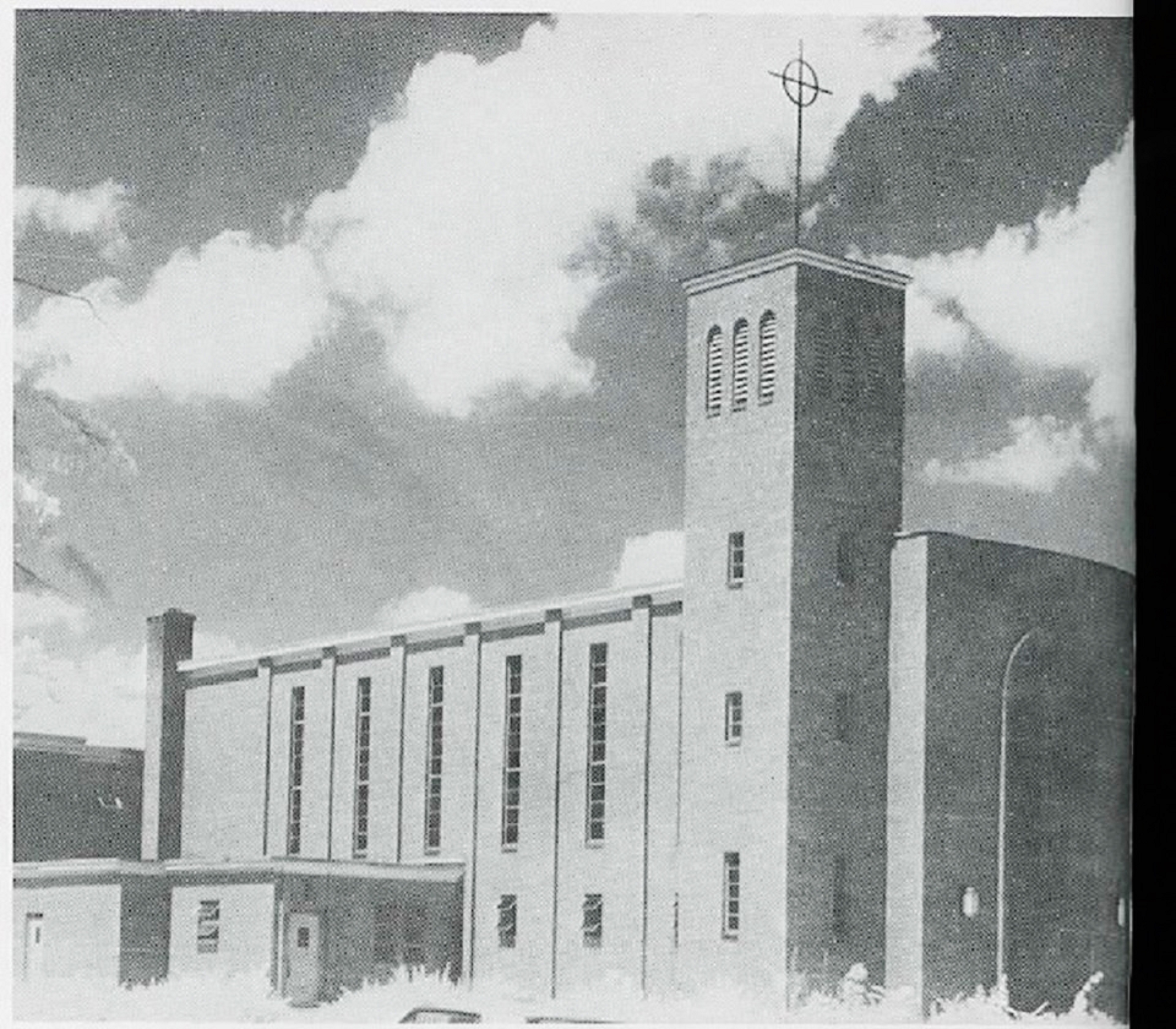
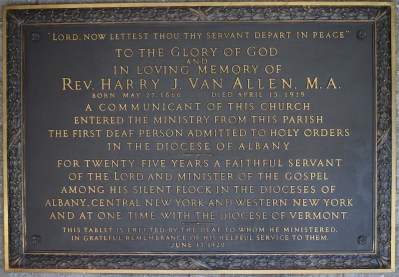
As you enter the door to St. Paul’s chapel, if you glance to your right, you will notice a brass plaque, one of only two from the Lancaster Street building to be displayed in our present church home.

Harry Van Allen Memorial Plaque

Harry Van Allen Memorial Plaque

You may be touched, as I have been, by this memorial to the first deaf person ordained in this diocese, and one whose ministry, both lay and ordained, was connected with this parish.

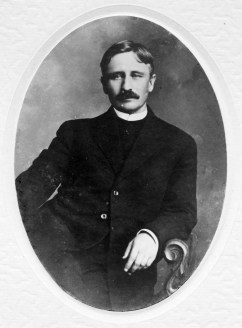
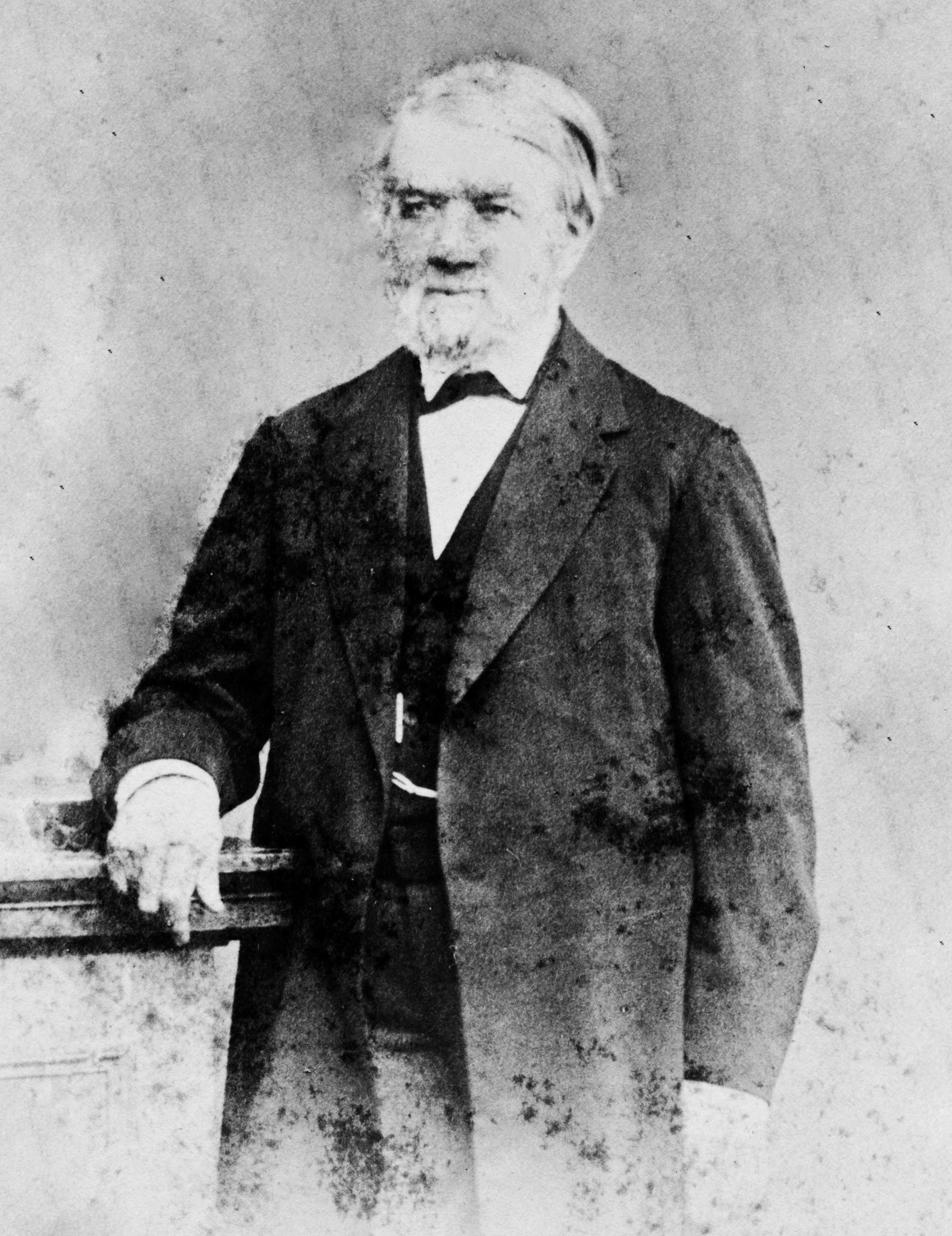
When Harry Van Allen came to his first service at St. Paul’s in 1894, he had already accomplished much for a young man of twenty-eight. Deaf since the age of ten as a result of scarlet fever, Van Allen had first attended the school for the deaf in Oneida County, and then the institution now known as Gallaudet University. He had taught printing for three years at the Pennsylvania Institution for the Deaf and Dumb (where he also served as editor of their newspaper, Mt. Airy World), and had worked as a printer in several central New York cities. But Harry Van Allen had a vocation as well as a career. Since his days in Philadelphia, he had served as a lay reader in Episcopal churches, conducting Bible classes for the deaf. In 1894, he was appointed missionary to the deaf by the Albany diocese’s newly-organized Commission for Church Work Among Deaf-mutes, whose secretary was St. Paul’s rector, Freeborn G. Jewett.

Van Allen moved his young family from Johnstown to Albany, obtained a job at Riggs Publishing and Printing, and began an energetic round of visits to churches throughout the diocese, leading classes and conducting services. Just as important, in a period when deaf people were isolated, Van Allen’s services drew them together for mutual support and encouragement. Van Allen also provided practical assistance not otherwise available, including translating, counseling, and help in finding jobs.

To add to a schedule that few of us could maintain, Harry Van Allen also began to study theology and church history and applied to Bishop Doane as a candidate for ordination. The bishop at first rejected his application, but after discussions at the General Convention of 1895 decided to accept him as a postulant. Harry Van Allen was ordained deacon in 1898 (with the recommendation of St. Paul’s vestry) and priest in 1902.

Harry Van Allen (courtesy Gallaudet University Archives)

Through these years, Harry Van Allen was listed in the Albany City directory as “missionary and printer,” as he continued his printing job during the week and on Sundays traveled across the diocese. In 1900 he added the Central New York diocese to his responsibilities and shortly afterwards moved his family to Utica. In 1916 he also took on Western New York, extending his mission field from Albany to Buffalo and from Ogdensburg to Binghamton.

At a celebration of the twenty-fifth year of his missionary efforts held at St. Paul’s just a few months before his death, Harry Van Allen estimated that in those years he had traveled 150,000 miles and reached more than 1,500 deaf men and women. We see him in the final photograph as he must have often stood, overnight bag in hand, about to board another train or interurban car, heading off yet again to serve “the deaf to whom he ministered.”

Harry Van Allen (courtesy Gallaudet University Archives)

Harry Van Allen (courtesy Gallaudet University Archives)

Holy Innocents’ Day

Today, December 28, is Holy Innocents’ Day, and we are sharing a manuscript poem, found in St. Paul’s archives, that was written for this day by William Prall, our rector from 1902 until 1905.

William Prall

William Prall

Holy Innocents’ Day

Jesu, pure and undefiled,
Make me as a little child
Wash my soul from grief and sin
Keep me good and true within.

Only as a child may I
Hope to see Thee when I die.
As a child I long to be
Now and for eternity.

In the fullness of Thy grace
Turn upon me Thy dear face
Assuage the tears that I have shed;
Lay Thy hands upon my head.

Bless me as Thou once didst bless
The children that around Thee press’d;
In thy blessing I shall be
A child for all eternity.

1902
William Prall

William Prall was born 6 April 1853 in Paterson, New Jersey[1], a son of Edwin T. Prall and Rachel More Thomson.[2] He earned the A.M. and Ph.D. degrees at Heidelberg University in 1873 and the LL.B. at Columbia University in 1875 and then took up the practice of law in Paterson.[3] He served a term in the New Jersey State Assembly (1883-1884), during which he wrote and sponsored the state’s free public library statute.[4]

William Prall married Lilian Porter Clapp in 1881[5] and the couple had a daughter, also named Lilian. Mother and daughter died within a year of each other[6], in 1884 and 1885 respectively. Weeks after his daughter’s death, Prall was accepted as a candidate for the priesthood by Thomas A. Starkey, St. Paul’s former rector, and by then bishop of Northern New Jersey.[7]

Thomas A. Starkey

Thomas A. Starkey

Prall began study at the De Lancey Divinity School (associated with Hobart College, Geneva, New York) in the spring of 1886.[8] He was ordained a deacon in 1886 and priest in 1887, both ordinations by Bishop Starkey.[9]

Prall’s first assignment was as assistant to J. Livingston Reese at St. Paul’s, Albany, where he served from 1887 to 1889. He next served as rector of the Church of the Holy Comforter in South Orange, New Jersey (1889-1891) and St. John’s Church, Detroit Michigan (1891-1900).[10] In 1900 he chose to return to St. Paul’s Albany as rector, to the “intense surprise” of an anonymous New York Times columnist, who described St. Paul’s as “the very reverse of rich and marked by the signs of decrepitude sometimes incidental to advanced age”.[11] Prall was to stay at St. Paul’s from 1900 until his retirement in 1905.[12] In 1903, he briefly accepted the wardenship of St. Stephen’s College (now Bard College) in Annandale, New York, but changed his mind and returned to Albany after he and his wife “expressed dissatisfaction with the accommodations afforded”.[13]

William Prall was awarded an honorary Doctor of Sacred Theology degree by the De Lancey Divinity School in 1893.[14]

In 1897, during his stay in Detroit, Prall married Helen Ames Lothrop.[15] There is no evidence of children from that marriage.

Among William Prall’s publications are:

Books:
The State and the Church (New York: T. Whittaker, 1900)

Civic Christianity (New York: T. Whittaker, 1895)

Book Chapters:
“The Priest in the Organized Parish” Chapter VII (pages 92-110) of Edward Macomb Duff (ed.), The American Priest at Work: A Symposium of Papers (Milwaukee: The Young Churchman Co., 1900)

Books translated and edited:
Giovanni Visconti Venosta Memoirs of Youth: Things Seen and Unseen (Boston and New York, Houghton Mifflin Co., 1914)

Almira Strong Lothrop, The Court of Alexander III: Letters of Mrs. Lothrop (Philadelphia: The John C. Winston Company, 1910)

Published sermons and lectures
“Past, present and future; a sermon preached January 26th, 1902, in commemoration of the seventy-fifth anniversary of the founding of the parish of St. Paul’s, Albany, N.Y.”

“The Reformation and the Origin of the Church of the Huguenots: A Study” (New York: The Huguenot Society, 1924)

William Prall died 22 March 1933 at his home, 1130 Park Avenue in New York City.[16]

[1] Frederick S. Hills (ed.), New York State Men:Biographic Studies and Character Portraits (Albany: The Argus Company, 1910), page 186

[2] “Dr. William Prall Dies in 80th Year,” New York Times, 24 March 1933

[3] New York Times, 24 March 1933

[4] Hills, New York State Men, page 186

[5] New York Times, 24 March 1933

[6] The Churchman, 26 Sep 1885, page 343

[7] New York Times, 18 October 1885

[8] New York Times, 18 October 1885

[9] The National Cyclopaedia of American Biography (New York: James T. White & Company, 1897), Volume VII, page 113

[10] Frederic E. J. Lloyd (ed.), The American Church Clergy and Parish Directory for 1903 (Cleveland: Frederic E. J. Lloyd. 1903), page 208

[11] “Topics of the Times,” New York Times 21 Jan 1900

[12] Hills, New York State Men, page 186

[13] New York Times 23 September 1903

[14] Journal of the Fifty-sixth Annual Council of the Protestant Episcopal Church in the Diocese of Western New York 1893 (Buffalo: printed for the Council, 1893), page 54

[15] John W. Leonard (ed.), Who’s Who in America 1899-1900 (Chicago: A.N. Marquis & Company, c. 1899), Volume I, page 579

[16] New York Times, 24 March 1933

A Merry Greeting on Christmas Day!

On this Christmas morning, a greeting from the only carol written for St. Paul’s Church, Albany. “A Christmas Carol”  was “written for the children of St. Paul’s Church” in 1856 by George William Warren, our organist and choirmaster from 1848 until 1860 and sets verse by our rector, Thomas A. Starkey.

Thomas A. Starkey

Thomas A. Starkey

Geo. Wm. Warren's A Christmas Carol

Geo. Wm. Warren’s A Christmas Carol

Starkey’s words also appear on a song sheet published separately.

Christmas Carol Song Sheet (courtesy Library of Congress)

Christmas Carol Song Sheet (courtesy Library of Congress)

Thirty years later, the song was still sung in Albany. Huybertie Pruyn Hamlin, in her memoir An Albany Girlhood, refers to it as “our favorite carol” in the 1880’s. Writing fifty years later, she still recalled the frosted bells on the cover and the last line of the first verse: “to young and old, to sad and gay, a merry greeting on Christmas Day!”


Christmas Holiday Festival and Bazaar — December 1981

Today, we see another Christmas event conducted by the women of St. Paul’s Church, a Christmas Holiday Festival and Bazaar in December 1981. The photograph appeared in the Albany Times-Union for November 30, 1981. The festival was to open the next morning, December 1, in the the church parish house, with a luncheon at noon and a roast beef dinner that evening.

In the photograph, the women are working on items for the sale.

Christmas Holiday Festival, December 1981

Christmas Holiday Festival, December 1981

Seated are Mrs. Anna Heinrichs and Mrs. Harry Wild.  Standing, left to right, are Mrs. Kenneth Eells [Virginia]] (bazaar co-chairman), Mrs. Roger Aiken [Ruth E. Mitchell], (bazaar co-chairman), Mrs. John N. Grant [Ismena J. Frazer], gift booth chairman. Mrs. Aiken and Mrs. Grant were serving in the same capacities that they had in the Christmas Bazaar twenty years earlier.


Christmas Bazaar — December 1961

The women of St. Paul’s have conducted fairs, sales and festivals since the church’s earliest years, and these benefits have played an important part in the financial support of the church. The first recorded fair was in December 1836: a “Ladies Fair at Stanwix Hall for the benefit of St. Paul’s Church,” at a time when the struggling young parish desperately needed that support. Today, we see photographs of a St. Paul’s Christmas Bazaar published in the Society page of the Albany Times-Union for December 4, 1961.

The first photograph shows three women of the parish “as they prepared luncheon for guests at the church.” As was then the custom, the newspaper gives only their husbands’ names; their first names (in brackets) were obtain from other sources.

Christmas Bazaar, December 1961: in the kitchen

Christmas Bazaar, December 1961: in the kitchen

Left to right, they were:  Mrs. David Powers [Lucille], Mrs. Shelley Edmundson [Louise], co-chairman of the luncheon, and Mrs. Roger Aiken [Ruth], co-chairman of the Christmas Bazaar.

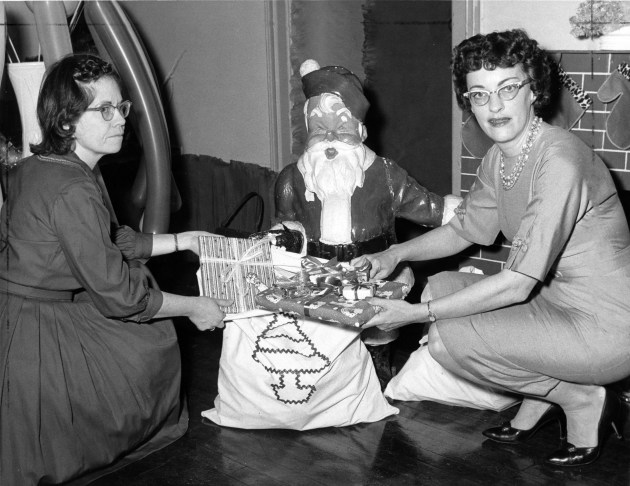
In the next photo, two women arrange the gifts in Santa’s pack.

Christmas Bazaar, December 1961: Santa's Pack

Christmas Bazaar, December 1961: Santa’s Pack

They were Mrs. Chas. H. House, Jr. [Merilyn] an Mrs. Harold Green [Maude]

Finally, here is a picture of the gift booth, with Mrs. John N. Grant [Ismena J. Frazer] on the right, assisting Mrs. D. Arthur Leahy [Grete].

Christmas Bazaar, December 1961: the gift booth

Christmas Bazaar, December 1961: the gift booth

George William Warren at St. Paul’s — Part 2, 1852-1856

By the fall of 1852, George William Warren had been at St. Paul’s Church, Albany for four years. We have been able to follow his work with the choir, particularly Mrs. Eastcott and Mr. Squires, and the works, both sacred and secular, that he composed in those years.
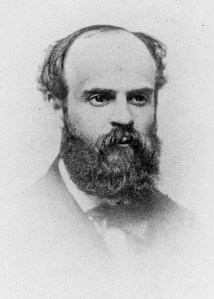
George William Warren

George William Warren

In October of 1852, Warren seems to have decided upon a career change. This was hardly a mid-life crisis; Warren was only twenty-four years old. Warren entered into a partnership with Richard H. Pease, a lithographer who also operated the successful Temple of Fancy, a variety store. In the notice published in the October 2, 1852 edition of the Albany Evening Journal by Pease, he explained that “Mr. Warren will have the general superintendence of the Variety Store, whereas the undersigned will attend to the Lithographing, Engraving, &c., as heretofore.” George Wm. Warren published his own advertisement, inviting “his old friends and other to call upon Pease & Warren and examine the new and elegant Fancy Goods, Toys, Games, Gloves, Worsteds, etc.”

For the next ten months, Albany newspapers regularly contain Pease & Warren advertisements for goods such as games, valentines, cards, cutlery, fans and perfume. During this period, Warren must have reduced his musical schedule: newspaper between October 1852 and July 1853 contain no references to him performing or conducting.

Pease & Warren advertisement, 1853-54 Albany Directory

Pease & Warren advertisement, 1853-54 Albany Directory

It is only in August 1853, that we find the next notice, with Warren advertising for a soprano soloist for St. Paul’s choir. The next month, September 1853, is the last advertisement for Pease & Warren. While the partnership seems to have been ended, the dissolution must have been amicable. Warren used the Temple of Fancy as his business address for three more years, but always as “Professor of Music,” no longer a partner in the business. Richard H. and Mary Pease named their son born in September 1853 George William Pease. Warren stood godfather at St. Paul’s for both his namesake in 1856 and his older brother Charles Elliott Pease in 1858. Most tellingly of all for continued warm relations, Warren married the Peases’ daughter Mary Eliza at St. Paul’s on September 16, 1858.

In December 1853, with Warren once again devoting full-time to music, we find the first contemporary description of the choir and of his compositions. A review in New York City’s The Musical World and Times describes St. Paul’s choir as consisting of G.W. Warren organist/choirmaster and tenor (he must have been unable to find a suitable replacement for Henry Squires), Mrs. Henry soprano (probably hired in August, since she received payment for one quarter due in November of that year ), Miss Scovil alto, Stephen W. Whitney bass.

The description of his compositions is not laudatory:

I cannot concede that the style of music usually performed in this church [sc. St Paul’s, Albany] is that of legitimate church music. A great portion of it is of Mr. Warren’s own composition, and is, in most instances, very nicely wedded to the words: yet I am more reminded of the concert room by it than of the church. I believe this state of things is owing to the fact the congregation require it. Mr. W. knows their taste and composes and adapts his music to their wants, like a good, obedient child.

Later that same month, St. Paul’s vestry minutes mention George Warren for the first time. A vestry resolution, dated December 13, 1853, reads “Resolved that Mr. Warren be requested and directed not to allow the organ to be used without the consent of the Vestry.”
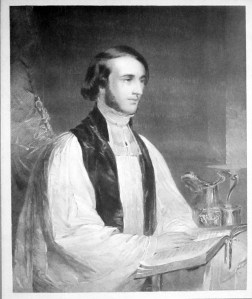
Wm. Ingraham Kip at St. Paul's altar (from an 1847 portrait by William Tolman Carlton)

Wm. Ingraham Kip at St. Paul’s altar (from an 1847 portrait by William Tolman Carlton)

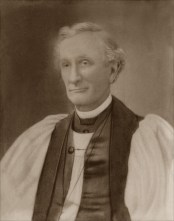
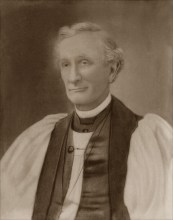
We do not know what prompted this directive. Had he used the organ for a non-church function? Had he permitted someone else to use the organ? Whichever it may be, this was a turbulent time in the church’s life: our long-time rector, William Ingraham Kip, had just resigned to become the first missionary bishop of California. Kip appears to have left Albany with warm feelings for Warren. Thirty-three years later, he inscribed a carte de visite “To Mr. George Wm. Warren in remembrance of old times. Wm. Ingraham Kip Bishop of California 1886” A new rector, Thomas A. Starkey, was called at the end of December 1853.

Kip carte de visite reverse with inscription to Geo. W. Warren

Kip carte de visite reverse with inscription to Geo. W. Warren

In May 1854, Warren became a communicant of St. Paul’s Church. During the years 1854 and 1855 we find three newspaper notices of his performing at the inauguration of new organs, with two of these describing his extemporizing on themes. Each identifies him as organist of St. Paul’s church. The 1854 notice says that he “extemporised in his usual fanciful and somewhat comic style.”

Warren had been teaching organ, piano and singing since 1849, but in the fall of 1854, he organized larger singing classes for girls, on both Rudimental and Advanced levels. At this time, he did not offer a boys’ class, but recommended singing the classes for boys taught by Mrs. Margaret Gourlay, his former soprano soloist.

In October 1855, Warren was offered the post of organist and choirmaster at St. Paul’s Church, in Troy, New York. He chose to remain at St. Paul’s, Albany, with his salary doubled, and announced big plans for the future: “I am forming a choir of boys, in addition to a quintette choir and hope to have very delightful music this winter.”

This was to be the first boychoir in the city of Albany. It was composed of twelve boys, not vested, who supported plainchant and hymns. A quartet choir provided all remaining service music. One of the choirboys reported that he never learned to read music, and so the level of performance was probably not high. The most talented of these boys was William James Gourlay, the son of the Warren’s soprano soloist in 1850, Mrs. Margaret Gourlay. “Willie” was not only a soloist at St. Paul’s, but also appeared in Warren’s 1856 Concert for the Poor, where he was billed as “Master Gourlay, the little vocalist of St. Paul’s Choir”.

Albany Evening Journal 18 Jan 1856

Albany Evening Journal 18 Jan 1856

Another highlight of the “delightful music” that Warren promised for the winter of 1855 – 1856 was his recently-discovered soprano soloist. Isabella Hinckley was only fifteen years old, but she had studied piano with St. Paul’s former organist, Oliver J. Shaw, studied voice with St. Paul’s former soprano soloist, Electa Cone, and had proved herself as choir director at the Church of the Holy Innocents. She was featured in Warren’s Concert for the Poor in 1856 (“her first appearance”) and again in 1857.
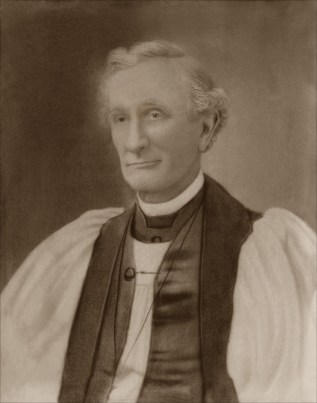
Starkey Portrait St PaulsIn 1856, Warren published another piece of music with a St. Paul’s connection,  “A Christmas Carol, Written for the Children of St Paul’s Church, Albany with Words by their Rector Rev. T.A. Starkey,” published by J.H. Hidley of Albany.
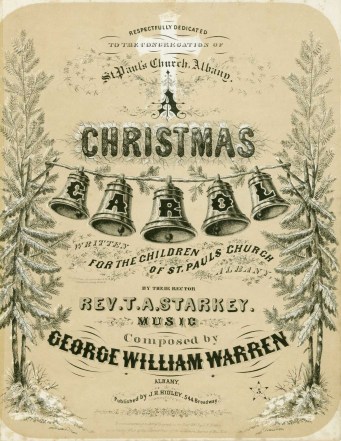
Geo. Wm. Warren's A Christmas Carol

Geo. Wm. Warren’s A Christmas Carol

In April of 1856, shortly after finishing the busy schedule for the Concert for the Poor (featuring Miss Hinckley, Master Gourlay and fifty members of his singing class) in February, Warren for the first time advertised singing classes for boys. A reminiscence by one of St. Paul’s choir boys suggests that Warren used these classes to attract and train candidates for the St.Paul’s boy choir. In this classified advertisement, he identified himself  as “Organist and Musical Director at St. Paul’s Church (eight years)” implying that he had worked at St. Paul’s continuously since 1848.

But a break was about to occur. According to vestry minutes for 6 September 1856, “George W. Warren account for services as Organist & amounting to $698.77 was present and referred to Messrs. Kendrick Tweddle & Raymond with power & authority to adjust the same.” The size of the demand suggests that it covers salary for multiple months, and that Warren was settling his accounts with the church.

This supposition is confirmed by a November 1856 article in Dwight’s Journal of Music, which first describes the music program at St. Paul’s as consisting of

an excellent quartet at one side of the organist, and a choir of twelve boys at the other. Quite a number of singers, of a great deal more than ordinary ability, have been engaged at St Paul’s. Mrs. Lucy Eastcott (who is now an acknowledged European prima donna) was their soprano for two years [1850-1852] and Mr. Henry Squires, now a leading tenore in London, was in the same choir at the same time. Their soprano of last season [1855-1856], Miss Isabella Hinkley, has a voice of remarkable beauty, and her talent is to he further cultivated and perfected by a thorough musical education in Italy, for she goes to Florence next May.

But then the article announces Warren’s resignation, which prompted a round of musical chairs among Albany’s organists and choir members:

But choir matters have been through a constant series of changes this season; George William Warren, for eight years director at St Paul’s resigned, and accepted at Dr Sprague’s [Second Presbyterian]. Albert Wood resigned at St Peter’s and accepted at St. Paul’s. The choirs of these and some other also changed and exchanged and it would hardly fair to report the degree of excellence in either present, but be assured a deep interest is felt have good church music and excellent salaries paid to our host organists and singers and it not be the fault of our people if the good is attained.

St. Paul’s vestry minutes do not note Warren’s resignation, and we may never know his reasons for leaving. Nor do we know why Albert Wood chose to leave St. Peter’s after a tenure of at least four years; the earliest St. Peter’s salary receipt (housed at the New York State Archives) for Wood is from August 1852 and the latest from August 1856 (shortly before his resignation), with several from every year between those dates.

George Wm. Warren must not have stayed long at Second Presbyterian church, because he offered his services to St. Paul’s in May, 1857. In a future post, we will conclude our story of Warren’s time at St. Paul’s Church with an account of his final period here, from August 1, 1857 through August 1, 1860.



Late Autumn 1965 — Construction Continues on Hackett Boulevard

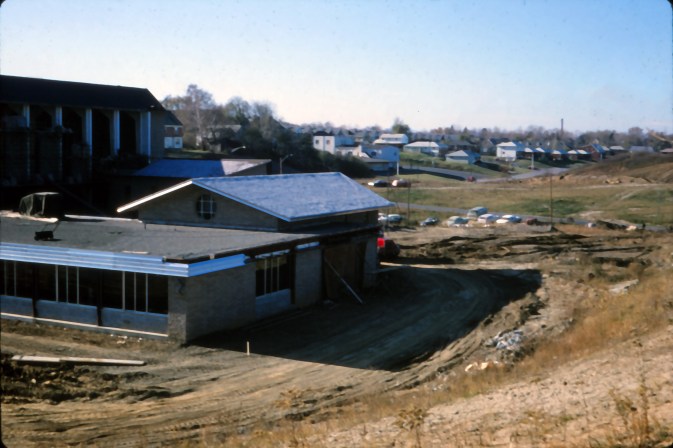
Today we share the last three photographs showing construction of St. Paul’s Hackett Boulevard building. These slides were processed in November 1965, and probably show progress as of late October or early November of that year.

The first photo is from an unusual vantage: the photographer stood behind and above the chapel, providing an interesting view of parts of the surrounding area. You can clearly see that what is now the Albany Medical Center South Clinical Campus parking lot was still open ground.

Hackett Boulevard November 1965

Hackett Boulevard November 1965

The second photo shows the west end of the nave, with all exterior work apparently complete.

Hackett Boulevard November 1965

Hackett Boulevard November 1965

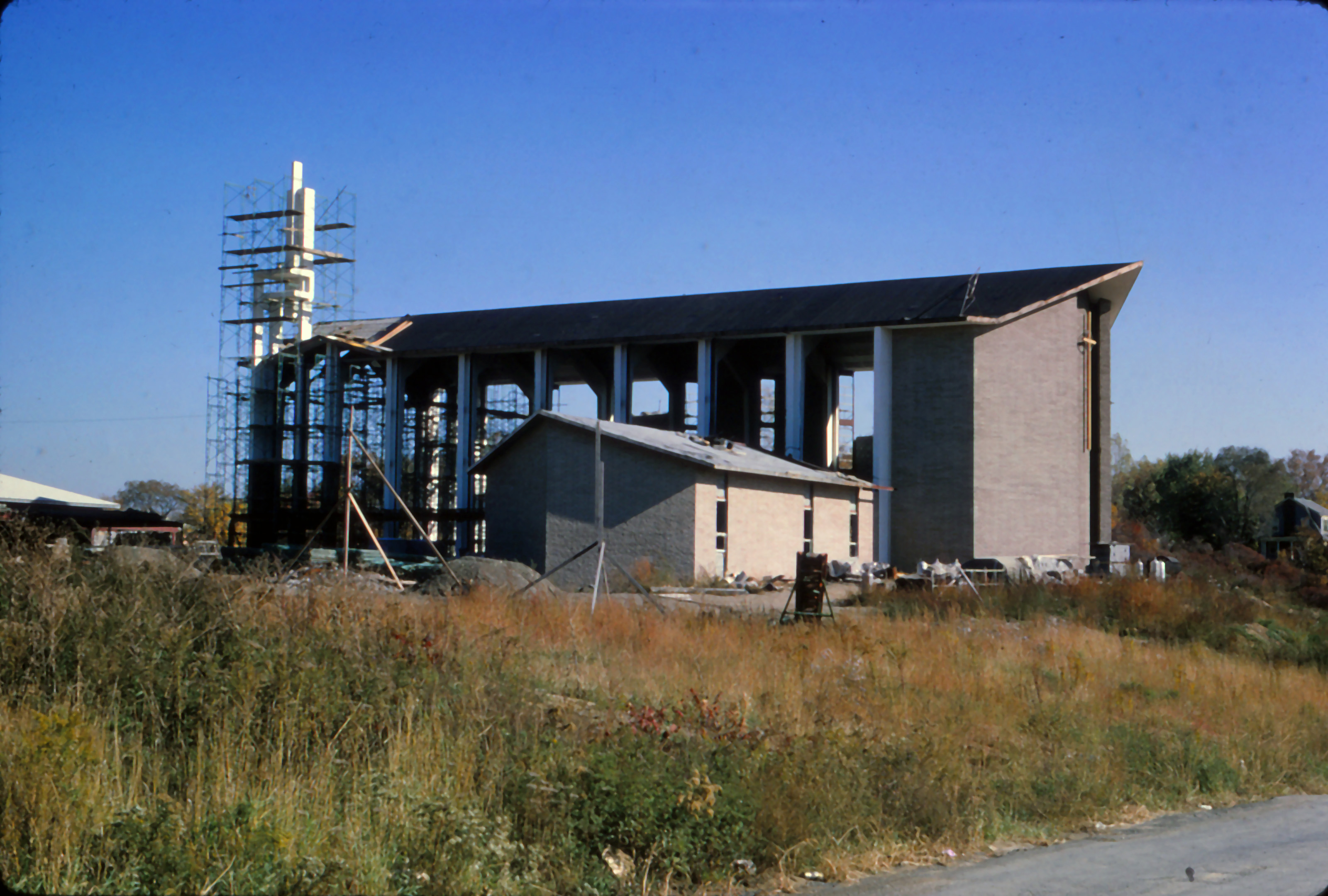
And finally, another shot from the east, showing the back of the education wing and the back of the church proper, with the back wall still not enclosed. You can just make out workmen, sitting on scaffolding.

Hackett Boulevard November 1965

Hackett Boulevard November 1965

These are the last photographs showing exterior construction. Work on the interior must have continued through the winter, in preparation for the consecration of the main altar in April 1966 and  consecration of the entire building in June of that year.


All Souls 2015: “And there are some who have no memorial”

Cross in St. Paul's Lot, Albany Rural Cemetery

Cross in St. Paul’s Lot, Albany Rural Cemetery

On this All Souls Day, I ask you to remember those souls resting on the St. Paul’s lot (Lot 126, Section 26) in Albany Rural Cemetery. It was given to the parish in 1878 by Miss Mary E. Hewson, “as a place where the poor of the Parish might be buried” and has been used regularly since then both for parishioners and for other needy persons.

Dedication of Cross in St. Paul's Lot, 1911

Dedication of Cross in St. Paul’s Lot, 1911

With adoption of The Proper for the Lesser Feasts and Fasts in 1979, this day is now known as Commemoration of All Faithful Departed. Certainly, these souls resting in our lot include faithful members of the St. Paul’s family, including Miss Josephine Chandler, a seamstress at Myers Department Store on Pearl Street for 29 years.

Albany Evening News 1927 Feb 22

Albany Evening News 1927 Feb 22

She was active at St. Paul’s starting in 1920’s, as a member of the Girls’ Friendly Society (performing in minstrel shows, and organizing card parties) and the Business Women’s Guild, as a volunteer at church bazaars, and as a Sunday School teacher. She was buried here from St. Paul’s in 1972.

Josephine Chandler's Tombstone

Josephine Chandler’s Tombstone

But I ask that you also remember “those who faith is known to God alone”, those who are described in the apocryphal Wisdom of Jesus ben Sirach: “And there are some who have no memorial, who have perished as though they had not lived; they have become as though they had not been born, and so have their children after them.”

Among these is Elizabeth Wallace, who died in Albany in 1888. We know very little about her: she was born in Ireland, lived last at 349 Washington Ave, and died of arthritis at the age of 34. Newspapers do no mention her life or her death, and she seems never to have been affiliated with the church. She rests in Tier 1 of the St. Paul’s lot, her resting place unmarked.

Holy Innocents: The Chapel of Ease That Never Was

St. Mark’s Chapel was the third and last of St. Paul’s missions, but there was one additional mission that was carefully planned, a building designed, a cornerstone laid, yet never served that purpose. You know it as the Church of the Holy Innocents on the corner of North Pearl and Colonie Street, but it began its life as the Chapel of the Holy Innocents, a chapel of St. Paul’s Church.

Holy Innocents

Holy Innocents

When William Ingraham Kip returned from his medical leave in August 1845, he resumed the busy life he had left a year earlier, and the church continued to flourish.

Wm. Ingraham Kip at St. Paul's altar (from an 1847 portrait by William Tolman Carlton)

Wm. Ingraham Kip at St. Paul’s altar (from an 1847 portrait by William Tolman Carlton)

Two years later, in 1847, the increased size of the congregation was straining the available seating in the North Pearl Street church building. Consulting with his long-time senior warden, William H. DeWitt, Kip proposed to build a chapel in Albany’s rapidly growing North End, intending “to sustain it as a free church and mission.” When he referred to a free chapel, Kip meant a building which was conveniently located for St. Paul’s parishioners who lived far from the main church, and one which was financially supported without resort to pew rents. The clear intention, then, was to create what is known as a “chapel of ease” for St. Paul’s parish, not a church for a new, separate parish.

Kip and DeWitt organized a subscription to raise funds, and started planning the building with a young architect, Frank Wills. DeWitt’s wife, Ann Covenhoven DeWitt, donated two lots for the building.

William Henry DeWitt

William Henry DeWitt

St. Paul’s vestry approved these preliminary plans “to build a free chapel in connection with this Parish” in July 1848, and a building committee was formed. The vestry specified that the finances of the chapel be kept distinct from St. Paul’s, with “no liability on any account to be incurred or created against St. Paul’s Church.”

Conflagration at Albany N.Y., August 17, 1848

Conflagration at Albany N.Y., August 17, 1848


These plans were derailed a month later by the massive fire of August 1848, which destroyed 439 buildings in close to 200 acres in the heart of the city. The subscription for a building fund failed. It was at this time that DeWitt volunteered to support the entire cost of the new chapel.

William and Anna DeWitt had four children, all baptized at St. Paul’s Church. All died as babies or young children between 1830 and 1844. A heart-breaking note in our parish records, after the record of the death of the two boys within two days of each other in December 1844, reads: “the parents of these children are now childless.” The DeWitts proposed to fund the chapel as a memorial to their children.

The couple could well afford this donation. William Henry DeWitt was a lumber dealer, and while we don’t know his wealth at this time, fifteen years later he paid taxes on income of about $36,500, the equivalent of almost a million dollars in today’s currency.

Construction of the Chapel of the Holy Innocents began on May 13, 1849. Kip wrote that day to William Rollinson Whittingham, Bishop of Maryland, asking that he lay the building’s cornerstone on June 7, 1849, when Whittingham was already scheduled to be here to consecrate Trinity Church and to perform confirmations at St. Paul’s. Kip wrote: “Cannot you on that afternoon lay the corner stone of our Chapel of Ease? It was begun today & will be about ready for the corner stone at that time. It is to be attached to St. Paul’s Parish (seats free) & to be principally under the charge of an assistant minister. It is to be of stone & far finer than the Holy Cross at Troy.”

The Rev. Sylvanus Reed

The Rev. Sylvanus Reed

The assistant minister whom Kip had chosen was a recently-ordained deacon, Sylvanus Reed, who had grown up at St. Paul’s and had been supported for ordination by the vestry. Whittingham must have accepted Kip’s invitation, because the chapel cornerstone was indeed laid on June 7, 1849, with Kip preaching in place of the Bishop, who was indisposed.

You might ask why the Bishop of Maryland was presiding. Didn’t the Diocese of New York (in which St. Paul’s then resided) have a bishop? Yes, Benjamin Tredwell Onderdonk was bishop, but in 1845 he had been found guilty of “immorality and impurity” by the House of Bishops and suspended “from the office of a Bishop … and from all the functions of the sacred ministry.” New York had a bishop, but a bishop who could not officiate. Between 1845 and 1852 (when the first provisional bishop was elected), all episcopal services had to be conducted by bishops from other dioceses.

In his report to the Standing Committee of the Diocese of New York, Bishop Whittingham wrote: “On Thursday, June the 7th, I laid, with appropriate solemnities, the corner-stone of the Chapel of the Holy Innocents, designed for a free chapel of ease of St. Paul’s Church, Albany.” And through most of 1849, Holy Innocents is consistently referred to as a chapel. That changed abruptly in late 1849 or early 1850. The DeWitts had been members of St. Paul’s since 1831; William H. DeWitt had been a warden of St. Paul’s Church since 1837. But on February 16, 1850, the chapel was organized as the Church of the Holy Innocents, a separate parish in the city of Albany, with William H. DeWitt its senior warden.

Interior of the Church of the Holy Innocents

Interior of the Church of the Holy Innocents

We will never know what prompted this change. Could DeWitt have felt that, having paid the entire cost of the property and the church building, he should have control of the enterprise? Did William H. DeWitt want Holy Innocents to be his own church?

DeWitt’s interest in control is shown clearly in an unusual condition in the church’s incorporation “[a] reservation of a right of nomination to the rectorship, to the donors and their heirs (said heirs to be of the age of twenty-one years, and communicants in the P[rotestant] E[piscopal] church).” DeWitt wanted to be able to name the rector, and wanted to grant the same right to his heirs forever.

We have better evidence for William Ingraham Kip’s view of this condition. Before the church was consecrated in September 1850, three Albany clergymen filed a formal objection to the consecration, specifically objecting to DeWitt’s control over the naming of a rector. Kip was not present at the consecration, which suggests that he was one of the three. But we also have a cryptic letter from the vestry to Kip, praising “your proceedings in the matter of the consecration of the ‘Church of the Holy Innocents’”. What those proceedings were is not specifically stated, but the vestry does praise Kip for guarding against “innovations” and “dangerous precedents,” which probably refer to the right of nomination.

Bishop Whittingham discussed the objection with DeWitt, who agreed to modify the right, restricting it to the DeWitts’ issue (as opposed to heirs), limiting the number of nominations to three and requiring that the nominations “be exercised within a year from the occurrence of a vacancy.” Whittingham then consecrated the church, with no clergy from St. Paul’s present.

As with the break with Trinity Church nineteen years earlier, the creation of this new congregation came at significant cost: the loss of William and Ann DeWitt. But the establishment of Holy Innocents did, indeed “promote the interests of religion in this City” as St. Paul’s vestry had predicted.

Grace and Holy Innocents (credit: Albany Group Archive)

Grace and Holy Innocents (credit: Albany Group Archive)

In its first home for almost one hundred years, and on Clinton Avenue for another seventy years after its merger with Grace Church, the congregation has been an important presence of the Episcopal Church in north Albany.

The DeWitts’ gift still stands in its original location. Although the Russian Orthodox congregation that worshiped there for forty years replaced the traditional bell-cot with an onion dome, the authentic Gothic complex still creates the feeling of an English country churchyard on a gritty street corner.

Church of the Holy Innoents (credit: Albany Group Archive)

Church of the Holy Innoents (credit: Albany Group Archive)

The building has been empty since 1983, and, to our city’s shame, has been allowed to deteriorate. While the collapse of a section of wall in May 2015 is particularly worrisome, we may hope that the city and the building’s current owner, Hope House, will be able to stabilize the structure, not only as a precious example of early Gothic revival architecture, but also as a reminder of its important role in Albany history.

If the building cannot be saved, my hope would be that some of the stained glass could be rescued. According to the building’s National Register application: “the Bolton windows in the west facade and the chancel, and the two grisaille windows near the west end of the nave” were still “extant, but in need of repair” in 1978. They are the work of John Bolton (1818–1898), who collaborated with his brother William Jay Bolton. They represent some of the earliest stained glass made in this country using authentic medieval techniques.


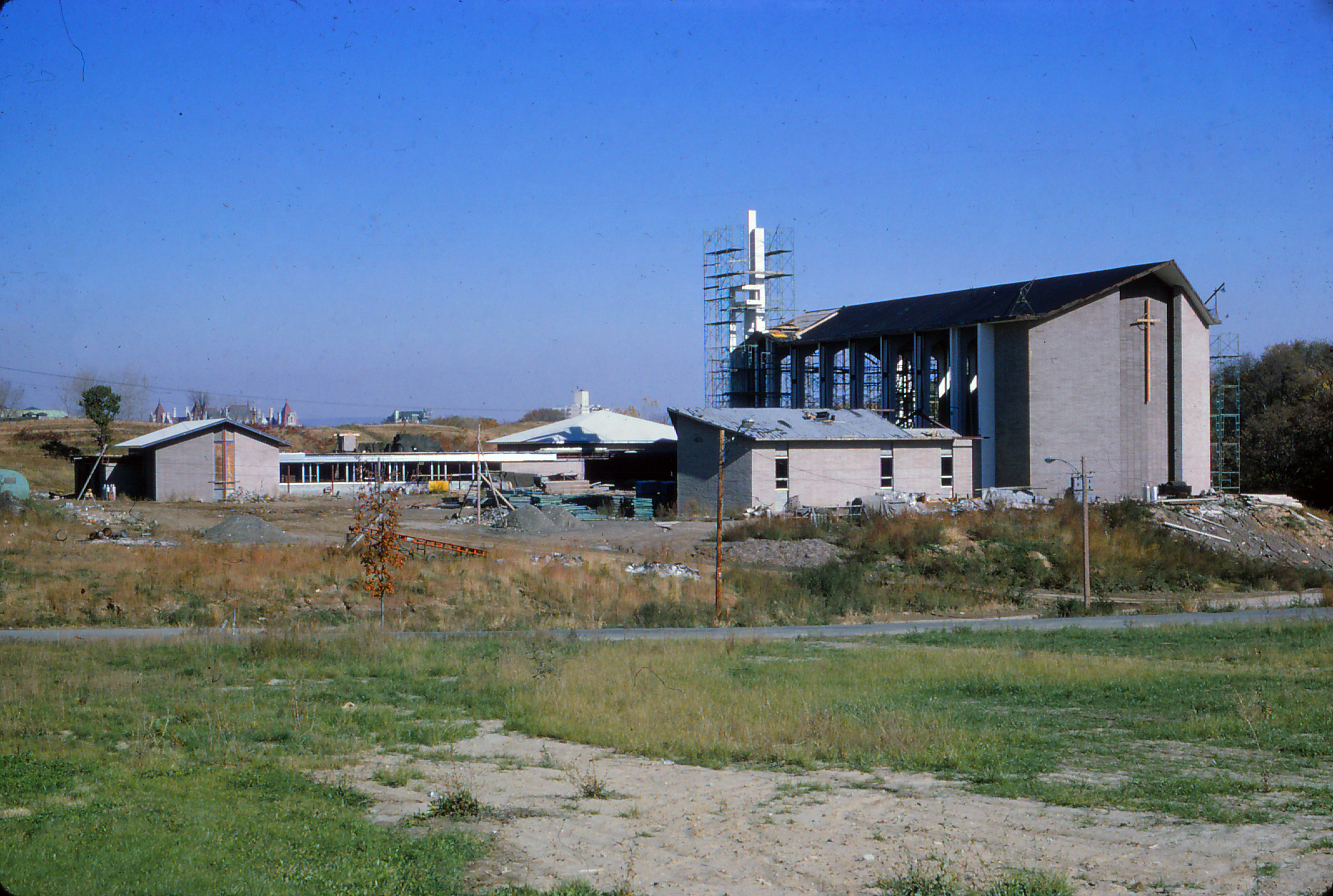
Early Autumn 1965 — Construction Continues on Hackett Boulevard

Here is another set of slides showing construction of the church on Hackett Boulevard. These were processed in October 1965, and so they probably represent the situation in September or early October of that year.

It is striking how similar the construction looks to the view from slides processed in early spring of that year. One parishioner remembers hearing that a strike virtually stopped work for several months, and that may explain the slow progress.

Hackett Boulevard Choir Room and Church, October 1965

Hackett Boulevard Choir Room and Church, October 1965

Hackett Boulevard Church, October 1965

Hackett Boulevard Church, October 1965

Hackett Boulevard Choir Room, Parish Hall and Church, October 1965

Hackett Boulevard Choir Room, Parish Hall and Church, October 1965

Hackett Boulevard Church, October 1965

Hackett Boulevard Church, October 1965