The Jay Street Parish House

The Parish House for St. Paul’s Lancaster Street building was at 79 Jay Street, at the rear of the church building. It consisted of two buildings, both donated in memory of long-time members. This photograph, from the 1920 Year Book, is the earliest that shows both sections.

St. Paul's Jay Street Parish House, 1920

St. Paul’s Jay Street Parish House, 1920

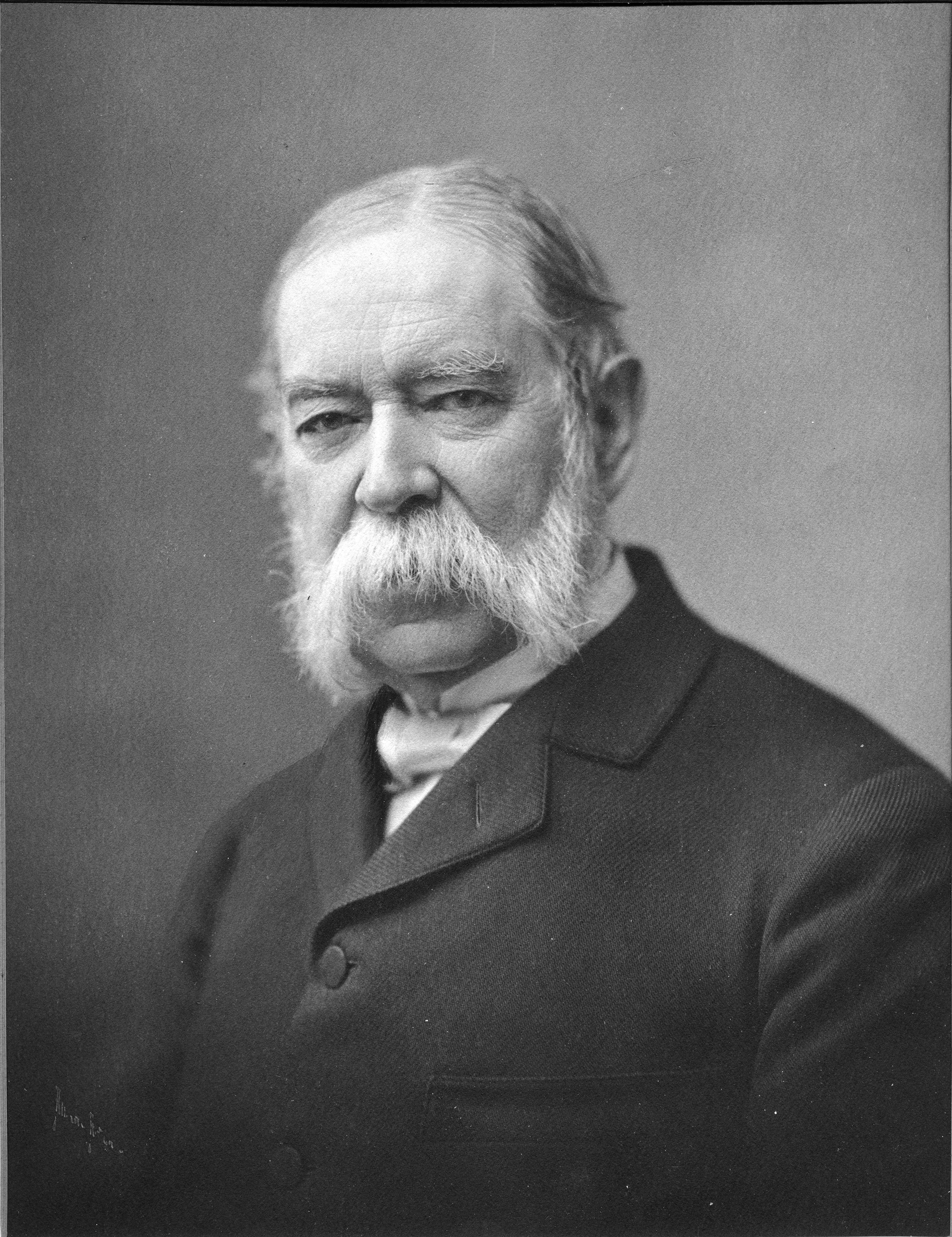
The older section on the east side was built in 1883 through a donation by John Henry Van Antwerp in memory of his wife Martha Nancy Wiswall Van Antwerp, who had died in 1880.

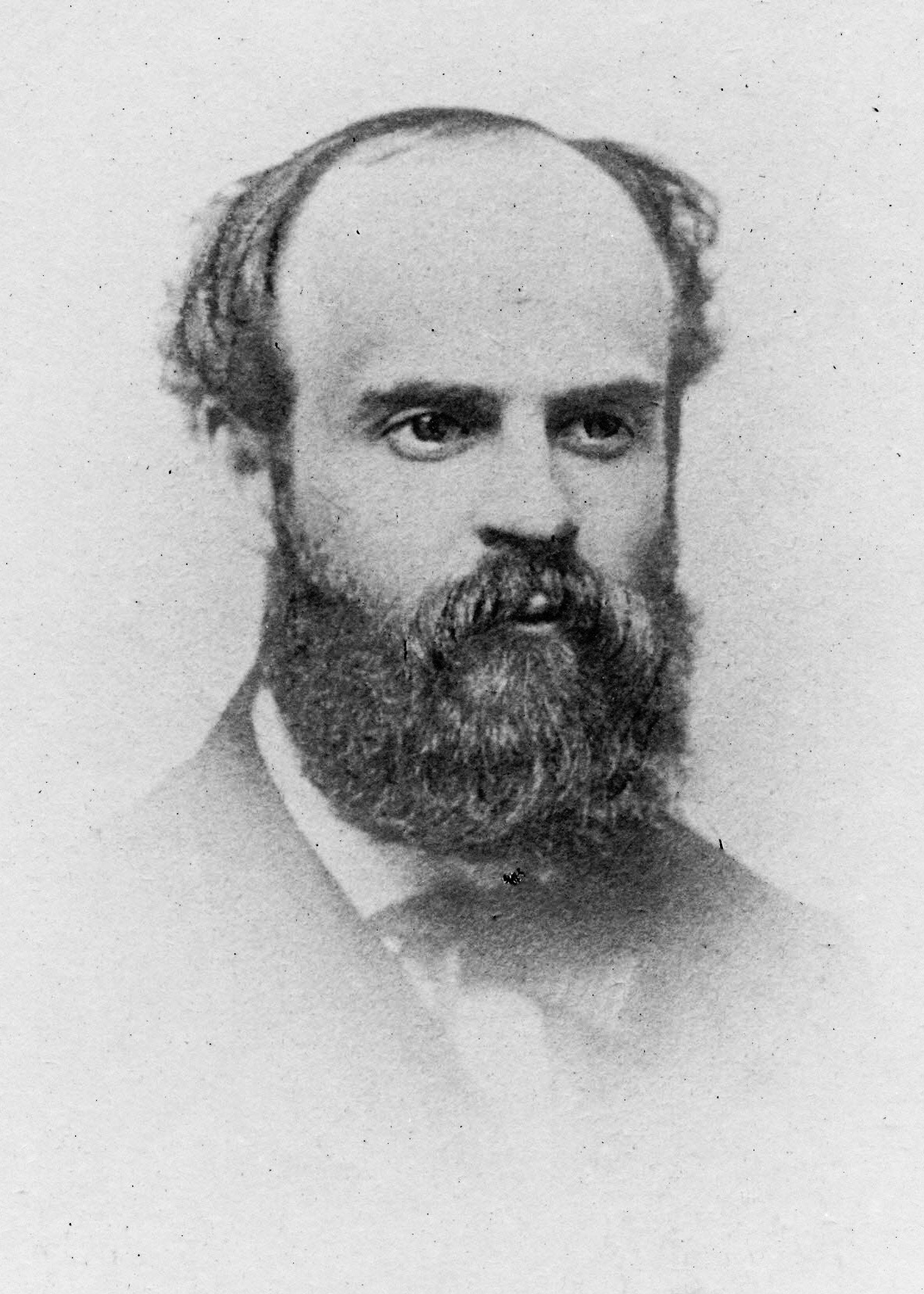
John Henry Van Antwerp

John Henry Van Antwerp

John H. Van Antwerp was first elected to the vestry in 1858 and became senior warden in 1862. At the time of his retirement in 1902 he had served continuously as senior warden for an amazing 41 years.

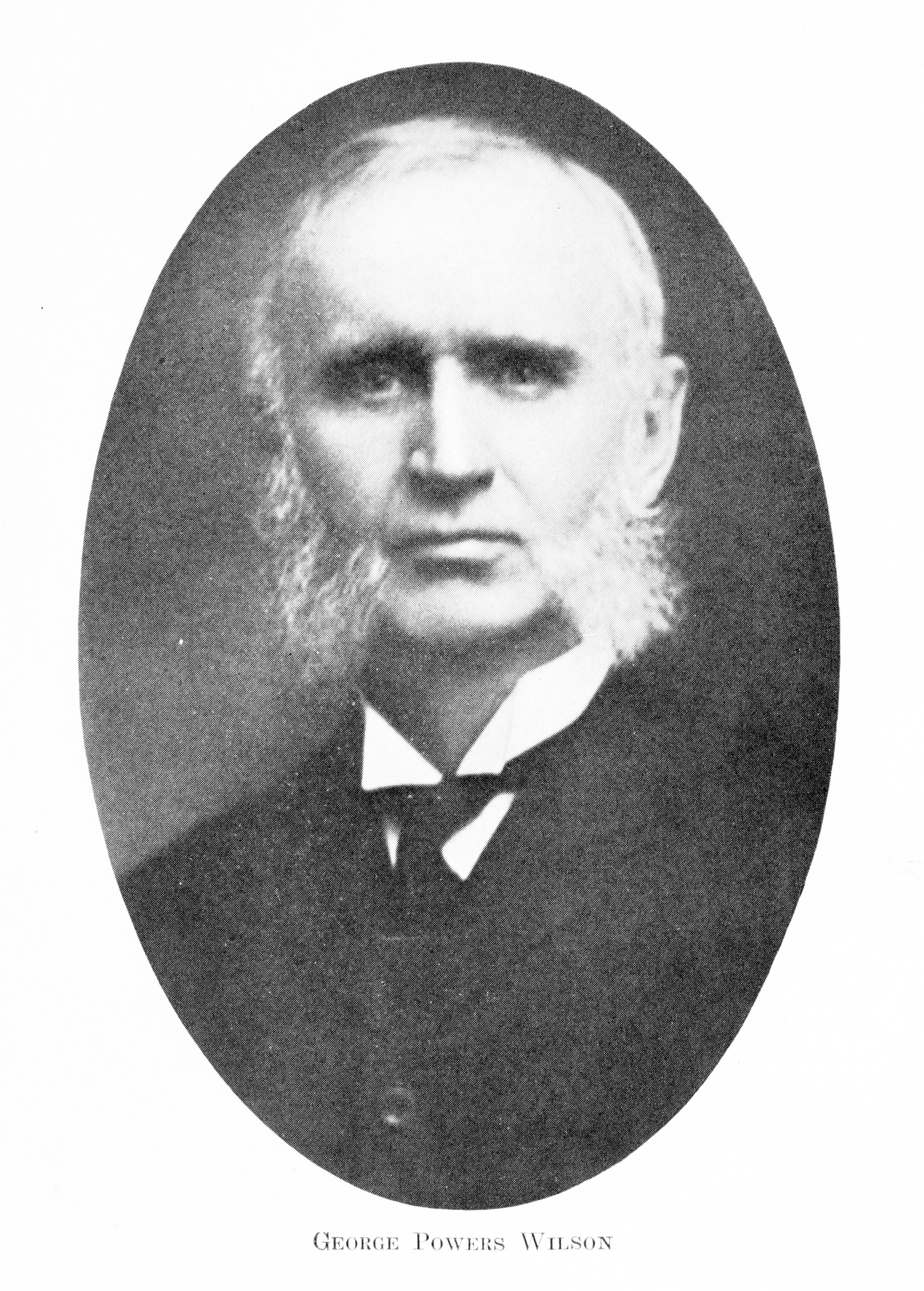
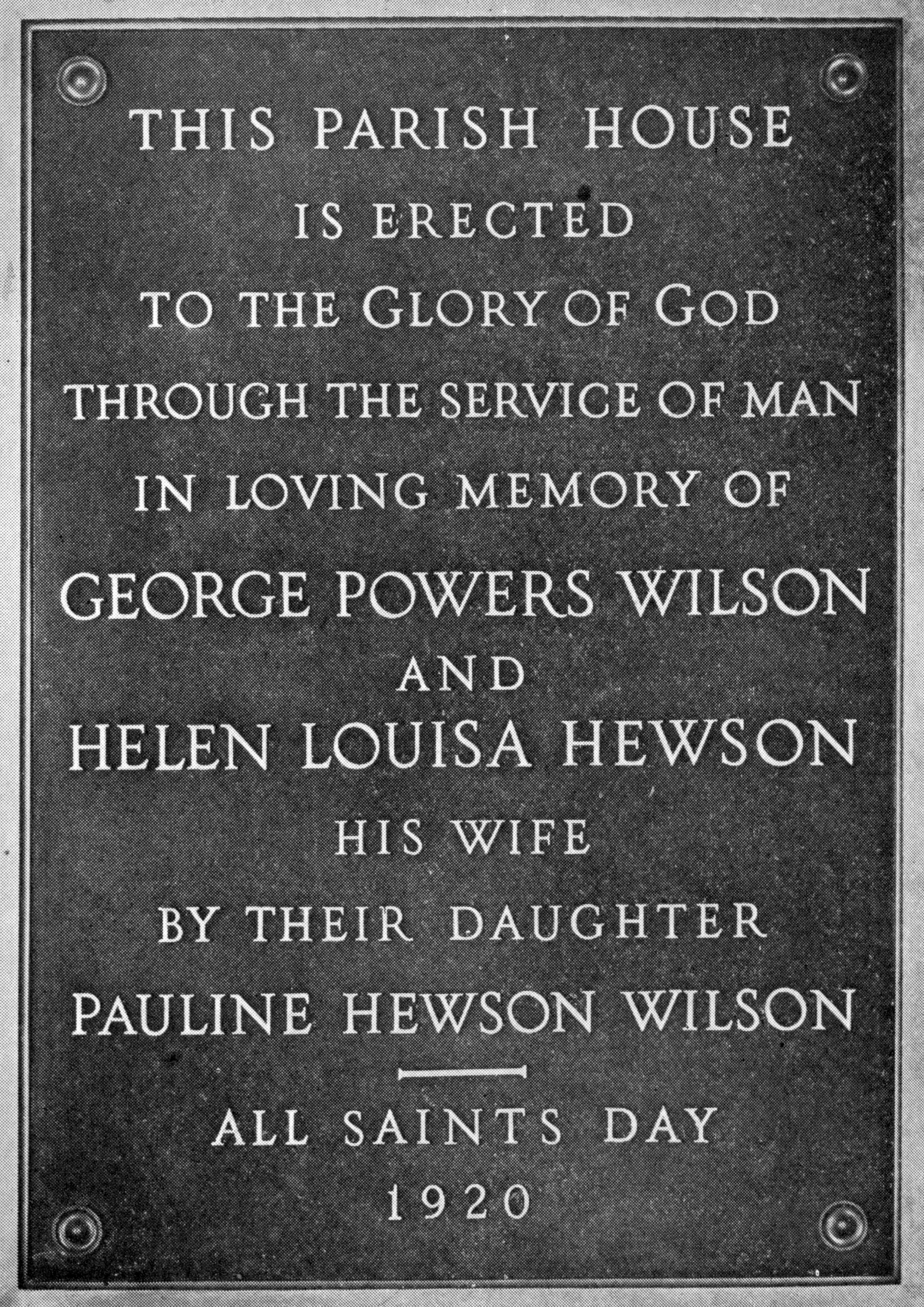
The western section of the Parish House was built in 1920, with funds donated by Pauline Hewson Wilson in memory of her parents, George Powers Wilson and Helen Louisa Hewson Wilson.

George Powers Wilson

George Powers Wilson

Helen Louisa Hewson Wilson

Helen Louisa Hewson Wilson

Parish House Plaque

Parish House Plaque

George P. Wilson had served as vestryman for two periods (1876-1878 and 1884-1895) and two periods as warden (1895-1900 and 1908-1918), for a combined 28 years as vestryman and warden.

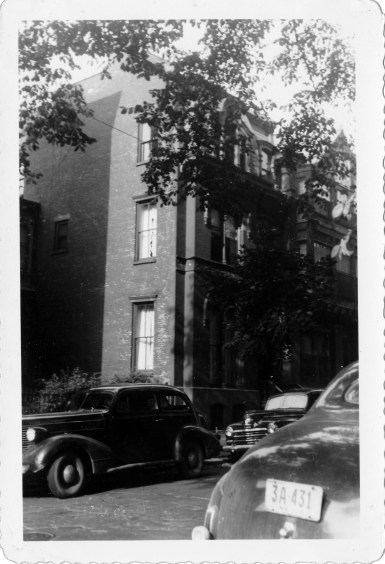
There are very few photographs of the exterior of these buildings. The next that I’ve been able to find shows the Van Antwerp section in May 1964, with the date 1883 visible just left of center.

St. Paul's Church Jay Street Facade May 1964

St. Paul’s Church Jay Street Facade May 1964

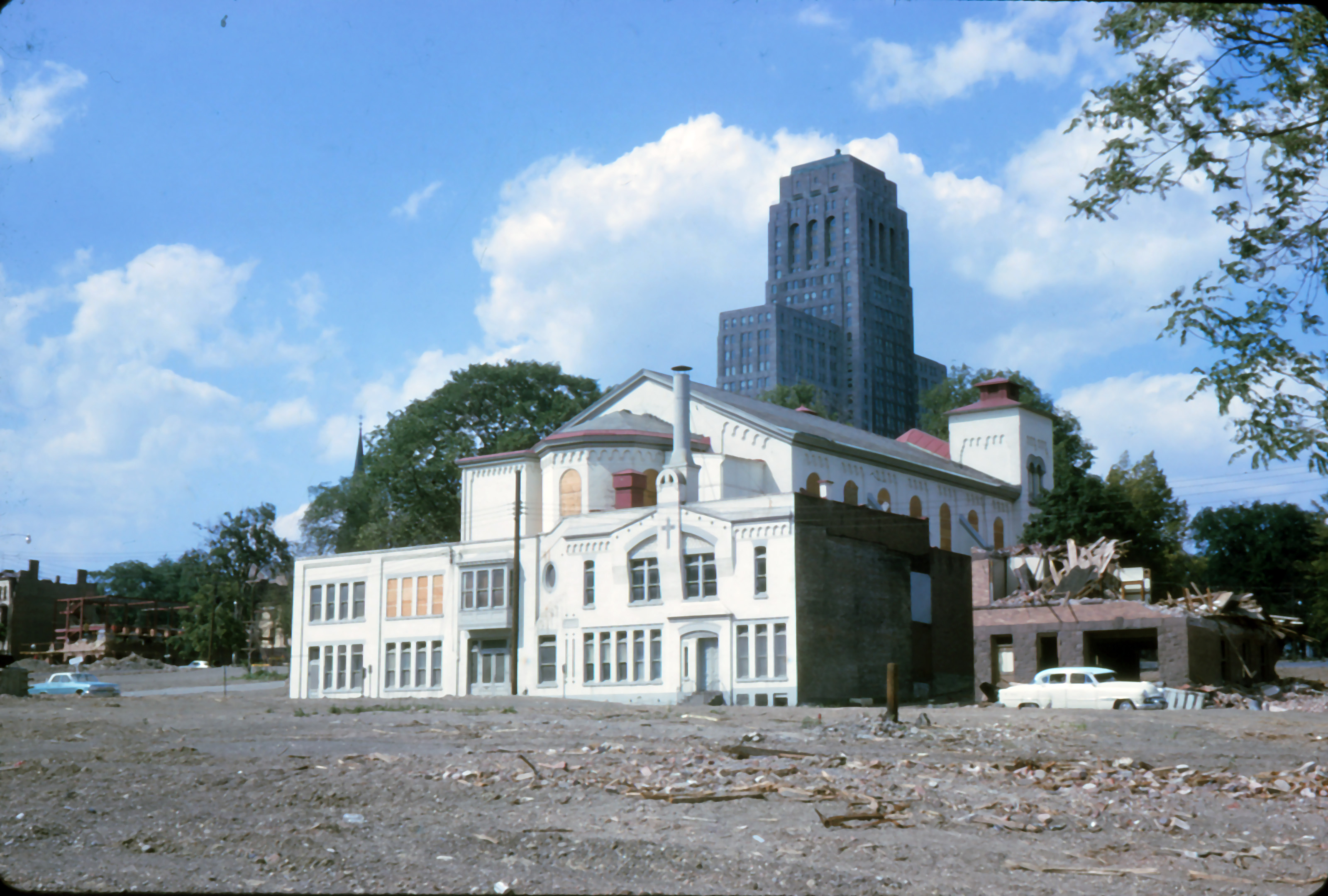
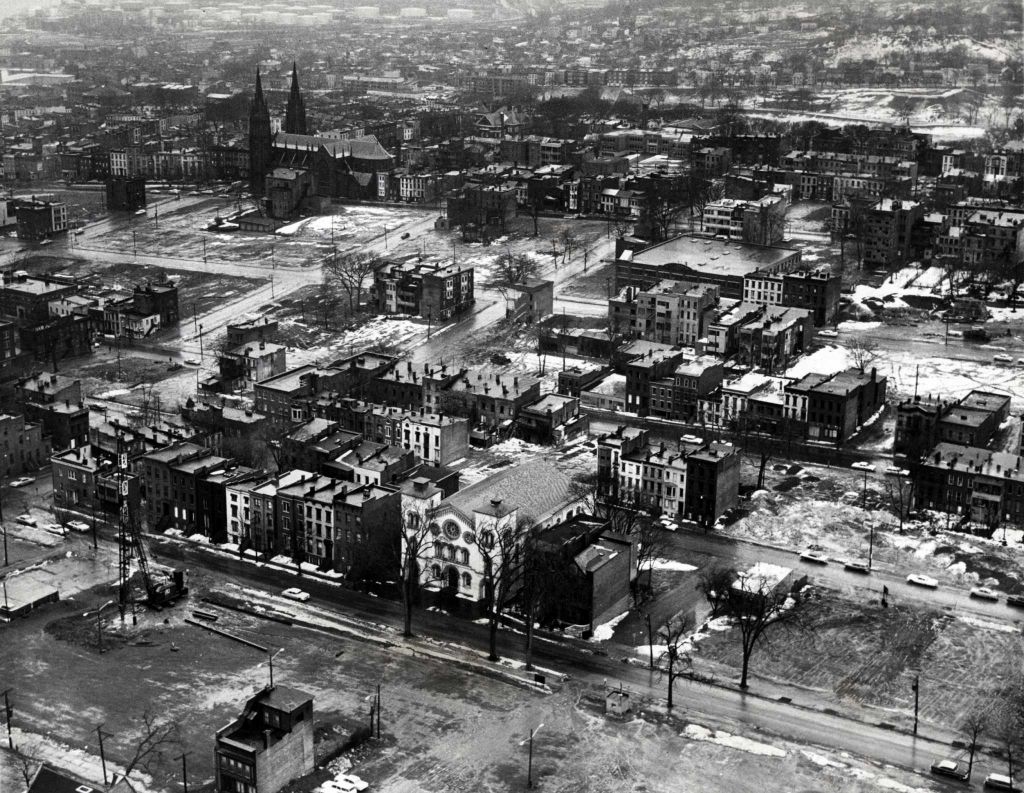
A few months later, in October 1964, a St. Paul’s parishioner took this photograph of the Parish House just before it was demolished. Several blocks to the south of the church had already been leveled, producing the only picture to show the entire building from a distance.

St. Paul's Jay Street Facade October 1964

St. Paul’s Jay Street Facade October 1964

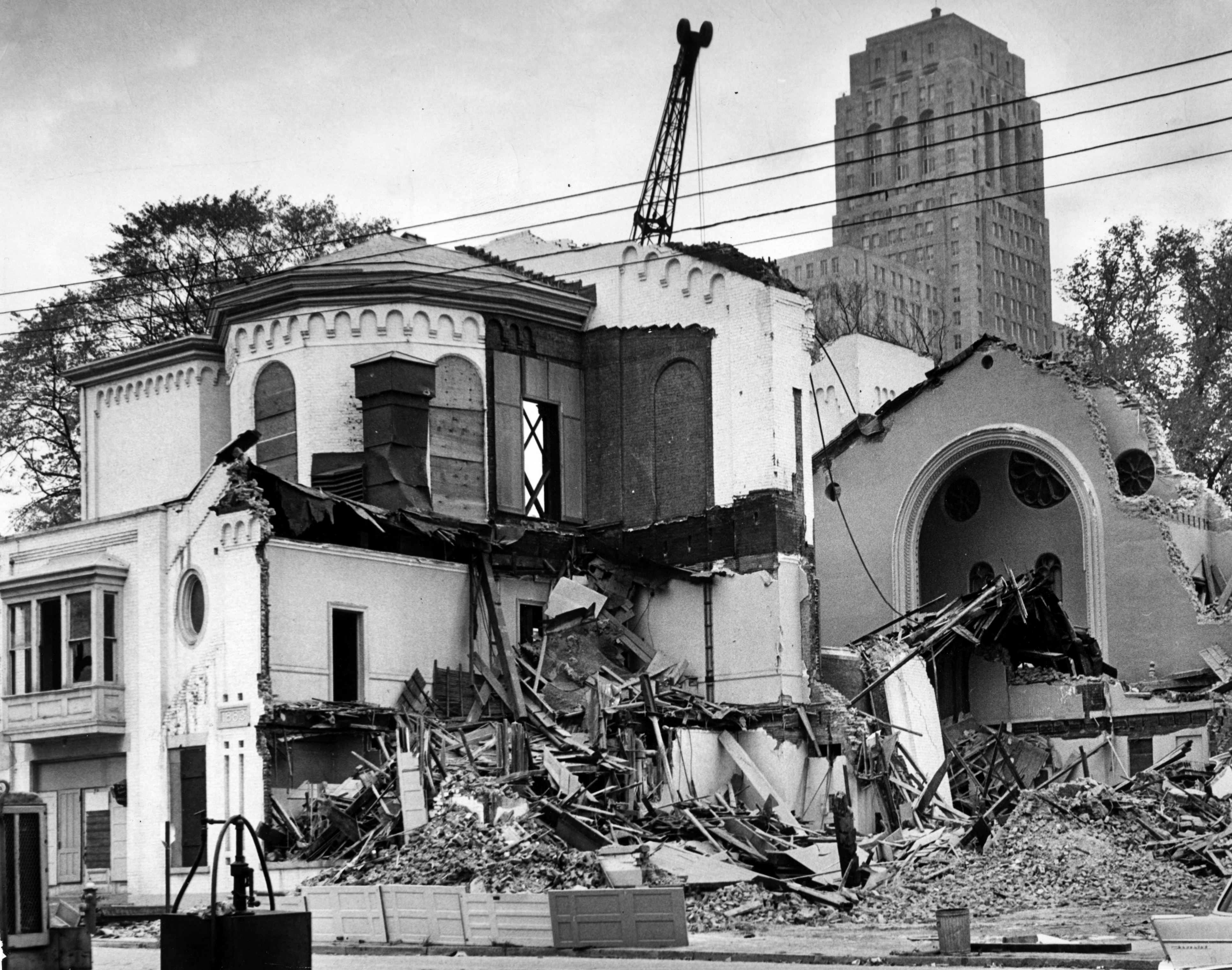
The final image of the Parish House (from the Times-Union archive), taken a few days later, shows the buildings during demolition, with the 1883 date again clearly displayed.

St. Paul's Episcopal Church is demolished to make way the South Mall Oct. 19, 1964, in Albany, N.Y. Historic buildings and streets 1960s, Empire State Plaza. (Times Union archive)

St. Paul’s Episcopal Church is demolished to make way the South Mall Oct. 19, 1964, in Albany, N.Y. Historic buildings and streets 1960s, Empire State Plaza. (Times Union archive)

The Lancaster Street Rectory

Church records no information about how housing was provided to St. Paul’s earliest rectors. Most of them seem to have rented or purchased houses in the neighborhood, although as late as 1869 J. Livingston Reese (rector from 1864 until 1891) was boarding at 67 Chapel Street, one third of a mile from the church. The first mention of plans for a rectory appears in our records in 1865, when the Sunday school donated $1,200 for purchase of the lot to the west of the church for that purpose from Miss Kate Wilson. This was an impressive amount of money, with an approximate current value of $18,000,  at a time when St. Paul’s had one of the largest Sunday Schools in the city, with almost 500 students and about 50 teachers. In 1867, funds for construction of the building were raised by a subscription and by the women of the parish.

There is some question about when the rectory was completed. Reese, Its first occupant, reported that he was first able to welcome guests there on New Year’s Day, 1870. But church historian Thomas H. C. Clemishire (whose father, John Clemishire was a carpentry contractor on the project) writes that contracts were let in June 1870. A January 1871 newspaper article says “A new rectory is already completed and occupied”, but adds information about what its dimensions and cost will be “when completed.” [Albany Evening Journal 28 Jan 1871] Perhaps it is best to say, as did Milton W. Hamilton in his 1977 history of the parish, that it “was built in 1870-71,” and that construction may have proceeded in stages.

Construction over a period of years would explain the building’s unusual design, which has been described as “post-Civil War eclectic, combining several stylistic trends of the period: French Second Empire, Venetian Gothic (arches with poly-chrome voussoirs), and maybe a bit of Italian Renaissance thrown in for good measure.”

The  rectory was “sixty feet in length by twenty-four feet in width, and three stories in height.” [Albany Evening Journal 28 Jan 1871].  The best photograph we have was probably taken about 1900. The rectory (80 Lancaster) is immediately to the right of the church. The house on the far right (82 Lancaster) was built in 1884 as the home of Anna Van Allen Jenison and her husband  E. Darwin Jenison, Vice President of the Commerce Insurance Company. Known as “the Swiss Chateau,” it was a wedding gift from Anna’s parents, Mr. and Mrs. Garrett A. Van Allen, who were long-time members of St. Paul’s.

St. Paul's Church and Rectory

St. Paul’s Church and Rectory

I have been able to locate only three additional photographs of the Lancaster Street rectory. Then next two are snapshots that were taken in 1946 during an insurance appraisal.

Rectory 1946 002 v001

St. Paul’s Lancaster Street Rectory, 1946

Rectory 1946 001 v001

St. Paul’s Lancaster Street Rectory, 1946

Sadly, the fourth photograph was also most likely the last, taken shortly before the church and rectory were demolished in October 1964 for construction of the South Mall.

St. Paul's Church and Rectory, 1963 or 1964 (photo credit: Times-Union Archive)

St. Paul’s Church and Rectory, 1963 or 1964 (photo credit: Times-Union Archive)

Much of the neighborhood was demolished by mid-1963, so this undated photo may have been taken during the winter of 1963 – 1964. The church stands out clearly in the foreground, because its reddish or buff-colored brickwork had been painted white in 1960.  The rectory still exists, but is difficult to see behind the bare trees.

William Ingraham Kip’s Leave of Absence

While St. Paul’s fourth rector, William Ingraham Kip, is certainly the best-known of our early clergy, his fame is principally due to his later service as the first missionary bishop — and subsequently first diocesan bishop — of California. But Kip deserves our respect and remembrance as well for his role in leading this congregation through an early financial crisis that we might not have survived.

Within months of Kip’s appointment as rector in 1838, it became apparent that the congregation was (in the words of a contemporary vestryman) “hopelessly wrecked.” Kip and a new group of lay leaders had no choice but to sell the Ferry Street church in order to pay creditors. It was their genius, however, to realize that if the church was to survive it could not stay in Albany’s South End. Under Kip, the Pearl Street Theater was purchased and renovated, relocating the congregation to what was then the center of Albany’s most upscale neighborhood. In that new location, with dynamic leadership, both ordained and lay, the congregation thrived.
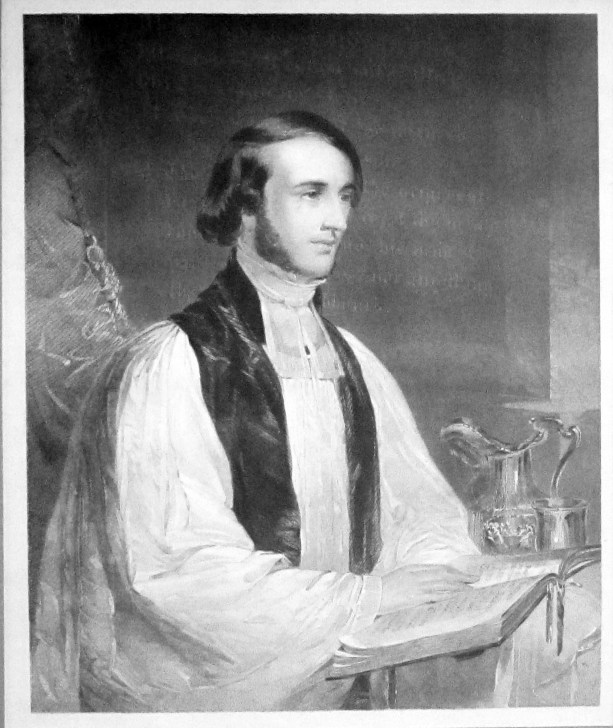
Wm. Ingraham Kip at St. Paul's altar (from an 1847 portrait by William Tolman Carlton)

Wm. Ingraham Kip at St. Paul’s altar (from an 1847 portrait by William Tolman Carlton)

The years that followed this new beginning were busy and stressful ones. While major creditors had been satisfied by the sale of the church, for several more years others submitted claims for payment. Kip led through this difficult period, attracting many new parishioners with his dynamic preaching. During the winter of 1842-1843, he also gave a series of lectures that were to be published as Double Witness of the Church, one of the most popular and influential books of theology in the Episcopal Church in the mid-19th century, printed in 25 editions.

All this activity must have taken its toll. At a special meeting on September 30, 1844, the vestry was read a letter from Kip, announcing (as summarized in the vestry minutes) “his intention of leaving the city for the winter on a Tour to Europe for the purpose of improving his health as he has been advised by his Physician and Friends.”

The suddenness of this announcement may have surprised the vestry, but illness among clergy in this period was common. St. Paul’s, in particular, had far too much experience with illness among its clergy. Our second rector, William Linn Keese, came to Albany already in frail health, which was further worsened by his providing pastoral care for both St. Paul’s and St. Peter’s Church during the cholera epidemic of 1832. He was forced to resign in 1833, his health completely broken, and died three years later, at the age of 33. Kip’s immediate predecessor, Joseph H. Price, on his resignation had cited “the severity of the climate of Albany.” And Kip’s successor, Thomas Alfred Starkey, was on medical leave for the last six months of his term as rector.

The vestry approved a leave of absence for Kip of no more than one year and appointed Vandervoort Bruce as interim rector. They closed their meeting by approving this statement:

Therefore it is unanimously resolved that the good wishes and earnest prayers of the Vestry for the safety and preservation of our much esteemed Rector and his family accompany them on their contemplated voyage to Europe, and their Tour on that continent, and that under the blessing of Divine Providence they may return in safety, and that with a renovated constitution he will again resume among his congregation the exercise of his holy functions.

Kip and his family left Albany on October 2, and on October 8, 1844 sailed from New York City to Paris. On November 12, Kip addressed a pastoral letter from Paris to his flock, signed by “your absent yet affectionate rector.”

Cover, Kip Pastoral Letters to the Congregation of St. Paul's Church (1845)

Cover, Kip Pastoral Letters to the Congregation of St. Paul’s Church (1845)

By January 9, 1845, Kip was in Rome, where he wrote a second pastoral letter. He seems to have spent the majority of his leave in Rome. Both letters were later published for distribution in Albany.

Kip took almost the entire year’s leave granted by the vestry. He returned to Albany in August 1845, and preached his first sermon on September 7, 1845. The leave of absence proved fruitful intellectually. Before the year was out, he had published Christmas Holydays in Rome, and he later wrote The Catacombs of Rome, which used research that he had done on the trip.

The Rt. Rev. William Ingraham Kip

The Rt. Rev. William Ingraham Kip

Kip’s leave of absence seem to have succeeded in restoring his health; he served the rest of his term in Albany in apparent good health, resigning in 1853 when he was elected missionary bishop to California.


St. Mark’s Chapel

During its first century, St. Paul’s Church supported three chapels in the city of Albany. They were all located in areas of the city that were underserved by other churches, and they were all “free,” meaning that they were supported by pledges, rather than by the sale and rental of pews, as was the case at St. Paul’s until 1927.

Today’s post concerns the last of these, St. Mark’s Chapel, which existed for five years, from 1909 until 1913. St. Marks was a project of St. Paul’s Chapter of the Brotherhood of St. Andrew (“For the spread of Christ’s Kingdom Among Men”), which was chartered November 17, 1891. The Brotherhood was a small organization (rarely more than a dozen men), headed by the rector and with membership drawn from prominent parishioners.

The Brotherhood’s report in St. Paul’s Year Book for 1908 describes the background of this effort, and the initial plans for its development under the heading “The Delaware Avenue Chapel.”

 Under the auspices of the Brotherhood of Saint Andrew of Saint Paul’s Parish, a chapel will be established in the Delaware avenue section of the city sometime during the month of December. This work will be in line with similar efforts made by the Parish in past years. Many of the parishioners will remember Saint Paul’s Free Chapel, on lower Madison avenue, which was located in a fire engine house purchased from the city in 1867, and the night school which was maintained to give instruction in the “three R’s” of elementary education. This chapel was maintained until 1884 when it was sold. Then the “Pine Hills” section of the city began to be built up and a Sunday School was established to meet the needs of that section. Out of this came a reading room on Ontario street and finally the building of the present Saint Andrew’s Church, which became an independent Parish in 1899.

The up-building of the Delaware avenue section offers the same opportunities as did Pine Hills, and the Brotherhood of Saint Andrew has long felt that something ought to be done to provide a Sunday School for the children, and this will be their first work, and just as soon as it is feasible services will be inaugurated. The history of the Parish guarantees the interest of Saint Paul’s in this work. “To help others is to help ourselves.”

St. Mark’s was formally opened in January 1909 by the Rt. Rev. Richard H. Nelson, D.D., Bishop Coadjutor of Albany. The building, a remodeled storehouse, was located on what is now called Oneida Terrace, just off of Morton Street and only a few blocks from Delaware Avenue. The mission seems to have been a success from the beginning. One month after opening, plans were made to provide additional seating. And a year later, with a Sunday School class of twenty to twenty-five and attendance of forty to fifty at the services conducted by St. Paul’s curate Arthur H. Beaty, there was discussion of moving to a larger building.

By the 1912 Year Book, the Brotherhood was able to report movement toward construction of a church building for the Mission:

The work of the Brotherhood during the past six months has been almost exclusively given to the work at St. Mark’s Chapel. About seventeen hundred dollars have been given or pledge for paying for two lots on Delaware avenue as a site for a new chapel, and we expect to raise the balance, one thousand dollars during the winter.

Included with this report are two architectural renderings for the new building, one of the crypt,

Design for St. Mark's Crypt

Design for St. Mark’s Crypt

and one an elevation view of the church itself.

St. Mark's Church Design

St. Mark’s Church Design

But the Chapel never resumed after its summer break in  1913. The lease on the former storehouse could not be extended, and, while the funds for purchase of the Delaware Avenue lots were in hand, the situation had changed. We read in the 1913 Year Book:

The school year closed May 26, 1913, with the expectation that when work was resumed in the fall, it would be in a chapel building of our own. Owing to the possibility of too many Churches being erected in the Delaware avenue section of the city and resulting in ‘religious competition,’ the erection of a building for St. Mark’s has been deferred, and the school for the Chapel is for the present merged with the Church School.

This entry marks the end of an important experiment in community outreach for St. Paul’s. Year Books over the next dozen years continue to show balances in the St. Mark’s Chapel Account, but with no indication of plans to proceed with the project. It is possible that St. Paul’s Church decided that the Trinity Institute (begun in 1912 in Albany’s South End, with Bishop Doane’s blessing and financial support from all the diocese’s congregations) would be a more effective vehicle for social programs.


T. Frederick H. Candlyn Anniversaries 1938 and 1940

This photograph has hung in the robing room for choir men for many years, but we were never sure of the occasion represented, or the names of those pictured, other than T. Frederick Candlyn (St. Paul’s organist and choirmaster 1915 — 1943), who is seated in the center.  Thanks to a scrapbook compiled by parishioner Grace McKinlay Kennedy in 1940, we now know that the photograph was published in the Knickerbocker News for April 22, 1938, with all explained.

1938 Choir Boy Reunion with T.F.H. Candlyn

1938 Choir Boy Reunion with T.F.H. Candlyn

The event was a reunion of former boy choristers, probably occasioned by  the 23rd anniversary of Candlyn’s arrival at St. Paul’s that month.  In addition to Candlyn, those pictured are:

  • Ted Bearup
  • Ed Newcomb
  • Charles Tremper
  • Marion Henry
  • Harold Henry
  • Herbert Devlin
  • James McCammon
  • James Shattuck
  • Harvey Sayles
  • Raymond S. Halse
  • Russell LaGrange
  • Charles Loftus
  • Edward Jackson
  • Laird Robinson

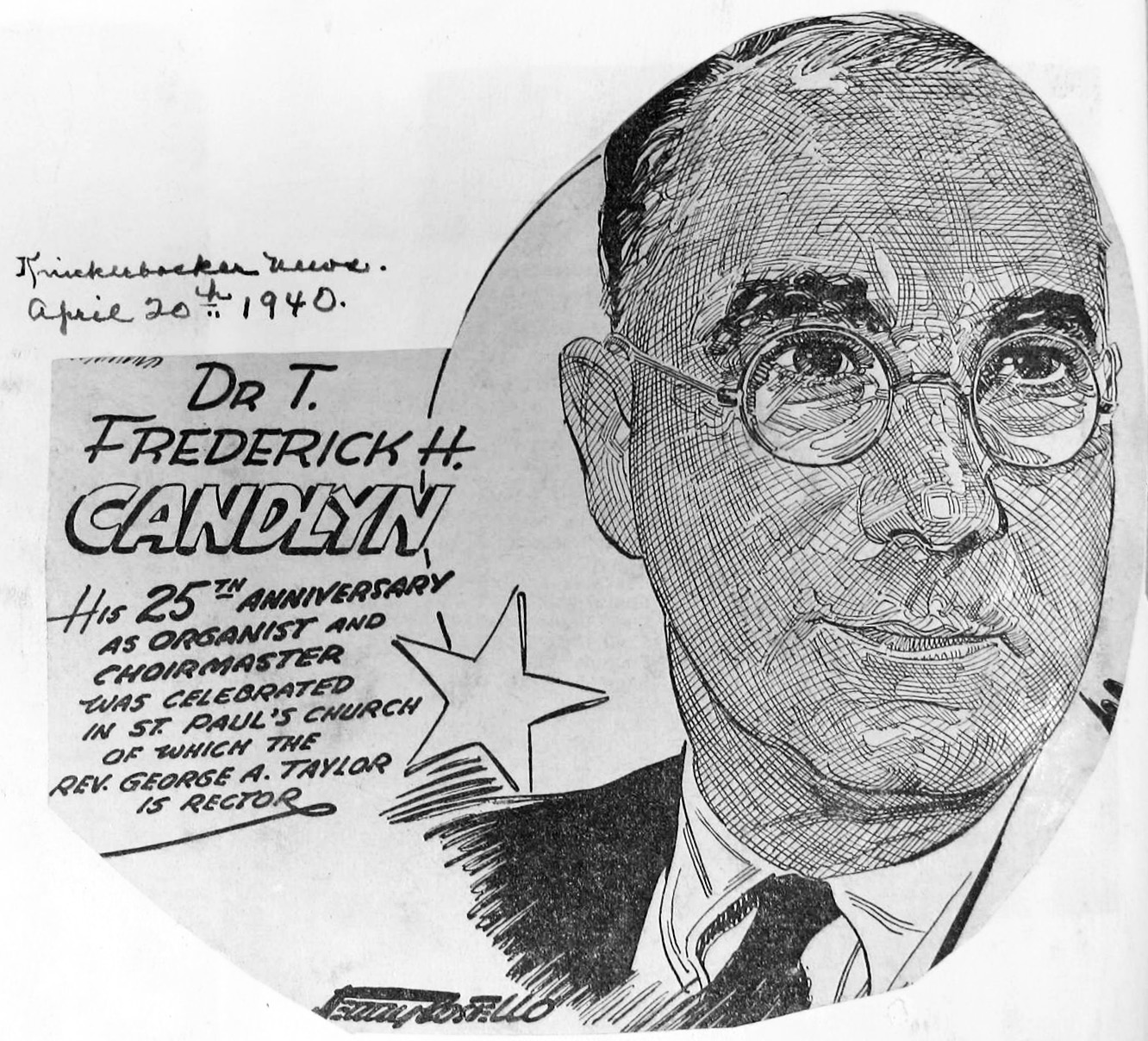
In the same scrapbook, Grace McKinlay Kennedy included this drawing of Candlyn, published in the Knickerbocker News April 20, 1940, on Candlyn’s 25th anniversary at St. Paul’s.

T.F.H. Candlyn 25th Anniversary at St. Paul's

T.F.H. Candlyn 25th Anniversary at St. Paul’s

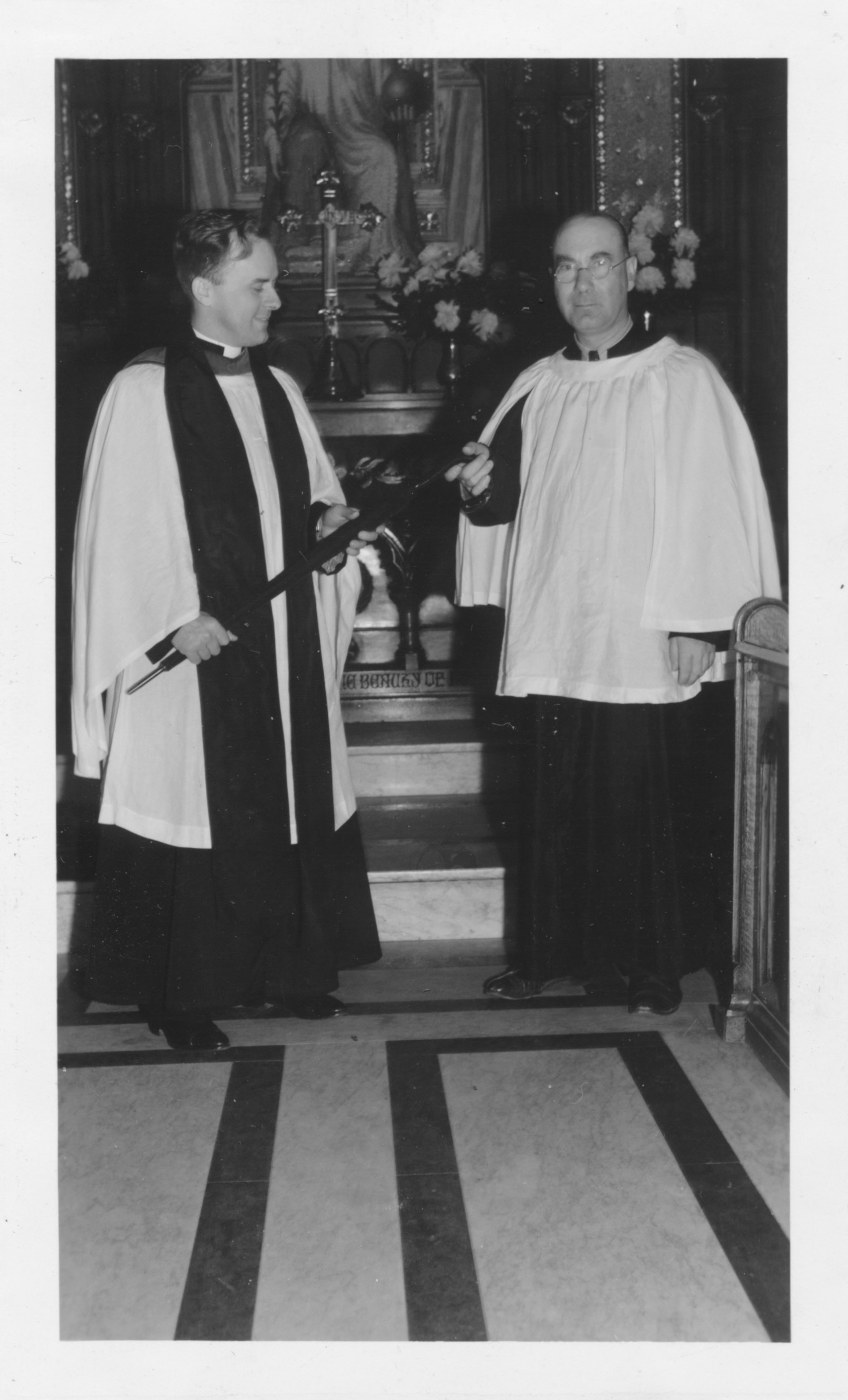
The scrapbook also explains a photograph of Candlyn that had puzzled us all. It shows Candlyn with George A. Taylor (St. Paul’s rector 1932 — 1948) standing in front of the chancel, with Taylor handing Candlyn what appears to be an umbrella.

Candlyn and George A Taylor, June 1940

Candlyn and George A Taylor, June 1940

This photograph, she tells us, is not from Candlyn’s 25th anniversary as organist and choirmaster. It was taken two months later, in June 1940, when Candlyn was honored for twenty-five years’ perfect attendance at Sunday School.


Thomas Gallaudet, “Apostle to the Deaf” at St. Paul’s

In The Proper for the Lesser Feasts and Fasts, today’s date, August 27, honors Thomas Gallaudet, known as the Apostle to the Deaf. Among saints so honored, he is the only one who was associated with St. Paul’s Church, and who sparked what has been called “one of the most peculiar and interesting agencies for good connected with St. Paul’s,” a ministry to the deaf that lasted for over one hundred years.

In the early nineteenth century there was no organized education for the deaf in the United States. In 1815, a Hartford, Connecticut businessman, seeking an education for his deaf daughter, paid Thomas Hopkins Gallaudet’s way to Europe to learn about advances there. When Gallaudet returned, he brought the source of what would become American Sign Language and French techniques for teaching the deaf and he was named principal of the Hartford School for the Deaf, the first school for the deaf in the United States.

But Thomas H. Gallaudet, for whom Gallaudet University is named, is not the person we remember today. It is, rather, his son, Thomas Gallaudet, an Episcopal clergyman who in 1852 established St. Anne’s Church to serve the deaf of New York City.

Thomas Gallaudet

Thomas Gallaudet

From that base Gallaudet reached out to other cities: first Philadelphia, then Baltimore, and, in 1860, Albany. Here, Gallaudet was welcomed by St. Paul’s new rector, William Rudder, who as an undergraduate in Hartford had known of the Deaf School.

Between 1860 and 1872, the Rev. Thomas Gallaudet or one of his associates traveled to Albany each month to conduct services for the deaf and to translate sermons at regular services into sign language. As this outreach expanded beyond the northeastern United States, Gallaudet formed the Church Mission for Deaf-Mutes, for which he served as General Manager for many years.

Albany Evening Journal 9 Mar 1861

Albany Evening Journal 9 Mar 1861

Preaching at St. Paul’s fiftieth anniversary in 1877, Gallaudet proudly described the Church Mission’s activities across the country, and reminisced about the years which St. Paul’s had extended a “helping and guarding hand” to the deaf of this part of the state.

As further support for the Church Mission, this congregation in 1872 called the Rev. Thomas Benjamin Berry as assistant to the rector and as priest-in-charge of St. Paul’s Mission Church on lower Madison Avenue.

Thomas Berry

Thomas Berry

Before his ordination, Berry had taught at schools for the deaf in England, New York and Maryland. Berry’s ministry at the Mission Chapel included monthly services and a Sunday School class for the deaf, and he also assisted Gallaudet in ministry throughout the state as an associate of the Church Mission.

Thomas Berry left St. Paul’s in 1874, continuing his work with the deaf in Wisconsin, South Dakota and central and western New York. But Berry’s departure was not the end of St. Paul’s ministry to the deaf. That ministry lasted until 1976, spanning more than half of the time that we have been a congregation.

Mrs. Hawley’s Legacy — the Deaconess and the Bishop

As the last of our posts about the legacy of Elizabeth Starr Hawley, we come to two more of her great-grandchildren, Gertrude Boucher Mosher, and Gouverneur Frank Mosher, younger siblings of J. Montgomery Mosher. They are unusual, because both brother and sister were ordained ministers of the church, and both served as missionaries. Gouverneur Frank is unique as the only person raised at St. Paul’s who became a bishop.

Gertrude Mosher was born in 1866; she was only 13 when her mother died, and 17 at her father’s death, when she assumed primary responsibilities for housekeeping and care of her two younger brothers. Gertrude was baptized at St. Paul’s in 1867 and confirmed here in 1881. “Gouv” was four years younger than Gertrude, and we are told that she was a parent figure to him. Gouv was also strongly influenced by his mother’s cousin, Sister Julia (born Julia Maria Janes, a granddaughter of Elizabeth Starr Hawley), a member of the Sisterhood of the Holy Child Jesus, who taught in St. Paul’s Sunday School.

Gouverneur attended school in Albany; after graduating from Union College, he decided to enter the ministry. Gertrude’s course through these years is harder to trace. We don’t know what schools she attended, but she must have been an enthusiastic reader. In 1888, she published a small pamphlet, “Spare Moments with Milton,” containing her favorite quotations from “Paradise Lost.”

"Spare Moments with Milton", Selected and Arranged by Gertrude B. Mosher

“Spare Moments with Milton”, Selected and
Arranged by Gertrude B. Mosher

In 1889, Gertrude sailed to Germany, “to continue her musical education.” She was in Germany until July 1891, when she returned to Albany. The next year, she was working as a governess.

Gouverneur, meanwhile, had entered Berkeley Divinity School, and while there decided that he was called to be a foreign missionary. Gertrude seems to have decided to join him, because she began study at the New York School for Deaconesses. In June 1896 Gouverneur was ordained a deacon, with the backing of St. Paul’s vestry. Later the same year, Gertrude was “set apart” as a deaconess.

On October 6, 1896, at a  service in the chapel of Church Missions House, in New York City, the congregation bade farewell to Gouverneur and Gertrude, “deacon and deaconess and brother and sister”. The next day they sailed for England, on their way to an assignment in China.

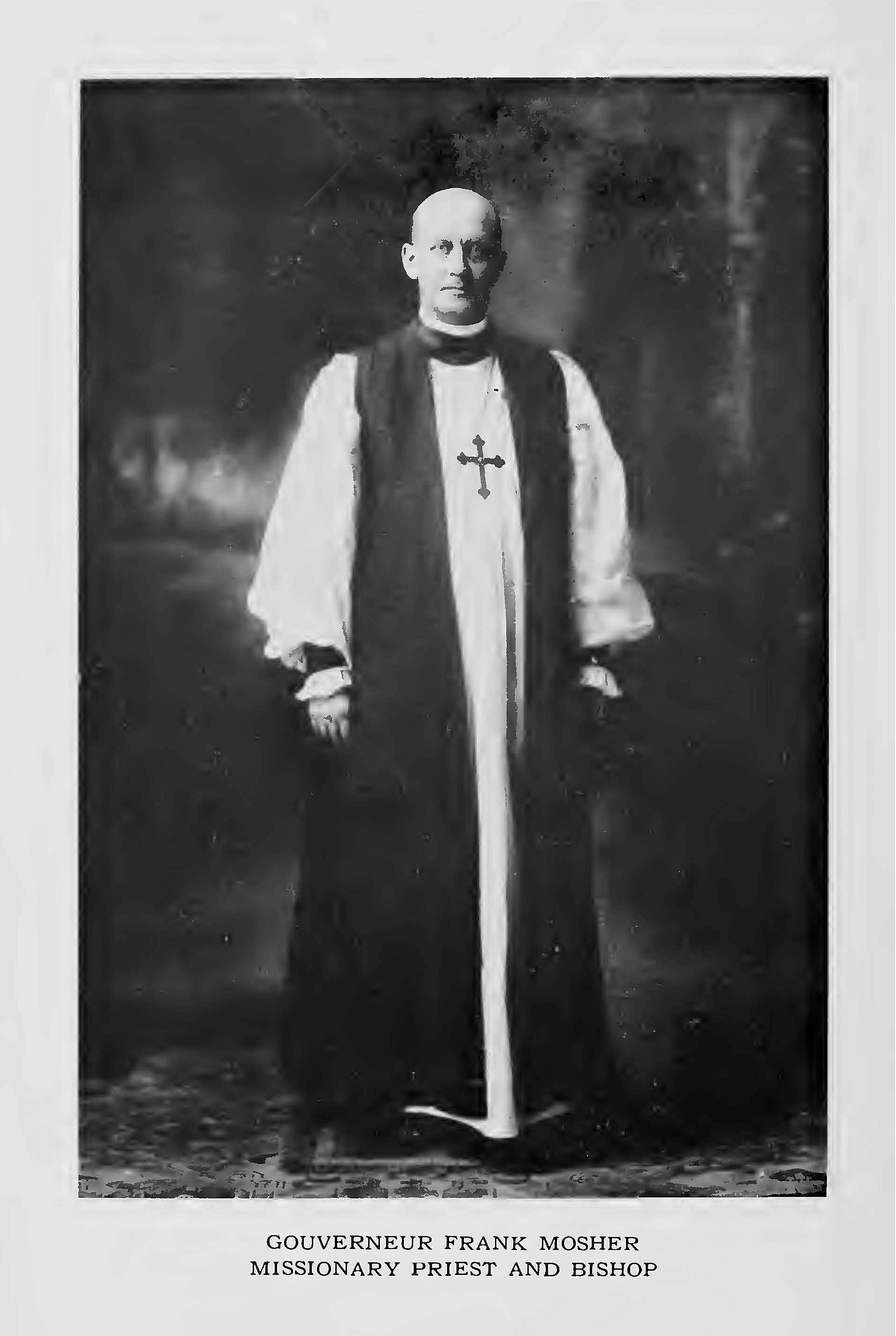
Gouverneur Frank Mosher

Gouverneur Frank Mosher

Gertrude worked in China from 1896 until 1900, when she returned to the United States and married the Rev. Franklin Knight in a ceremony conducted by St. Paul’s rector, William Prall. She and her husband had four children, and spent the rest of their lives in Massachusetts, Franklin’s home state. We have no further record of Gertrude’s activities, although it seems likely that she continued to contribute in other ways as well.

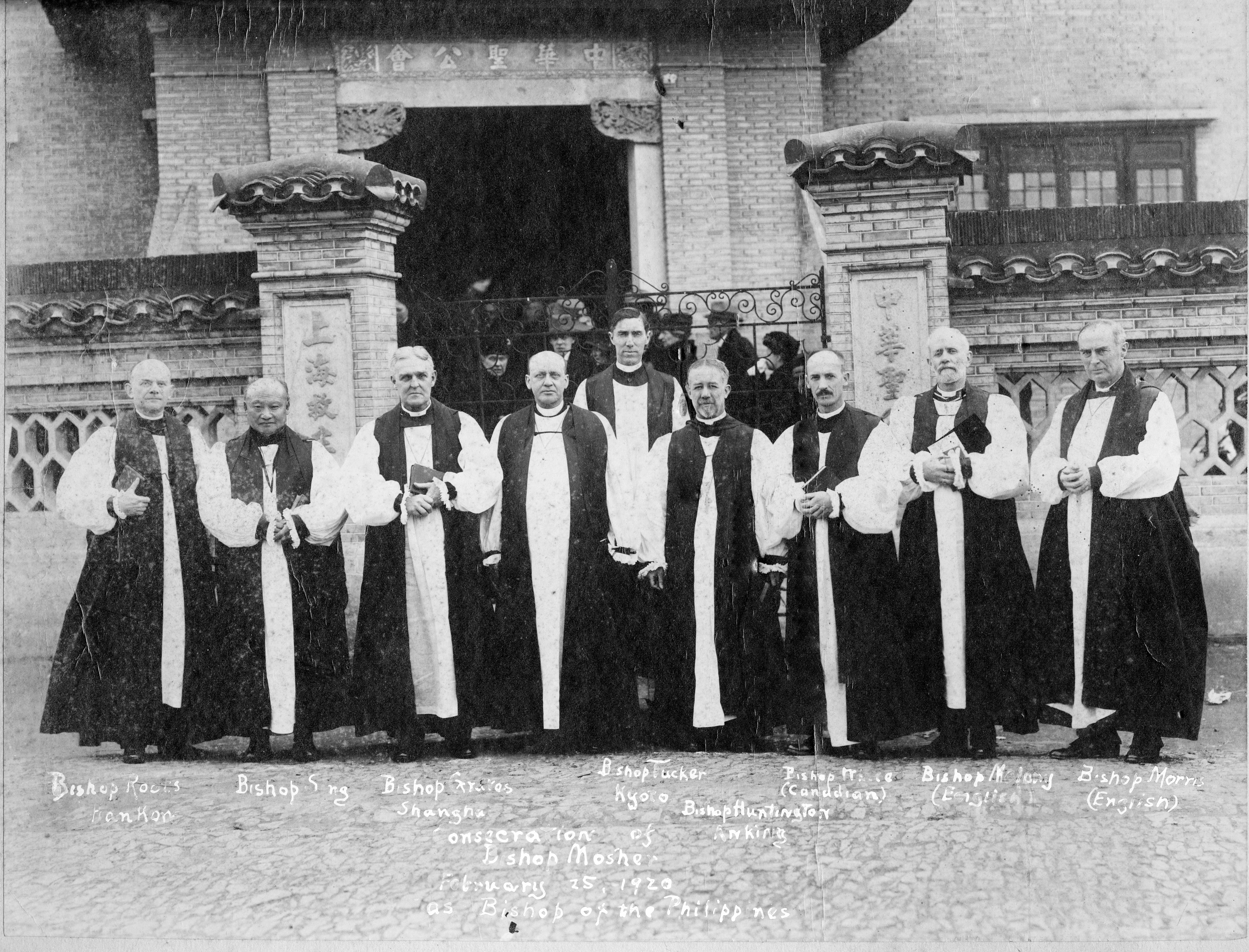
Gouverneur worked in China until 1919, when he was elect missionary bishop of the Philippines. He was consecrated in Shanghai on February 25, 1920.

Gouverneur Frank Mosher

Gouverneur Frank Mosher

The bishops who participated in Gouverneur Frank Mosher’s consecration as missionary bishop of the Philippines February 25, 1920 are listed below. Unless otherwise noted, they were bishops of the Episcopal Church in the United States. There is no record of a Church of England bishop named Morris in China, so we assume that the label on the man to the far right of the picture is an error.

Bishops at the consecration of Gouverneur Frank Mosher as Bishop of the Philippines

Bishops at the consecration of Gouverneur Frank Mosher as Bishop of the Philippines

Gouverneur Frank Mosher resigned as bishop in 1940 because of ill health,  and returned to the United States. He died in 1941.


Hackett Boulevard — The Lay of the Land

Approaching St. Paul’s Church on Hackett Boulevard, the building presents an impressive, but not particularly friendly, aspectHackett Blvd. building seen from west. Whether one is coming from the west


or from the east,churchonhill-190


the church rises fortress-like above the street, its massive walls showing no clear inviting entryway. IMG_8157

It is only when the driver turns into the parking lot from Samaritan Road that the  building opens, and the visitor is invited to enter. IMG_8191 v002

The building turns its back to the street; its entrance faces the buildings to its north, the buildings that originally composed the Episcopal diocese’s Good Samaritan Center: Child’s Hospital, Nelson House and St. Margaret’s Home. St. Paul’s, which it was hoped would become the chapel for these institutions, faces and invites those that it serves.

This explains the orientation of the building. but how did the church building come to be placed so high above the roadway? To answer this question, we first need to understand that in the mid-1950s the eastern section of Hackett Boulevard was unpaved, and reached only from Holland Avenue to what is now Samaritan Drive, where it angled northward to provide access to St. Margaret’s Home.

1953 topographic map of Albany's University Heights section (credit andyarthur.org)

1953 topographic map of Albany’s University Heights section (credit andyarthur.org)

A 1953 USGS topographic map of this area (provided by Andy Arthur, with a blue oval enclosing the area) shows this road stub clearly, as it follows the bed of a small creek and then bends north toward St. Margaret’s Home. The creek flowed through quite a deep ravine along its entire length, with another, deeper gully (parts of it colored green to indicate that they were wooded) branching off to the north just east of St. Margaret’s Home.

It was only in 1959, as part of a larger plan to develop the University Heights section of the city, that Hackett Boulevard was extended from Holland Avenue to Academy Road.

Knickerbocker News 16 July 1959

Knickerbocker News 16 July 1959

This photograph, taken early in the project, shows how drastically the landscape had to be changed to create Hackett Boulevard as we know it now.


But how can we visualize where St. Paul’s was placed, what the landscape looked like before construction began, and why the church now stands so high above the roadway? By cartographic magic, Andy Arthur has laid the 1953 topographic map over a 2014 aerial photograph.

1953 topographic map with 2014 aerial photograph underlay (Credit andyarthur.org)

1953 topographic map with 2014 aerial photograph underlay (Credit andyarthur.org)

Hackett Boulevard was paved and extended to follow the line of the creekbed, at the bottom of the ravine; the northward bend to St. Margaret’s is now Samaritan Road, extended to serve the entire Good Samaritan Center. St. Paul’s (indicated in a blue circle) was not built on an artificially-built platform , but on the only level spot available at the entrance of the Good Samaritan Center, placed high above the creek, now flowing underground. This is the geography that produces the imposing view our visitors now see.

While much of the original terrain has been leveled and smoothed, one feature remains little altered: the deeper, wooded gully lying to the west of Child’s Hospital and St. Margaret’s Home (now Albany Medical Center South Clinical Campus and St. Margaret’s Center).  Paul Grondahl in his Mayor Corning: Albany Icon, Albany Enigma (Albany: Washington Park Press, 1997, page 473)  tells us  that  the mayor arranged that much of the otherwise unusable clay and soil excavated for the South Mall (now the Governor Nelson A. Rockefeller Empire State Plaza) was used to fill parts of the gully during an expansion of Child’s Hospital. “Child’s Hospital happened to be operated by the Episcopal diocese; the mayor’s wife was a board member and the Corning family was a longtime major donor of the hospital.”


Mrs. Hawley’s Legacy — J. Montgomery Mosher

In our account of the legacy of Elizabeth Maria Starr Hawley, we come now to her great-grandson, J. Montgomery Mosher.

J. Montgomery Mosher

J. Montgomery Mosher

Jesse Montgomery Mosher was born 12 Oct 1864, the son of Jacob Simmons Mosher and Emma Starr Montgomery Mosher, and named for his maternal grandfather. The Moshers were from Coeymans; Jacob and two of his brothers, Cornelius Duel Mosher and Francis Gillette Mosher, were all doctors. Cornelius’s daughter (and little Montie’s childhood playmate) Clelia Duel Mosher, also became a physician, and as a professor of medicine at Stanford was an influential advocate for women’s health.

Mosher spent a peripatetic early childhood with frequent moves caused by his father’s career. Both of his parents died when he was in his teens: his mother in 1879 (when he was 15) and his father in 1883 (when he was 19), leaving the family in “straitened circumstances,” and with much of the parenting of younger siblings devolving on his younger sister, Gertrude.

Jesse Montgomery Mosher was baptized at St. Paul’s 19 Nov 1865, and confirmed here on Easter 1882. He attended Albany Academy, and graduated from Union College in 1886 and from Albany Medical School in 1889. During summers while in medical school, he worked in the pharmacy of a mental hospital. Mosher wrote his thesis on a psychiatric topic and upon graduation worked in mental hospitals until 1895; he took a European tour that year to update his training in other medical specialties, returning to Albany in June 1896.

While conducting a private practice, Mosher also edited the Albany Medical Annals. He was named an instructor in neurology in the Albany Medical College in 1896 and began clinical teaching at Albany Hospital in 1898. During this period, he conceived a novel idea for improvement in the care of the mentally ill:

“This idea was: that it having been definitely established that insanity was not merely an aberration of the mind, but rather a symptom of disease of the brain, whether functional, toxic or organic; therefore, these unfortunate victims of disease should be so considered and so treated. They should be sent neither to the “Poor House,” as was the custom in Albany in those days, nor to an Insane Asylum, which was so overcrowded and its medical staff so small that the individual patient could receive but little personal attention and treatment; but rather to a well-equipped, general hospital, where they could obtain treatment by the most modern methods.” [Albany Medical Annals, Volume XLIII, Number 1 (January 1922), page 526]

Mosher had to fight many years for a psychiatric ward in the hospital, facing opposition from physicians, administrators, and politicians. He succeeded in 1901, with the establishment of Albany Hospital’s Pavilion F, the first psychiatric ward placed within a general hospital in the world. It was to become a model for psychiatric wards in other cities in the United States, and later around the globe.

J. Montgomery Mosher

J. Montgomery Mosher

Like his father, J. Montgomery Mosher was elected a vestryman at St. Paul’s, and served from 1906 until his death in 1922. St. Paul’s Year Book for that year contains an unusually warm tribute to Mosher, praising both his professional dedication and his commitment to community organizations, including St. Paul’s, which his great-grandmother had joined more than ninety years earlier.

In Memoriam J. Montgomery Mosher, from 1922 St. Paul's Year Book

In Memoriam J. Montgomery Mosher, from 1922 St. Paul’s Year Book

We have now reached the fourth generation of the legacy of our Mrs. Betsy Hawley. The next post will primarily concern J. Montgomery Mosher’s younger siblings, Gertrude Mosher Knight and  Gouverneur Frank Mosher, with an appearance by another of Betsy’s descendants.

George William Warren at St. Paul’s — Part 1, 1848-1851

As we have seen, George William Warren resigned as organist and choirmaster of St. Peter’s Church in October 1848. We know that he was to spend most of the period until August 1860 at St. Paul’s Church, Albany. But when did Warren first come to St. Paul’s Church?

George William Warren

George William Warren

Warren’s obituary in the New York Times (17 Mar 1902) specifically says that he came to St. Paul’s in 1848. And Warren himself implies that year as well in an 1856 classified advertisement (Albany Evening Journal 7 Apr 1856); in which he identifies himself as “Organist and Musical Director at St. Paul’s Church (for eight years).” Articles in Dwight’s Journal (15 Nov 1856) and Albany Morning Express (30 May 1857) confirm that as of October 1856 Warren had been at St. Paul’s for eight years.

Additionally, Warren twice wrote that when he left Albany in 1860 he had been at St. Paul’s since 1848: “nearly thirteen years” according to his letter of resignation to the St. Paul’s vestry (“nearly” because of his ten months at Second Presbyterian), and precisely “thirteen years”  (writing as “Jem Bags” in Dwight’s Journal 1 Dec 1860).

St. Paul’s vestry minutes are silent on musical activities in this period, and we may never know the precise date or month in which he started. The first evidence comes almost a year later, when we read that “George W. Warren Organist of St. Paul’s Church” is offering piano and organ lessons (Albany Evening Journal, four insertions in mid-August 1849). Warren also advertised his music lessons the next year, describing himself as “Organist and Director of Music of St. Paul’s Church.” (Albany Evening Journal, 2 Sep 1850)

George William Warren must have begun composing early in the period. We have two compositions specifically mentioning performance at St. Paul’s. The first is “Rock of Ages,” which Warren (in his Hymns and Tunes as Sung at St. Thomas’s Church, New York (New York: Harper & Brothers, 1889) dates to 1849. It was first published in 1851, dedicated to St. Paul’s rector, William Ingraham Kip, and with the notation “as sung in St. Paul’s Church Albany by Mrs. Eastcott, Mrs. Gourley, Mr. Squires and Mr. Whitney in 1850.”

Rock of Ages by George William Warren

Rock of Ages by George William Warren

We also have Warren’s composition “Come Holy Spirit,” first published in 1850 with the notation “as sung by the choir of St. Paul’s Church (Albany)”.

Come Holy Spirit, by George William Warren

Come Holy Spirit, by George William Warren

And finally, we have Warren’s “Love’s Twilight Star,” published in 1849. While this is a secular work, it is dedicated to the popular Albany soprano Miss Electa Cone, who received payment (probably as soprano soloist) from St. Paul’s in 1850.

Love's Twilight Star, by George William Warren

Love’s Twilight Star, by George William Warren

In addition to proving that Warren was at St. Paul’s in 1849, “Rock of Ages” is important for giving us the first list of the St. Paul’s choir. At this time, and into the early twentieth century, St. Paul’s had a quartet choir, composed of four paid soloists. Most of Warren’s early compositions were written for such a group. The names of the choir members are also of interest. Mrs. Gourlay and Mr. Whitney were local talent. Margaret Campbell Gourlay was an Albany voice teacher, a member of St. Peter’s Church and a member of St. Peter’s choir with Warren in 1847. We will meet her talented son Willie as member of the boy choir that Warren formed in 1855. Stephen W. Whitney was a local businessman with a long  career as a church and concert soloist. The stars were Lucy Grant Eastcott and Henry Squires. Both were recent arrivals in Albany (in 1850, the Albany Evening Journal  praised St. Paul’s hiring of Lucy as a sign of “stirring up of the dry bones” ), and both were to leave the city within two years. They went on to distinguished opera careers in the United States, Europe and Australia, about which we will have much to say in a future post.

In April and May 1852, George William Warren advertised in the Albany Evening Journal for “a soprano and tenor, to fill vacancies in the choir of St. Paul’s Church.” Lucy Eastcott (who would soon begin styling herself Madame Escott) had already left the city; Henry Squires would leave by that October, bringing this first chapter of Warren’s years at St. Paul’s Church to a close. We will pick up the story in a later post, beginning with the events of autumn 1852 and continuing through 1856.