Category Archives: Hackett Blvd Building

“Te Deum laudamus”: The Nelson F. Parke Memorial Window

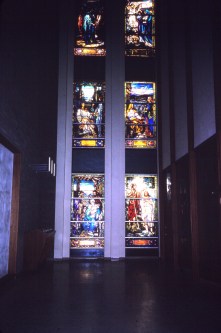
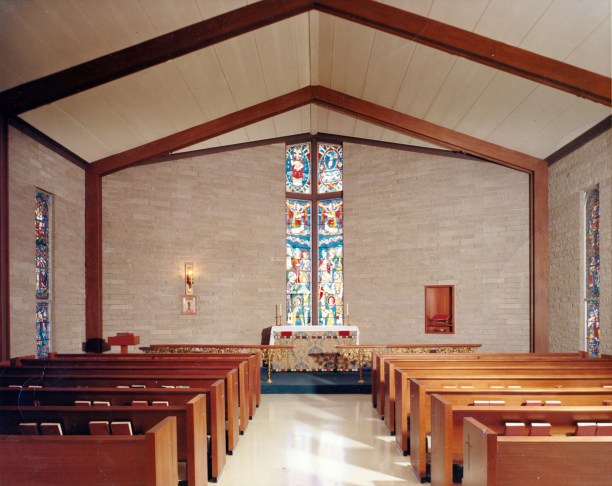
Te Deum laudamus, St. Paul's Chapel

Te Deum laudamus, St. Paul’s Chapel

Last month marked the fiftieth anniversary of the first Holy Communion service in the chapel on Hackett Boulevard. The chapel was designed to replicate a 1940s-era memorial chapel in the Lancaster Street church building, using the older building’s memorial windows and furniture. The new chapel even uses the communion rail from the main Lancaster Street chancel.

Chapel, Hackett Boulevard

Chapel, Hackett Boulevard

Only one new window was created for the new Hackett Boulevard chapel: the window named “Te Deum laudamus” behind the altar. It takes its name from the early Christian hymn of that name, and its donor describes it thus, mirroring the text of the hymn: “The group of figures includes saints, apostles, prophets, martyrs, and figures representing the Holy Church throughout all the world, all praising God.” The donor was William Starr McEwan, St. Paul’s vestryman, treasurer of the Hackett Boulevard building fund, and the McEwan for whom our parish hall is named. McEwan gave the window in memory of the Reverend Nelson Fremont Parke, St. Paul’s rector from July 1959 until his death in November 1962.
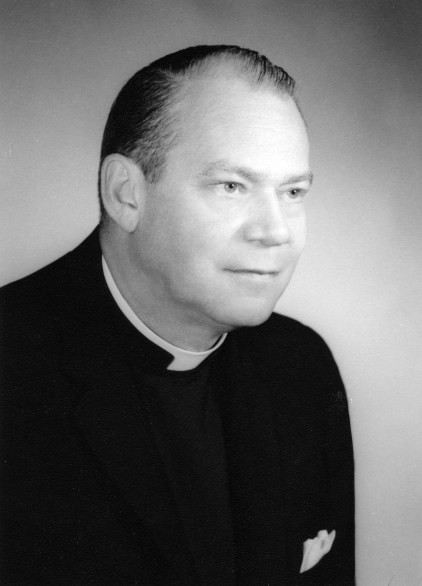
Nelson F. Parke (image courtesy Mrs. Nancy Grayson Knapp)

Nelson F. Parke (image courtesy Mrs. Nancy Grayson Knapp)

While Nelson Parke was rector here for only a little more than three years, his influence will long be felt, because it was his enthusiasm and leadership that held St. Paul’s family together in a difficult period, and and it was his powers of persuasion that convinced the State that St. Paul’s Lancaster Street building was of particular value.

St. Paul’s was not a strong parish in 1959. Changes in the neighborhood and flight to the suburbs had reduced the size of the congregation and its income, and since 1954 they had been unable to support a rector. Just a year before, the outlook was so grim that Bishop Frederick L. Barry advised the vestry that calling a new rector was “unthinkable,” and suggesting a choice between merging with another parish, or continuing as before, with a priest-in-charge, while considering other options.

Bishop Frederick L. Barry

Bishop Frederick L. Barry

Father Parke supervises painting [Times Union 9 Jul 1960]

Father Parke supervises painting [Times Union 9 Jul 1960]

The vestry chose to call Father Parke. Nelson Parke brought energy to St. Paul’s. In 1960, they painted the buff brick of the church façade white, with gray trim, in an effort to brighten the down-at-the-heels neighborhood.

In January 1962, the Temporary State Commission for the Capital City, which was planning urban renewal for the Capital District recommended that “the focus of state government be returned to downtown Albany.” Two months later, on March 27, 1962 they announced that the State would take 98.5 acres of downtown Albany by eminent domain for the South Mall. St. Paul’s Church was in the middle of this “take area.”
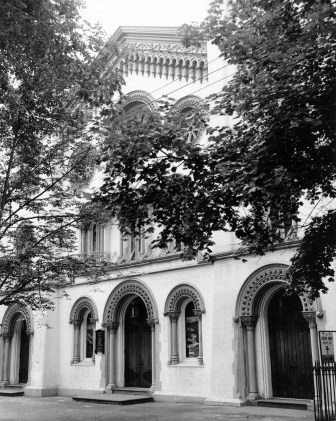
St. Paul's, freshly painted, about 1962

St. Paul’s, freshly painted, about 1962

In early comments on the situation, Father Parke suggested that St. Paul’s might be spared. On two occasions in early spring 1962, he quoted the Commission’s chairman, Lt. Governor Malcolm Wilson, as saying that there was a possibility the church would be allowed to remain. Leaning on this slender hope (Wilson never publicly made such a statement), Parke pushed for the concept of St. Paul’s remaining in the South Mall. In a May 15 letter to Lt. Governor Wilson he wrote, “We can envisage this white church, appropriately floodlighted, surrounded by lawns and gardens looming large in the middle of the Complex, as a spiritual and aesthetic center in the midst of the new State Buildings.” Parke also encouraged the congregation to “work to keep up our property, maintain it to the best of our ability and press forward in our ministry to those who will find a spiritual home in old St. Paul’s.” Parke closed this letter with another argument, this one more light-hearted:

“We notice that the excellent Telephone Company is to be left in the Mall area. May we suggest, perhaps not too seriously, that if this admirable institution which provides for the communication of man to man is left – St. Paul’s might well be left to provide a system whereby man might communicate with his maker.”

Through the summer of 1962, the congregation waited hopefully for a response from the State. As Parke suggested, they continued to maintain and improve the building, including a major renovation to the church kitchen.
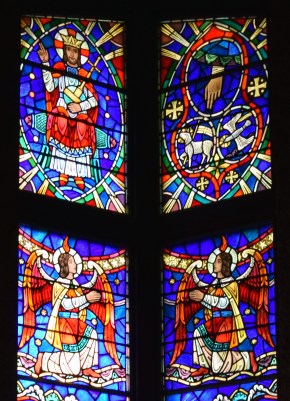
Te Deum laudamus: Christ the King and the Trinity

Te Deum laudamus: Christ the King and the Trinity

The State’s response was to come in a September 12 meeting with William F. Meyers, Assistant Commissioner of Housing. As related in a September 8, 1962 Knickerbocker News article, “Mr. Mayers [sic] said the talks would be merely fact-finding discussions to sound out the feelings of the two congregations. He said that at this point, as far as he knew, all buildings in the South Mall area were slated for demolition but, he added: ‘We will have a better insight into what may happen when the planners complete their work.’” In the same article, Father Parke continued to express hope for St. Paul’s Church-in-the-Green concept, suggesting that “its Romanesque architecture might ‘lend color, among the modern buildings in the South Mall.’”

But at the September 12 meeting, Meyers shut down all of St. Paul’s hopes for staying in the Lancaster Street building, and all but closed off the possibility of relocation within the South Mall area. As Parke summarized the meeting, Meyers

“told us quite bluntly that plans for the South Mall in the block bounded by Lancaster, Hawk, Jay, and Swan Streets were such that the continued existence of the Church at its present location was entirely impossible, that the demolition of the Church was inevitable, that we would have only three years in our edifice before it was torn down, and that the possibility of our being able to relocated in the South Mall area was extremely remote.”

The plans to which Meyers referred may be the placement of the Central Air Conditioning Plant and Main Transformer Vault between Chestnut and Jay streets, an area that included the church site. Once the planners made that decision, there was no hope for St. Paul’s to remain on Lancaster Street.

Te Deum Laudamus: Moses, Saints. Stephen, Peter, Paul, Catherine of Alexandria and Isaiah

Te Deum Laudamus: Moses, Saints. Stephen, Peter, Paul, Catherine of Alexandria and Isaiah

By early the next week, internal memos in the governor’s office show the level of anger and frustration from St. Paul’s warden and vestry. Governor Rockefeller’s administrative assistant suggested that Parke write directly to the governor. But that same week, within a few days after the meeting, Father Parke fell ill with pneumonia and was hospitalized at Saratoga Hospital. This fact was known by the Governor’s administrative assistant, who wrote in a memo to Lt. Governor Wilson that “Mr. Parke has been hospitalized recently but is now apparently picking up the cudgels again.”

Te Deum Laudamus: Augustine of Canterbury, Joan of Arc, Saint Chrysostom and Saint George

Te Deum Laudamus: Augustine of Canterbury, Joan of Arc, Saint Chrysostom and Saint George

On September 27, St. Paul’s church secretary, Nancy Knapp, was driven to Saratoga to take dictation from Father Parke. In his letter to Governor Rockefeller, Parke wrote:

“This then, Governor Rockefeller, is a prayerful plea to you that our Church be saved from demolition. We ask it because of its historic value as a building which will be 100 years old on next November 2 – because of its great beauty, particularly in more than 20 stained glass windows, not capable of replacement and not exceeded in magnificence in Albany – because we can offer a place of rest, meditation, and prayer to the thousands of State Workers of all denominations in the Mall (as Trinity Church does to those employed in the Wall Street Area) – and because, most importantly, with the passing of the Greek Orthodox and First Methodist Churches, ours then would be in the 98 acres of the South Mall the only House of God.”

That same evening, St. Paul’s vestry met in a special session, with Bishop Allen W. Brown as a guest. There were only two items on the agenda: arranging for substitute clergy during Mr. Parke’s absence, and determining a site for relocating St. Paul’s. At the conclusion of the meeting, “[t]he Vestry voted to go on record as in expression [sic] our intent of joining with the diocese in the purchase of the 4 acre site adjacent to the Good Samaritan Center for the purpose of construction and relocation of a new church for St. Paul’s Parish.”

It is apparent that Nelson Parke wanted to return to work. In an October 2 letter to the parish “from the rector’s temporary study (at Saratoga Hospital)” he wrote:

“My doctor has advised that I am coming along nicely with only rest stipulated before I am allowed to get back into harness. It is my understanding that our Wardens, Mr. Eckel and Mr. Foskett, have joined with my doctor to enforce this stipulation by having made arrangements for substitute priests for the next few weeks. This leaves me no choice.”

In this letter, Parke gives a summary of the September 12 meeting, and the vestry’s decision (with his full approval) to join the diocese in taking an option on the Hackett Boulevard property. As always, he expresses full confidence in St. Paul’s ability to thrive in this new location.

Te Deum laudamus: Mary and St. John

Te Deum laudamus: Mary and St. John

The letter was to be one the last acts by Father Parke as rector. On October 17, 1962, Bishop Brown announced that Parke would take a leave of absence until January 1, 1963. Nelson Parke and wife went to Florida, where he maintained at least weekly contact with the church, eager to return. But on November 9 he died of a heart attack. His funeral was held at St. Paul’s on November 15, 1962.

Father Nelson Parke played a particularly important role in his brief period at St. Paul’s, by invigorating a parish at its low ebb, by maintaining the congregation’s positive spirit in the face of the State’s plan to demolish our building, and by eloquently arguing for the importance of our presence in the the South Mall area. When the Lancaster Street building was demolished in 1964, the parish was far stronger than it would have been without him. And his advocacy for the building’s architectural and artistic merits resulted in a reimbursement from the State far higher than any other church in the South Mall area. The Te Deum window is an appropriate memorial to this good man.

Te Deum laudamus, St. Paul's Chapel

Te Deum laudamus, St. Paul’s Chapel

“Lest We Forget”

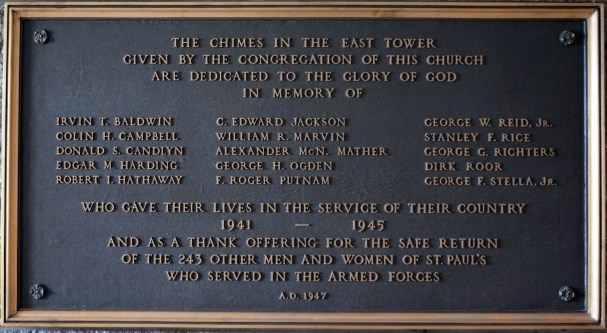
On June 8, 1947, St. Paul’s rector, George A. Taylor, dedicated a set of electronic chimes given by the congregation in honor of those from the parish who had died in military service during World War II.

Memorial plaque for World War II Dead

Memorial plaque for World War II Dead

The chimes, paid for by a special subscription from the congregation, had first been heard on Christmas Eve the previous year, when the organist, Raymond S. Halse, played carols before the service.

At the June dedication service, St. Paul’s choir sang Reginald De Koven’s setting of Kipling’s “Recessional.” Father Taylor took the title of his sermon from the the poem’s stirring line, repeated at the end of each of the first three stanzas: “Lest we forget!”

New York Times 6 Mar 1945

New York Times 6 Mar 1945

Among those listed is Donald Shore Candlyn, who was born in Albany in 1925 and graduated cum laude from the Albany Academy in 1943. He died 26 Dec 1944 in Luxembourg, during the Battle of the Bulge. The monument shown below is in the Memorial Grove in Van Cortlandt Park, the Bronx.

Donald Shore Candlyn memorial, Van Cortlandt Park, the Bronx

Donald Shore Candlyn memorial, Van Cortlandt Park, the Bronx

Candlyn’s parents. T. Frederick H. Candlyn and Dorothy Ridgway Candlyn, had moved to New York City in 1943 when his father, who had been the organist and choirmaster of St. Paul’s Church from 1915 until 1943, was named to the same position at St. Thomas Church, Manhattan.

As related in a November 12, 1945 New York Times article, “Sgt. Donald S. Candlyn was killed by a sniper’s bullet on Dec. 26, 1944 while on a mission above and beyond the call of duty. With the Germans on the offensive at the time, American communications had broken down and Sergeant Candlyn, in the face of heavy fire, had volunteered as a foot runner to obtain orders.” Candlyn was posthumously awarded the Silver Star and Purple Heart.

In a will signed just before leaving for war, Donald Candlyn made several bequests. We know that one provision was for his father’s new church: in April 1948 a  new principal four-foot stop on the St. Thomas organ was dedicated in his memory. But the 19-year-old also left a bequest to St. Paul’s Church. In our chapel is a window that was a gift of Donald Shore Candlyn.

Donald Shore Candlyn window, St. Paul's Chapel

Donald Shore Candlyn window, St. Paul’s Chapel
Detail, Donald Shore Candlyn window, St. Paul's Chapel

Detail, Donald Shore Candlyn window, St. Paul’s Chapel
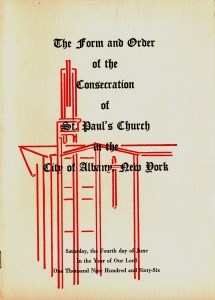
June 1966 — Consecration of “The New Modernistic St. Paul’s”

Consecration Bulletin 4 Jun 1966

Consecration Bulletin 4 Jun 1966

In posts over the past eighteen months, we’ve noted the progress in the construction of St. Paul’s new home on Hackett Boulevard, beginning with the groundbreaking in July 1964, following the stages of construction through 1965 and early 1966, and most recently the consecration of the high altar and the laying of the cornerstone. Today we celebrate the fiftieth anniversary of the building’s consecration on June 4, 1966.IMG_0012 v001

The preacher that day was Darwin Kirby, Jr., rector of St. George’s Church in Schenectady. Thanks to a Times-Union article describing the consecration of “the new modernistic St. Paul’s Church at 21 Hackett Boulevard,” we know some of the words he spoke that day, words that still resound half a century later. Kirby described the church as “the Bethel of Albany, its House of God, a meeting place of heaven and earth, Jacob’s ladder pitched there in Hackett Boulevard, in the midst of a great swirl of traffic and the hurrying life of a great capital.”

The Times-Union article continued:

Father Kirby paid tribute to the “vision and vigilance” of the people of St. Paul’s, saying “You and your distinguished rector are to be congratulated on what you have achieved.”

The new edifice replaces the former church in the South Mall.

Father Kirby warned that “splendidly-cared-for church buildings by themselves are not enough; that from the day of Pentecost until the day of Constantine, the Church owned not a single building it could call its own.Yet, he went on, “the church outlived, outfought and outdied a hostile, pagan Roman Empire.”

Presiding at the ceremony was Allen W. Brown, Bishop of the Diocese of Albany, with Suffragan Bishop Charles B. Persell, Jr. The Master of Ceremonies was Thomas T. Parke, curate of St. George’s Church, Schenectady and son of Nelson F. Parke, St. Paul’s rector from 1959 until 1962. Here we see Bishop Brown and the servers as the procession formed. The processional hmyns were Austria (“Glorious things of Thee are spoken,” and Regent Square (“Christ is made the sure foundation.”)

IMG_0001 v005

Following the prayer of consecration, Bishop Brown made a circuit of the church, praying at the font, the crossing, the midst, the pulpit, the crossing again, and the sanctuary. In the next photographs, we see the bishop at two of these stations.

The first photo shows Bishop Brown, with Father Parke holding the service book. In the background is St. Paul’s rector, J. Raymond McWilliam; the server with his back to the camera is Peter Eells.

Bishop Brown, with Father Thomas T. Parke 4 Jun 1966

Bishop Brown, with Father Thomas T. Parke 4 Jun 1966

The second photo shows Bishop Brown and Father Parke, with the same two servers.

Bishop Brown, with Father Thomas T. Parke 4 Jun 1966

Bishop Brown, with Father Thomas T. Parke 4 Jun 1966

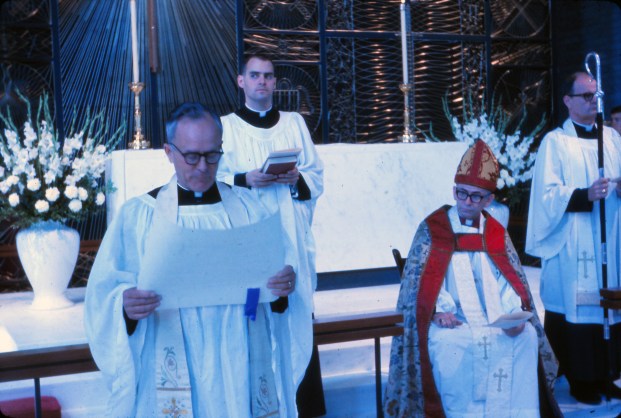
After the circuit of the church, the Sentence of Consecration was read by George A. Taylor, St. Paul’s rector from 1932 until 1948.

IMG_0006 v001

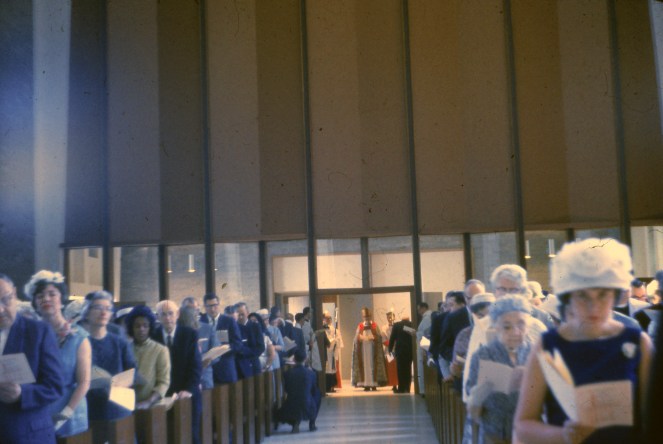
Following the celebration of the eucharist, the bishop preceded by Father McWilliam processed from the church as the congregation sang Vigiles et Sancti (“Ye watchers and ye holy ones”).

Procession, St. Paul's Consecration 4 Jun 1966

Procession, St. Paul’s Consecration 4 Jun 1966

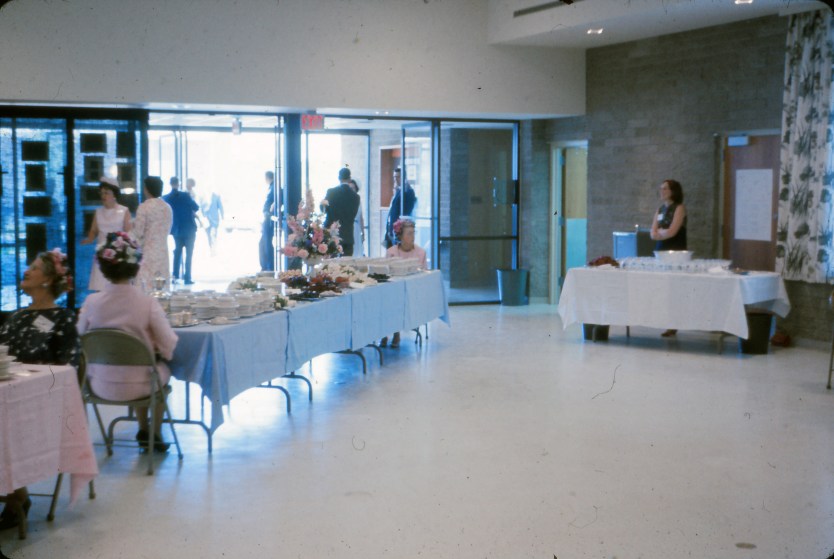
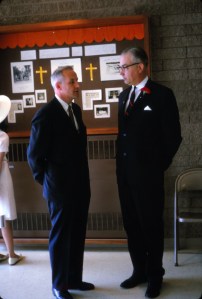
The reception after the service was the first to be held in the church hall, now known as McEwan Hall, in honor of William Starr McEwan, treasurer of the building committee. We see McEwan standing that day in the narthex with the building’s architect, Donald Stephens.

Reception 4 Jun 1966

Reception 4 Jun 1966

Donald Stephens (architect) and William S. McEwan (treasurer, building committee)

Donald Stephens (architect) and William S. McEwan (treasurer, building committee)

Finally, here are two photographs of clergy taken in the parking lot, probably immediately after the service.

Father George A. Taylor

Father George A. Taylor

Bishop Allen W. Brown and Father George A. Taylor

Bishop Allen W. Brown and Father George A. Taylor

May 1966 — “Women Prepare for St. Paul’s Consecration”

Knickerbocker News 18 May 1966

Knickerbocker News 18 May 1966

In today’s world, women’s roles in an Episcopal congregation include ordained ministry, election as wardens or members of the vestry and many other kinds of service.  While this headline, from an article in the Knickerbocker News of May 18, 1966, is only fifty years old, it describes a St. Paul’s that is some way familiar, yet foreign, one in which women’s part in the new building’s consecration on June 4  consisted of cleaning, decorating, and pouring tea. As was then the custom, the newspaper gives only their husbands’ names; their first names (in brackets) were obtain from other sources.

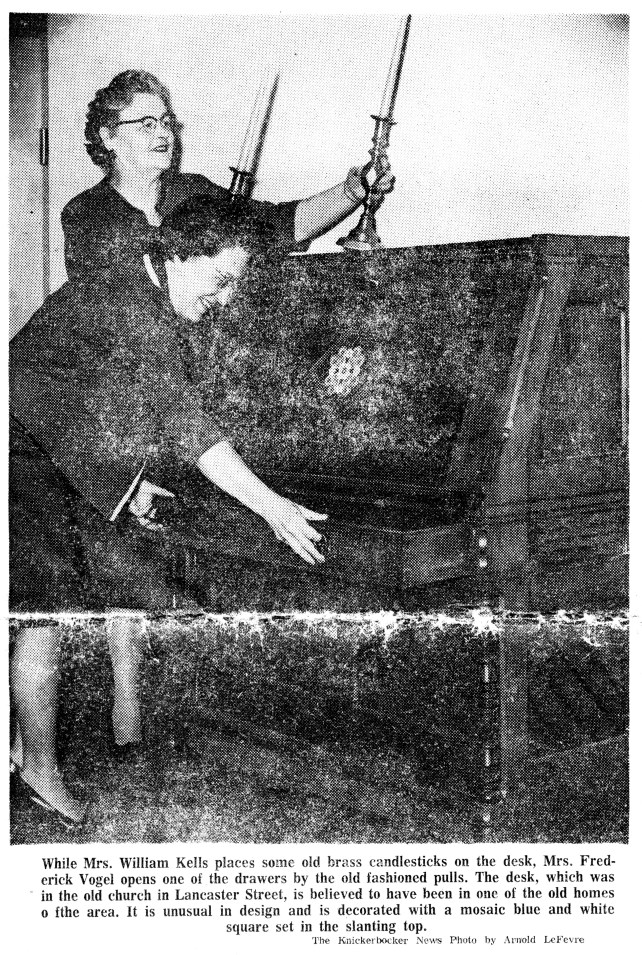
The entire effort was organized by Mrs. Frederick [Betty Jeanne] Vogel. We see her here with Mrs. William E. [Josephine] Kells arranging furniture and candlesticks.

Knickerbocker News 18 May 1966

Knickerbocker News 18 May 1966

Decoration of the new building was organized by Mrs. Arthur C. [Ruth] McDowell, the President of Women of St. Paul’s, assisted by Mrs. Roger [Ruth] Aiken, who had the distinction of being the only woman on the building committee. We have seen Mrs. Aiken before, as co-chair of the 1961 Christmas Bazaar and the 1981 Christmas Holiday Festival and Bazaar.

Painting of Lancaster Street Building signed "J. Lyons"

Painting of Lancaster Street Building signed “J. Lyons”

The article particularly mentions two objects that were to be placed in the Fellowship Hall: the grandfather clock and a painting of the Lancaster Street building, donated by Dr. Susan Seabury Smith, associate professor of library science at the State Teachers’ College. We will have more to say about these objects in a later post.

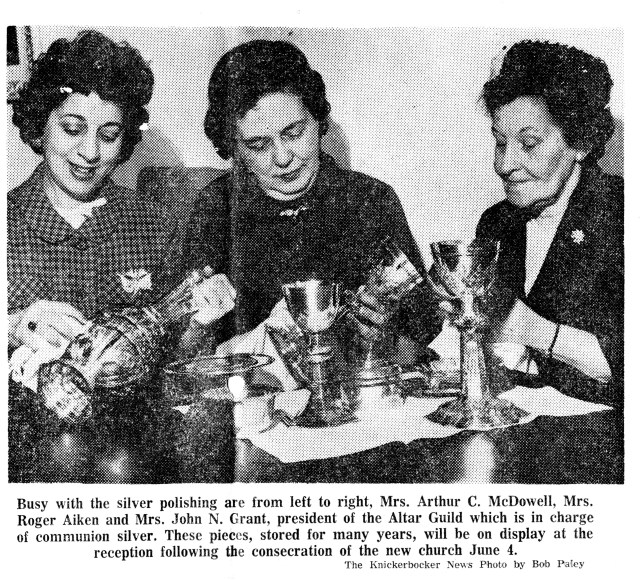
Cleaning and polishing of the church silver were organized by Mrs. John N. [Ismena] Grant, longtime president of the Altar Guild, who also had roles in the 1961 and 1981 Christmas Bazaars. We learn that much of the old silver had been stored for years or decades in the tower of the Lancaster Street building was “pretty black.”  Here is the photograph of Mrs. Grant, assisted by Mrs. McDowell and Mrs. Aiken.

Knickerbocker News 18 May 1966

Knickerbocker News 18 May 1966

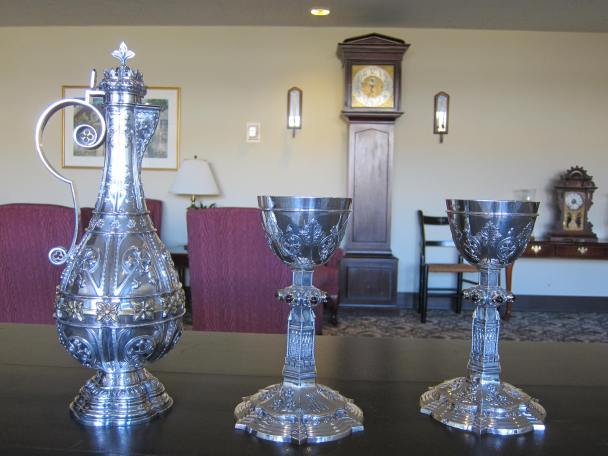
For comparison, here is a more recent picture of the flagon and chalices, with the grandfather clock in the background. The silver pieces were donated in 1886 in memory of parishioner Adam Van Allen (1813-1884).

Flagon and Chalices given in memory of Adam Van Allen (1813-1884)

Flagon and Chalices given in memory of Adam Van Allen (1813-1884)


So that everyone would be able to enjoy the event, the dinner after the consecration was to be catered, but the women were to be active as pourers and hostesses. The article mentions a tea set and tea urn that are still used for formal occasions. The tea set was donated by Mrs. William G. Burrill, the tea urn by Pauline Hewson Wilson, who had also given the Wilson Memorial Parish Hall on Jay Street.

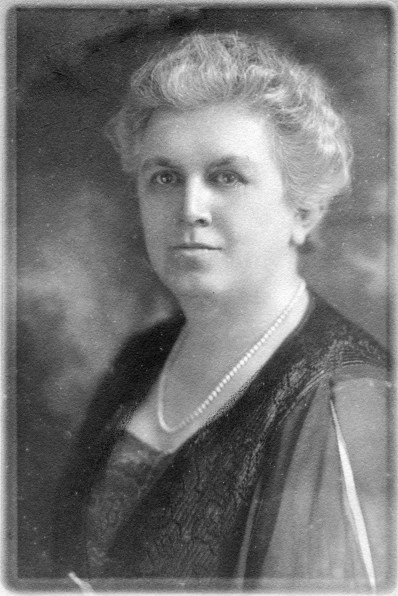
Pauline Hewson Wilson

Pauline Hewson Wilson


You’re Invited!

Yes, here is your formal invitation, to the consecration of St. Paul’s new Hackett Boulevard building on June 4, 1966. As we have seen, the nave had been in use since April 7, but work on the chapel and Sunday School rooms would continue into the summer.
Invitation to consecration of St. Paul's Church

Invitation to consecration of St. Paul’s Church

As we prepare to note the fiftieth anniversary of the building’s consecration, it is interesting to look back at what was being said about the new building when it was new. We don’t have records of discussions within the St. Paul’s family about the design of the new church,  but we do have two slides of an architect’s model that was shown to the congregation before construction began.

Architect's model, Hackett Blvd Church from the southeast

Architect’s model, Hackett Blvd Church from the northeast

Architect's model, Hackett Blvd Church from the northeast

Architect’s model, Hackett Blvd Church from the southeast


We also have newspaper reports of the design, with some interesting details on how and why it was chosen.

A Knickerbocker News article from shortly before the consecration declares that “[t]he new St. Paul’s Church on Hackett Boulevard is a contemporary church that hasn’t forgotten man has a history.”

As to the general design, it quotes Father McWilliam: “We wanted a church that was contemporary but not extreme, a church that expressed the social concerns of the day”

The article continues

Architect Donald J. Stephens of Loudonville explained the building committee wanted a church that was different from the typical A-frame used in most modern churches. The result of visits to new churches throughout New York and New England was a building ‘traditional in plan and form, contemporary in structure and materials.’

Outside, the church gives the impression of slenderness and height, with a white bell tower in the forms of an abstract cross soaring skyward….

Inside, the nave is designed to focus everything on the plain, marble free-standing altar.  The sawtooth construction of the side walls, patterned after the new cathedral in Coventry, England, helps create this focus. The zigzag causes the light from the narrow stained glass windows to be reflected on the gray, rough-textured bricks that make up the walls. Because of the construction, a member of the congregation facing the altar cannot see the stained glass windows, which, according to Father McWilliams, minimized distractions and keep attention focused on the altar.

IMG_8241 v001The comparison to  the window design to that of  Coventry Cathedral is one that is often still made. What has been forgotten over the years is the building committee’s survey of new church in New York and New England. It would be interesting to know where they visited. We know of one for certain, because an April 2, 1966 Times Union article specifically mentions it.

The congregation drew inspiration from a similar project in the Church of Saint Mark in New Canaan, Conn., with adaptations executed by St. Paul’s architect, Donald J. Stephens of Loudonville.

Donald Stephens (architect) and William S. McEwan (treasurer, building committee)

Donald Stephens (architect) and William S. McEwan (treasurer, building committee)

Hackett Nave_0008


While the exterior of St. Mark’s Church is certainly reminiscent of St. Paul’s (if a bit more elaborate), the interior is even more so, with its free-standing altar and an elaborate reredos screening the choir and organ from the rest of the nave.

Both of these articles also explain how carefully the building committee attempted to incorporate elements of the old building into the new. Prominently mentioned are the ten J. and R. Lamb windows in the narthex, the Tiffany Good Shepherd window in the sacristy and the almost complete preservation of elements in the chapel.

“Christ the Good Shepherd” was given in 1899 in memory of J. Livingston Reese, rector of St. Paul’s from 1864 until 1891. It was designed and executed by the Tiffany Studios, after a painting by Bernhard Plockhorst.

"Christ the Good Shepherd" window

“Christ the Good Shepherd” window


July 1964 — Another Photo of the Hackett Boulevard Groundbreaking

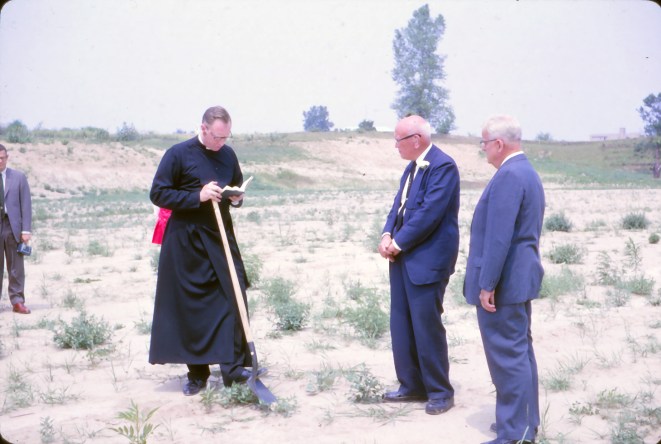
Last year, we shared a snapshot of the groundbreaking for St. Paul’s new Hackett Boulevard building on July 26, 1964.

Father J. Raymond McWilliam and wardens Frederick Eckel and Raymond E. Foskett

Father J. Raymond McWilliam and wardens Frederick Eckel and Raymond E. Foskett

Thanks to the late Mildred Lentz (and to Pam Love, who has preserved her files) we now have another photograph taken that day.

Groundbreaking at Hackett Boulevard, 26 July 1964

Groundbreaking at Hackett Boulevard, 26 July 1964

The photographer was facing west, and in the background we can see the tower of the Albany Academy, and the Child’s Hospital and St. Margaret’s Home buildings. Fr. J. Raymond McWilliam and wardens Frederick Eckel and Raymond E. Foskett are in the foreground, with the congregation forming an arc around them. Thanks to Dave Van Hattum, Betty Peters Bertrand and Gertrude (Trudy) Van Hattum, we can identify a few faces in the congregation. To the right of the rector and wardens, the woman in the striped dress is Gertrude Van Hattum, with her sons Dave and Steve to her right and left respectively. To the left of the rector and wardens, the woman in the flowered dress is Erma Peters; to her right, in a white dress, is her daughter Betty Peters. The man second from right holding flowers is Dave Powers. On the left side, the man standing next to man with suspenders is William S. McEwan.

From a Knickerbocker News article printed on the previous day, we know that the congregation held its last service in the Lancaster Street building at 11:00 AM on Sunday, July 26, 1964, and then proceeded directly to the Hackett Boulevard site.

The Knickerbocker News article said that the new building was to be completed by September 1, 1965.  Because of a strike by masons, the building was not ready until spring 1966, and the first service was held April 7 of that year. For that period, more than twenty months, the congregation held its services at Trinity Episcopal Church.

In recognition of that last service at Lancaster Street, here, also from Mildred Lentz’s files, is an undated photograph of a service in the church. Can we identify any of the people shown, or guess approximately when it was taken?

Service in the Lancaster Street church

Service in the Lancaster Street church

May 1966 — the Hackett Boulevard Cornerstone

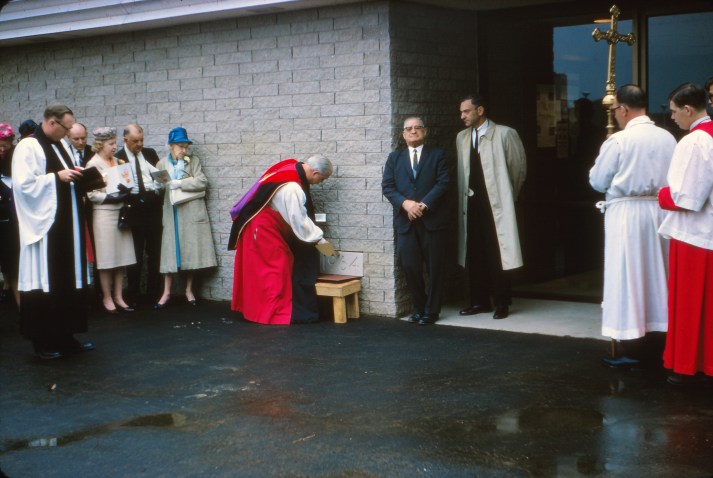
Today we continue our celebration of the fiftieth anniversary of St. Paul’s move to its new home on Hackett Boulevard with two photographs from the ceremonies at the laying of the new building’s cornerstone on May 8, 1966. The first photo shows Suffragan Bishop Charles B. Persell, Jr. laying the cornerstone.

Bishop Persell laying cornerstone 8 May 1966

Bishop Persell laying cornerstone 8 May 1966

The second photo is of Bishop Persell preaching in the church.

Bishop Persell preaching 8 May 1966

Bishop Persell preaching 8 May 1966


Easter 1966

It’s Easter, and fifty years ago St. Paul’s celebrated its first Easter in the Hackett Boulevard building. This was only the second service  in the church: the high altar had been consecrated on Maundy Thursday, and there were no services on Good Friday and Holy Saturday.

All three photographs show the rector, J. Raymond McWilliam, at the altar. Notice that he stood with his back to the congregation. In the third photo, David Van Hattum is the crucifer. Can anyone identify the others in these snapshots?

Easter 1966

Easter 1966

Easter 1966

Easter 1966

Easter 1966

Easter 1966

Maundy Thursday 1966 — Consecration of the High Altar

It’s Maundy Thursday, and fifty years ago today on the liturgical calendar St. Paul’s held its first service in the Hackett Boulevard church: the consecration of the high altar. In this photograph we see the altar, and behind it, “the massive, shimmering bronze reredos,”  as it was described in a contemporary  Knickerbocker News article.

Altar and Reredos, Hackett Boulevard

Altar and Reredos, Hackett Boulevard

The free-standing altar, of Vermont marble, was donated by the treasurer of the building fund, William Starr McEwan, and dedicated to his maternal grandparents, Samuel Starr Peck (1852-1934) and Susan Marsh Peck (1860-1942).

Bulletin cover, Consecration of Altar, Maundy Thursday 1966

Bulletin cover, Consecration of Altar, Maundy Thursday 1966

Bulletin, Consecration of Altar, Maundy Thursday 1966

Bulletin, Consecration of Altar, Maundy Thursday 1966

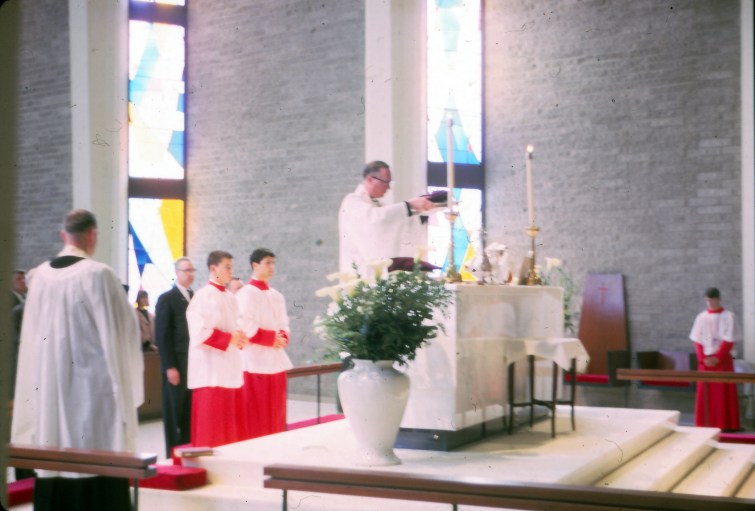
The only photograph that we know was taken that day shows Bishop Allen W. Brown at the altar, partially obscured by our rector, J. Raymond McWilliam.

Consecration of the High Altar, Maundy Thursday 1966

Consecration of the High Altar, Maundy Thursday 1966


April 1966 — “The New St. Paul’s Ready Next Week”

Kenneth Eels (chair, building committee) and J. Raymond McWilliam (rector)

Kenneth Eells (chair, building committee) and J. Raymond McWilliam (rector)

Fifty years ago today by the liturgical calendar, St. Paul’s was preparing to move into its new home at 21 Hackett Boulevard. In “The New St. Paul’s Ready Next Week” published in the Albany Times-Union for Saturday, 2 April 1966 (the day before Palm Sunday that year), we read:

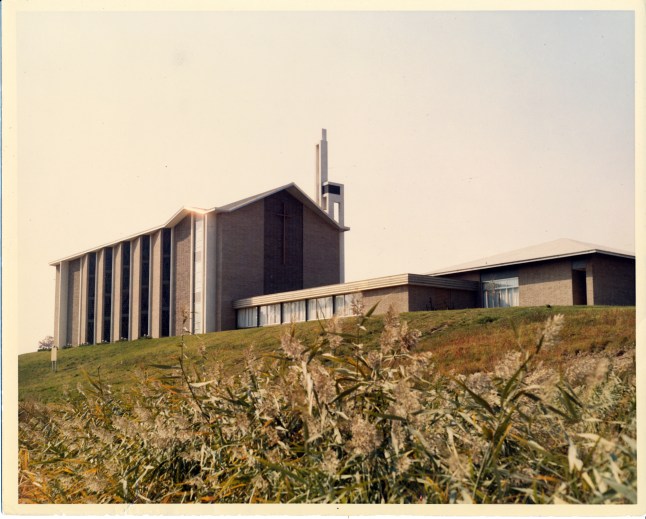
After almost two years of worshipping in another congregation’s church, the people of St. Paul’s Episcopal Parish will be moving back into their own religious home next week.  The striking new building at 21 Hackett Boulevard, just beyond Holland Avenue, replaces St. Paul’s that stood as a landmark in downtown Albany until it was demolished for the South Mall. Services will begin in the new church Maundy Thursday at 8 p.m. The Rt. Rev. Allen W. Brown, Bishop of the Albany Episcopal Diocese, will bless the high altar. Holy Communion and a brief sermon will be offered by the Rev. John Raymond McWilliam, rector of St. Paul’s.

St. Paul's, Hackett Boulevard, about 1966

St. Paul’s, Hackett Boulevard, about 1966

The article mentions the incorporation of the Tiffany Good Shepherd Window, as well as the ten J. and R. Lamb windows in the narthex, as well as the “almost completely preserved” 1940 Memorial Chapel.

J. and R. Lamb windows, Hackett Boulevard Narthex

J. and R. Lamb windows, Hackett Boulevard Narthex

J. and R. Lamb windows, Hackett Boulevard Narthex

J. and R. Lamb windows, Hackett Boulevard Narthex

Chapel, Hackett Boulevard

Chapel, Hackett Boulevard

Finally, the article reveals an aspect of the new building’s design which is not widely known:

The congregation drew inspiration from a similar project in the Church of Saint Mark in New Canaan, Conn., with adaptations executed by St. Paul’s architect, Donald J. Stephens of Loudonville.

St. Paul’s design was certainly influenced by that of Coventry Cathedral, particularly the angled windows in the nave. But the Times-Union article gives us a further clue to influences on the design, a clue that we will pursue in a later post.

Nave, Hackett Boulevard

Nave, Hackett Boulevard