From St. Paul’s Church to San Quentin: the Life of William Henry Hill

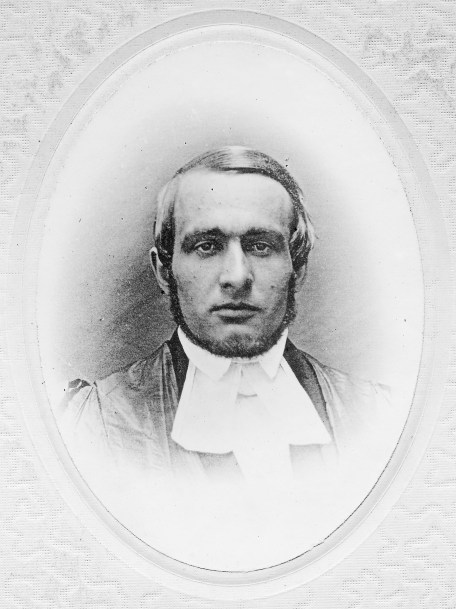
William Ingraham Kip (portrait attributed to Asa Weston Twitchell )

In his first decade as rector of St. Paul’s, William Ingraham Kip saw three young man enter the ministry from the congregation. We have already spoken of Sylvanus Reed, but the first of these three was William Henry Hill, who was not only an active member of the congregation, but also followed Kip to California. How Hill came to serve eight years at San Quentin Prison is only one of the fascinating things about this son of St. Paul’s Church.

William H. Hill was born in Connecticut in 1816, and came to Albany at age 15. He became a communicant of St. Paul’s in 1839, shortly after Kip arrived here as rector. Hill was soon busy in the life of the parish, particularly as “chorister” (then used to mean the leader of the church choir) intermittently from 1841 until 1845, while the organist was composer Oliver J. Shaw.

Oliver J. Shaw’s composition “Evening Hymn of the Ancient Christians,” dedicated to his friend, William Henry Hill.

He also represented the congregation at diocesan conventions in 1844 (during the contentious discussion of the fate of disgraced Bishop Benjamin T. Onderdonk) and again in 1846. During this period, he worked as a reporter and assistant editor for the Albany Evening Journal, owned and edited by the powerful Whig politician Thurlow Weed.

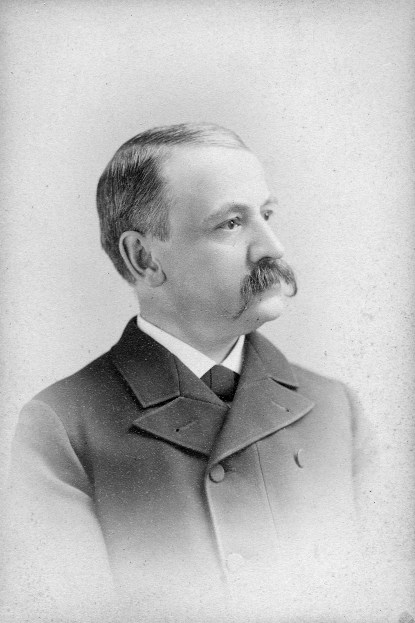
William Henry Hill

William H. Hill became a candidate for ordination in 1844, and was ordained deacon in 1846 and priest the next year. His first pastoral assignment was St. Paul’s, Brownville (Jefferson County, New York), where he served from 1846 until 1851. Interestingly, the Brownville church’s first rector was William Linn Keese, who was also the second rector of St. Paul’s, Albany. William H. Hill was then rector at Zion Church, Morris (Otsego County, New York) from 1851 until 1855.

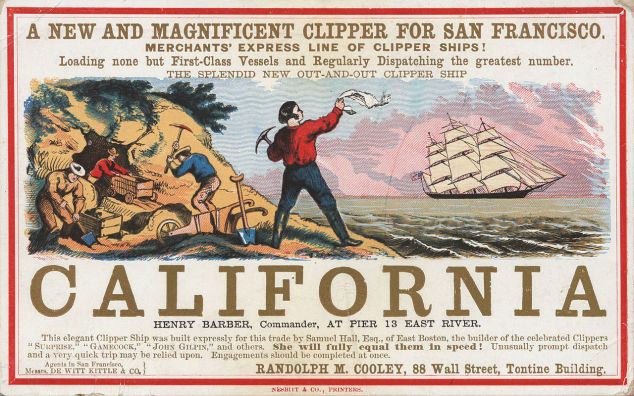
California Clipper advertisement (image credit: Wikimedia Commons)

William Ingraham Kip was elected Missionary Bishop of California in late 1853. A year later, William H. Hill followed him to the far distant west, which was still in the throes of the Gold Rush of 1849—1855.

Nevada City, California about 1856 (image credit: Wikimedia Commons)

Initially he served the church in Nevada City, and next was rector of Grace Church, Sacramento (where he also served several terms as superintendent of the city schools) from 1856 until 1871. His final parish assignment was at St. Athanasius, Los Angeles from approximately 1874 until 1881.


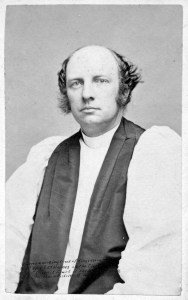
William H. Hill (San Francisco Chronicle 28 Oct 1896)

Have you been worrying about how Hill came to serve time at San Quentin? Well, you can relax, because he was definitely on the right side of the bars. William H. Hill was chaplain at San Quentin from 1881 until 1889. After a few years as a traveling missionary, he retired to Berkeley, where he died in 1896.

San Quentin Prison (image credit: Wikimedia Commons)


Child’s Hospital and the Good Samaritan Center

DSC_0141

St. Paul’s current building, at the corner of Samaritan Road and Hackett Boulevard

For the past 51 years, St. Paul’s address has been 21 Hackett Boulevard, at the corner of an inconspicuous street called Samaritan Road. Samaritan Road is not much to look at now, but its name is the last reminder of the Good Samaritan Center, a group of Diocese of Albany institutions that once clustered along it.

Between 1966 (when the Hackett Boulevard church was completed) and 1999, our building was paired with Child’s Hospital, the two buildings balanced on either side of Samaritan Road. When ground was broken for our building on July 26, 1964, you can see the then-new Child’s Hospital building directly to the west.

Groundbreaking at Hackett Boulevard, 26 July 1964

Groundbreaking at Hackett Boulevard, 26 July 1964

To understand the significance of the hospital and the entire Center, however, we need to look farther back, because in many ways, the Good Samaritan Center was the recreation of an earlier complex of diocesan institutions created in the late 19th century by Bishop William Crosswell Doane on Elk Street near the Cathedral of All Saints.

William Croswell Doane, Bishop of Albany

The Elk Street complex represented Bishop Doane’s plan for a cathedral with ancillary “institutions of learning and mercy that will gather about it.” This outgrowth of the social gospel was similar to the way in which his father, Bishop George Washington Doane, had surrounded his cathedral in Burlington, New Jersey with a group of institutions concerned with education and health care, particularly for the needy.

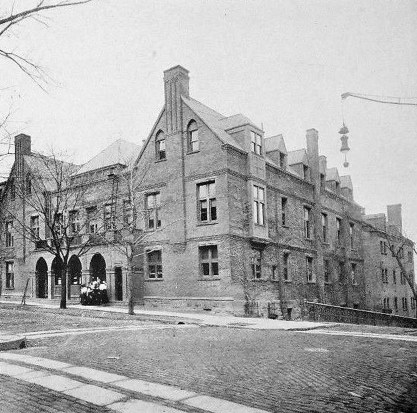
Child's Hospital Elk Street (credit: Albany Public Library Pruyn Collection)

Child’s Hospital Elk Street (credit: Albany Public Library Pruyn Collection)

The Elk street institutions were incorporated in 1871 as “the Trustees of the Corning Foundation for Educational and other Christian Work.” The corporation’s goals were “the establishment, maintenance and management in the City of Albany of a school or schools, and other educational, religious, and charitable works and institutions, with a church or chapel and other convenient buildings in connection therewith; the same to be maintained and conducted in accordance with the doctrines, discipline and worship of the Protestant Episcopal Church in said Diocese of Albany.”

Child's Hospital Elk Street

Child’s Hospital Elk Street

Child’s Hospital’s name requires some explanation. You might reasonably think it was called Child’s because most of its clients were children, but that is not the case. Nor was it named for a wealthy Mr. or Mrs. Child who endowed it. No, Child’s Hospital was named for the order of Episcopal nuns who ran it from 1874 until 1949.

Mother Helen Dunham, Mother Superior of the Sisterhood of the Holy Child Jesus

Mother Helen Dunham, Mother Superior of the Sisterhood of the Holy Child Jesus

The Sisterhood of the Holy Child Jesus was founded by Doane and Helen Dunham in 1873. Its constitution included this description of its goals: “The objects of the Sisterhood are to provide for the care of the sick, and the sound training and teaching of children, and as God shall give the means and the opportunity, to undertake such other works of charity and mercy, as our hands shall find to do.”

The institutions that they managed on Elk Street near the cathedral were St. Agnes School (founded 1870), Child’s Hospital (founded 1874) and St. Margaret’s House for Babies (founded 1883). All of these institutions were located on the north side of Elk Street, between Hawk and Swan.

Elk Street Diocesan Institutions in 1892

Elk Street Diocesan Institutions in 1892

When it was founded, Child’s Hospital was the only hospital for children between New York, Montreal, Boston and Buffalo. While it was affiliated with the Episcopal diocese, Child’s services were offered without regard to religious affiliation, and many services were offered free of charge. In addition to routine patients, Child’s Hospital also served children who needed long-term care for chronic conditions.

Child's Hospital Elk Street (credit: Albany Group Archive)

Child’s Hospital Elk Street (credit: Albany Group Archive)

Child's Hospital Elk Street (credit: Albany Public Library Pruyn Collection)

Child’s Hospital Elk Street (credit: Albany Public Library Pruyn Collection)

If you grew up in Albany and remember the old Child’s Hospital, you probably also remember why you (or a sibling) were there. For Albany children in the first half of the twentieth century, Child’s Hospital was the place for tonsillectomy. In 1950, Child’s set a tonsil-pulling record: 102 pairs in a single month.

The Sisters’ trio of institutions on the corner of Elk and Hawk began to break up in the 1930s. In 1932, with several of the buildings threatening to slide down into Sheridan Hollow, the diocese offered to sell all three buildings to the State. The State declined that offer, but St. Agnes’ School moved to Loudonville that same year, and St. Margaret’s House (by then known as St. Margaret’s House and Hospital for Babies) moved to the former Pest House (used by the city for isolating those with contagious diseases) in 1936. This site, located halfway between New Scotland Avenue and what is now Hackett Boulevard, would become the Good Samaritan Center campus.

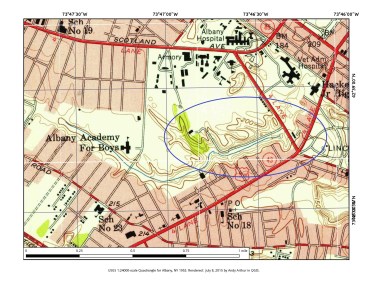
St. Margaret’s official mailing address was 100 New Scotland Avenue, but it was much more easily reached from an unpaved section of Hackett Boulevard. A rough path then led the visitor north up the incline. This rough path became Samaritan Road.

1953 topographic map of Albany's University Heights section (credit andyarthur.org)

1953 topographic map of Albany’s University Heights section (credit andyarthur.org)

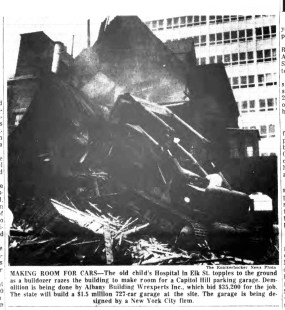
Child’s Hospital, however, remained on Elk Street for another twenty years. The Sisterhood ran the hospital until Sister Lydia’s death in 1949. Bishop Oldham then brought the Order of St. Anne from Kingston; they administered the hospital until 1958. In 1959, the Episcopal diocese again offered to sell the property to the State to build a much-needed parking lot. The State accepted this offer, and the diocese closed the Elk Street building in summer 1959. The building was demolished in August 1960.

Knickerbocker News August 22, 1960

Knickerbocker News August 22, 1960

With the closing of the last of the Elk Street institutions, Bishop Frederick L. Barry had a vision of a similar grouping of Episcopal institutions near the St. Margaret’s site. The location was selected both because it was near to St. Margaret’s, but also because the land was not settled and was easy to purchase. Before construction of the buildings, much of the land was used by squatters for garden plots.

Bishop Frederick L. Barry

Bishop Frederick L. Barry

As described in the Knickerbocker News for February 4, 1960, pride of place for the Good Samaritan Center was to be given on the Hackett Blvd entrance to the new Child’s Hospital and a chapel. The remainder of the 17 acre complex was to include a home for the elderly, a nurses’ residence and possibly nursing school, an addition to St. Margaret’s House, an administration building, and possibly a doctor’s building.

Knickerbocker News February 4, 1960

Knickerbocker News February 4, 1960

The first element to be built the Center was the new Child’s Hospital. This was accomplished speedily, and it received its first patient on October 23, 1961.

For unknown reasons, plans for the chapel did not progress. This was all for the best for St. Paul’s, because in September 1962 New York State bluntly informed our vestry that the congregation would not be able to stay on Lancaster Street. The vestry chose to relocate to the proposed site of the chapel at the Samaritan Center.

Over the next decade, other elements were added to the center: Nelson House (the home for the “well aged”), the Child’s Nursing Home, additions to St. Margaret’s House and a doctor’s building.

Good Samaritan Center (credit: Albany Churchman, March 1981)

Good Samaritan Center (credit: Albany Churchman, March 1981)

St. Paul’s and Child’s Hospital were Episcopal partners, siblings on Hackett Boulevard for our first 33 years on Samaritan Road. The Diocese of Albany sold Child’s Hospital in 1999, and it became the Albany Medical Center South Clinical Campus. The profits from that sale (over 10 million dollars) went to create Episcopal Charities of Albany Inc., which now provides “health care services and health care-related educational and religious programs” at the Spiritual Life Center in Washington County.

St. Margaret’s still sits on Samaritan Road, although it has long since become an independent institution. The diocese’s sale of Nelson House to the Albany College of Pharmacy in 2003 leaves only the street name to remind us of the Center. Perhaps we should change St. Paul’s address to 1 Samaritan Road as an appropriate nod to our history, and to the history of a laudable diocesan effort.

Creighton R. Storey and the Trinity Institution

If you’ve ever driven down Third Avenue on Albany’s South End you may have noticed a group of subsidized houses known as the Creighton Storey Homes. Who was Creighton Storey and how did he come to be honored in this way? The answer tells us something of the Albany Diocese’s history in social services, and (you shouldn’t be surprised to learn) touches significantly on the history of St. Paul’s Church.

Creighton Storey Homes

Creighton Storey Homes

Creighton Richard Storey was born in Ireland in 1864, and came to this country as a teenager. He attended Colgate College and then Hamilton Theological Seminary. Although as a boy he had been confirmed in the Church of Ireland (a member of the Anglican Communion), he chose to become a Baptist pastor, and served congregations in Syracuse, Kingston and Buffalo. Through these years, he came to understand his ministry as service to those both within and outside the church. In each city, he established social service programs. But there were objections to Storey’s concentration on outsiders: he resigned his positions in Baptist churches in Kingston and Buffalo when church leaders insisted that he stop these “outside” activities.

Creighton R. Storey

Creighton R. Storey

First Baptist Church, Albany (credit: Albany Group Archive)

First Baptist Church, Albany (credit: Albany Group Archive)

After resigning the position in Buffalo, Storey had trouble finding another post because of his reputation for concentrating on social work. He finally accepted a position at First Baptist in Albany, then very much down on its luck, with a handful members and unable to even promise him a salary. In response to the Panic of 1907, he started providing a free breakfast to the unemployed in the church basement.

Albany Industrial Brotherhood Flyer, page 1 (credit: NYS Manuscripts and Special Collections)

Albany Industrial Brotherhood Flyer, page 1 (credit: NYS Manuscripts and Special Collections)

A year later, Storey organized the Albany Industrial Brotherhood, housed in a building next door to the church and dedicated “to helping men help themselves.” Services included assistance in finding jobs, and a workshop making wire implements such as rug beaters and kettle forks. From the beginning, Storey seems to have been successful in attracting support from different churches, and involving influential young business men to serve on his board and committees. Over the next years, the Brotherhood’s services were extended to include night classes to teach trades, and providing employment in chair caning and upholstery workshops.

But the pattern in Kingston and Buffalo was repeated: when First Baptist decided to sell their building and move to a new building on Delaware Avenue, Storey was asked to come with them, but only if he was willing to abandon his social services programs. Storey resigned his post at First Baptist in early 1911, saying farewell to both that congregation and “to the pulpit altogether” in order, he said,“to devote his entire attention to brotherhood and settlement work”. He initially planned to expand the Brotherhood into a full social services agency, providing services for the entire family. To accomplish this, he had begun negotiations to purchase First Baptist’s building. Storey had an option on the building and (backed by “a number of influential men”) had until March 9 to raise funds.

William Croswell Doane, Bishop of Albany

For unknown reasons, these plans failed and Storey looked for another way to support his programs. Knowing that Trinity Church in Albany was in serious financial difficulties, he spoke with the Albany Episcopal diocesan bishop, William Croswell Doane (an early supporter of the Brotherhood), and volunteered to serve as Trinity’s rector, with the understanding that he would be able to continue the social service programs previously supported by First Baptist. Doane agreed, and convinced the city’s Episcopal churches to contribute $1,000 a year for his programs.


In April 1911, within a few months of his resignation from First Baptist, Storey’s entire family was confirmed at St. Paul’s, and that spring and summer Storey preached at St. Paul’s as well as St. Mark’s Chapel (St. Paul’s free chapel just off of Morton Avenue). In November of 1911, Creighton Storey was ordained to the deaconate, with the support of St. Paul’s vestry. By July of 1912, he had been named rector of Trinity Church, and had plans for hiring a full-time social worker and creating a full program of services.

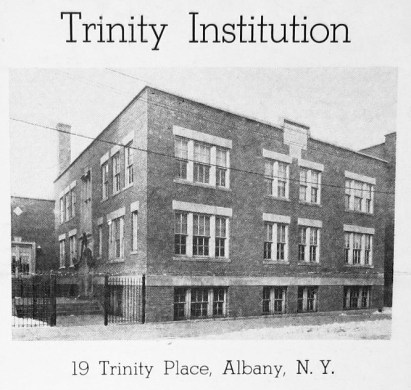
Trinity Institution in 1937 (credit: Pruyn Collection, Albany Public Library)

Trinity Institution in 1937 (credit: Pruyn Collection, Albany Public Library)

Over the next 28 years, Creighton Storey offered a wide range of social services and a thriving summer camp. In 1928 these services included hot lunches for school children (charge: 3 cents for those able to pay), a boys club, scout troop, Jewish scout troop, girl scout troop, a mothers club, a sewing club, two kindergartens and an Americanization class. The Trinity Institution building also included space for neighborhood groups, an Albany Public Library branch and an employment bureau.

Children enjoying the 3-cent lunch (Albany Evening News 25 Jan 1927)

Children enjoying the 3-cent lunch (Albany Evening News 25 Jan 1927)


As with the Industrial Brotherhood, Storey continued to include

Albany Evening News 15 Dec 1916

Albany Evening News 15 Dec 1916

prominent young business men on Trinity Institution board of directors. These “Albany Blue Bloods” provided financial backing for the enterprise, but as importantly, served to publicize the Institution’s work.

St. Paul’s involvement did not end with Storey’s ordination: St. Paul’s vestrymen served on the Trinity Institution’s board, the women of St. Paul’s St. Margaret’s Guild provided the hot lunch program on day each week, and the church regularly raised funds for the Institution’s summer camp. Among those “Blue Blood” board members was Randall J. LeBoeuf, Jr., whose father,  Randall J. LeBoeuf, was a St. Paul’s warden. And another of our own, Elsa Ridgway, was on the Trinity staff from 1920 until 1947, most of that time as Director of programs for girls and women. Miss Ridgway was a life-long member of St. Paul’s, and president of the Altar Guild and Women’s Auxiliary. Her father was Frederick W. Ridgway Sr., St. Paul’s vestryman from 1901 until 1915; she was the sister of Frederick W. Ridgway Jr., the sister-in-law of our organist and choirmaster, T.F.H. Candlyn and aunt of Donald Shore Candlyn.

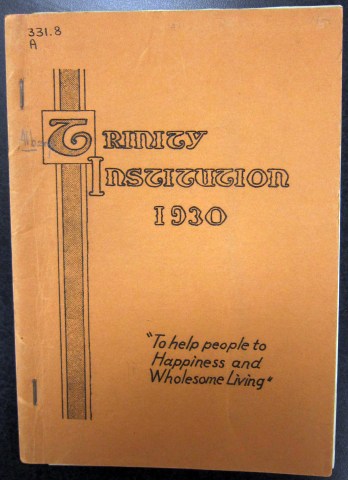
Trinity Institution Annual Report for 1930 (credit: Pruyn Collection, Albany Public Library)

Trinity Institution Annual Report for 1930 (credit: Pruyn Collection, Albany Public Library)

Creighton Storey was to be Trinity’s rector from 1912 until his death in 1930, overseeing a revival of the congregation in that period. More importantly, he created the Trinity Institution (often referred to as the Trinity Institute, and now known as the Trinity Alliance), which for almost 100 years now has been helping the people of the South End. The Trinity Alliance and the Creighton Storey Homes serve as important reminders of our church’s and our diocese’s outreach to Albany’s South End.


The Windows of St. Paul’s: Epiphany

“The Adoration of the Magi” (Photo courtesy of the Gelman Stained Glass Museum)

This window, titled “The Visit of the Wise Men to the Manger Cradle,” was given in memory of Andrew Barton Jones and of his wife, Alice Tucker Jones by their children, and dedicated on Trinity Sunday, May 18, 1913. The window was designed by Frederick S. Lamb and executed by J. & R. Lamb, New York.

“The Adoration of the Magi,” detail (Photo courtesy of the Gelman Stained Glass Museum)

Andrew Barton Jones (19 May 1840 — 29 May 1909) was a St. Paul’s vestryman  from 1892-1902 and warden 1902-1909. He became a partner in the Hudson Valley Paper Company in 1875, and the firm remained in the hands of the Jones family until its acquisition by Lindenmeyr Munroe in 2012.  Andrew Jones and Alice Tucker Jones (13 May 1843 –10 Jun 1891) had five children, one of whom was also a long-time member of the congregation.

Andrew Barton Jones

Sydney Tucker Jones

Sydney Tucker Jones

Like his father, Sydney Tucker Jones (1878-1958) was a St. Paul’s vestryman and warden, serving forty years in those roles, most of them as senior warden. He married  Gwenola Smith, and the couple’s daughter Alice Tucker Jones married George A. Taylor, St. Paul’s rector from 1932 until 1948.

George A. Taylor

George A. Taylor

The Windows of St. Paul’s: Christmas

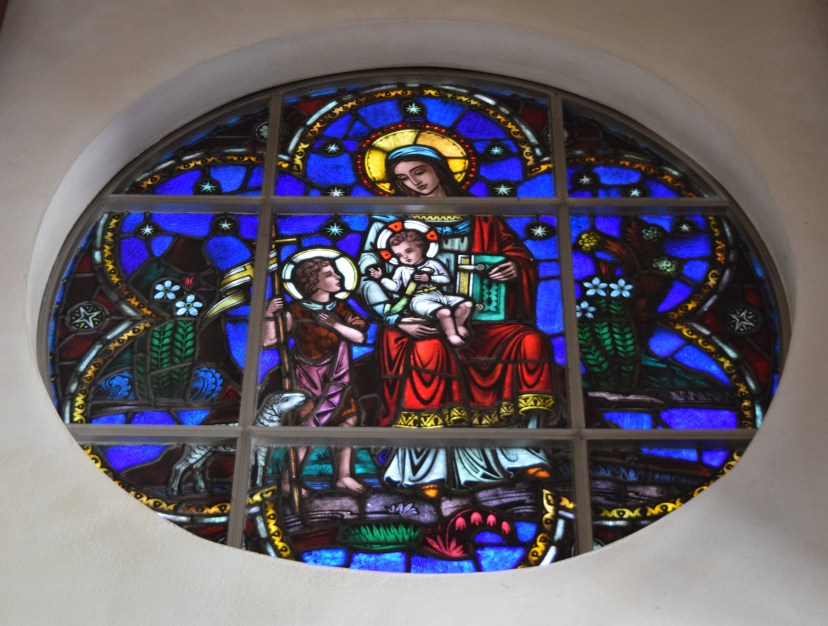
It’s Christmas Day, and a proper time to appreciate the rose window in St. Paul’s chapel, which reproduces a painting titled “Madonna and the Holy Children, Jesus and John.”

"The Madonna and the Holy Children, Jesus and John"

“The Madonna and the Holy Children, Jesus and John”

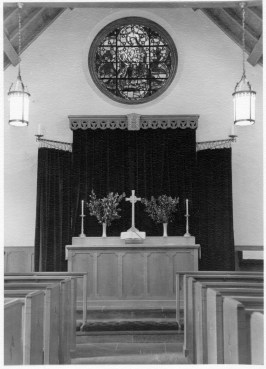
The rose window was originally installed in St. Paul’s Memorial Chapel on Lancaster Street, and dedicated on March 29, 1942 by G. Ashton Oldham, bishop of the Episcopal Diocese of Albany.

Memorial Chapel, Lancaster Street

Memorial Chapel, Lancaster Street

It was given in memory of Randall J. LeBoeuf, St. Paul’s vestryman from 1914 to 1930, and warden from 1930 until his death in 1939. LeBoeuf (born 1870) was an attorney specializing in banking and corporate law, the founder of the Albany Trust Company (later First Trust Company) and a justice of the New York Supreme Court.

Randall J. LeBoeuf

Randall J. LeBoeuf

Did you notice the brilliant blue glass that surrounds the figures? The Times Union for March 27, 1942 tells us the story of  that glass, which was shipped from England to Boston during World War II:

The first ship carrying the glass was torpedoed in the Atlantic, but was beached and the cargo saved. The glass was placed on another ship which also was torpedoed and again the cargo was reloaded, and this time the glass arrived at its destination. When delivered, the packing case was still wet and on it was painted, “Great Britain Delivers the Goods.”

A small miracle that the glass arrived safely, and that on a Christmas Day almost seventy-five years later it still graces our chapel!


The Windows of St. Paul’s: Advent

As the first in a series of St. Pau’l’s Church windows for the liturgical year, here is the lower panel of the chapel window donated by Donald Shore Candlyn, showing the Annunciation. This window, like all those in the chapel, is the work of Wilbur H. Burnham Studios, in Boston.

The Annunciation: lower panel of the Donald Shore Candlyn window

The Annunciation: lower panel of the Donald Shore Candlyn window


St. Paul’s in Albany’s South End: the Old Engine House

St. Paul’s was originally founded in Albany’s South End. While we chose to leave that neighborhood in 1839, we established an important presence there thirty years later, when we created our Free Mission Chapel on Madison Avenue in 1867. This post discusses the intertwined reasons why St. Paul’s chose the Madison Avenue location for its Chapel, and why, after fourteen successful years, we chose to leave.

St. Paul's Ferry Street Building as it looked in the early 20th century

St. Paul’s Ferry Street Building as it looked in the early 20th century

The first home of “St. Paul’s Church or Congregation in the City of Albany” was  at what is now the corner of South Ferry Street and Dongan Avenue. The parish was organized as an outreach to that rapidly growing part of the city, and most of the early congregation was drawn from the neighborhood. Purchase of the property and construction of the building were too great a burden for the congregation. By 1830, only a year after the building was completed, debt and mounting interest payments were already threatening to overwhelm the young congregation. The parish struggled along on South Ferry Street until 1839, when creditors forced the vestry to sell the building. The leadership of St. Paul’s decided to leave the neighborhood and to modify a theater on Pearl Street as their church home, starting what they called “a new venture” in the center of Albany.

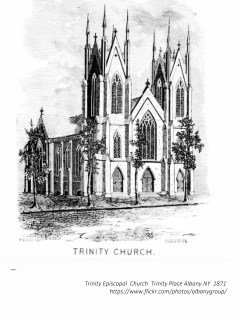
Trinity Church (image credit: Albany Group Archive)

Trinity Church (image credit: Albany Group Archive)

The decision to abandon the South End was not unanimous: a number of St. Paul’s families, including those of two vestry members, started a different “new venture.” Choosing to remain in the neighborhood, they formed a parish and named it Trinity Church. The new congregation was not strong or wealthy in its early years, but by 1848 they were able to build a handsome building on what is now Trinity Place, where they remained until they were closed in about 1980. As the only Episcopal congregation in Abany’s South End, Trinity will play a role as our story progresses.

St. Paul's Second Building on Pearl Street

St. Paul’s Second Building on Pearl Street

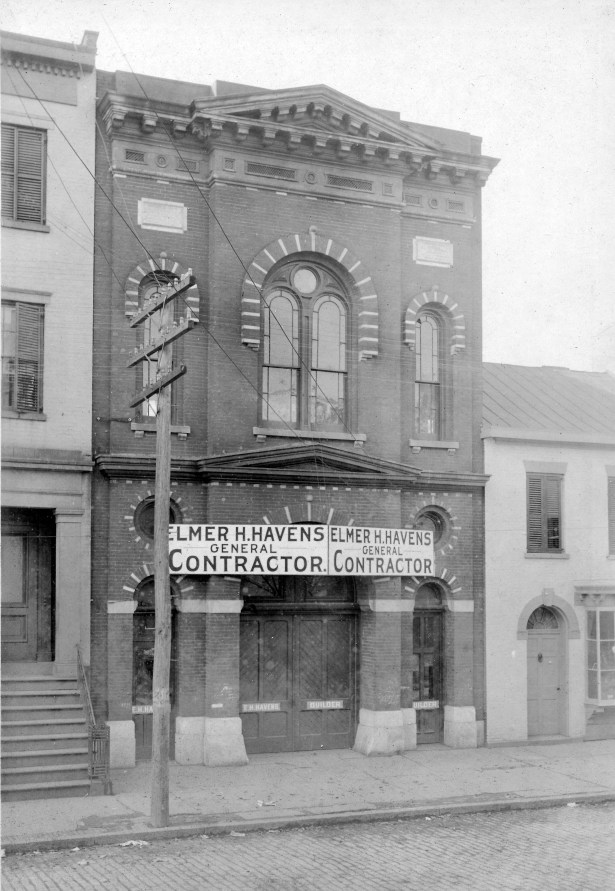
St. Paul’s stayed at the former Pearl Street Theater for twenty-three years, only leaving in 1862 after what had been an upscale residential neighborhood became Albany’s business district. We moved to our third home on Lancaster Street, a structure originally built as the Dudley Memorial Reformed Church. Five years after moving to Lancaster Street, St. Paul’s decided to establish a mission chapel. Vestry minutes record the purchase on December 20, 1867 of the former fire house on the south side of Madison Avenue, just east of Green Street, for a cash deposit of $1,500 and a mortgage totaling $2,366.16 “on behalf of the Missionary Society of the Church.”[i] The rector at the time says that this was “in response to an earnest desire to enter upon some mission work in the city.”[ii] But what were the Mission’s purposes and what were the reasons for the timing of purchase and the location selected?

The chapel’s name suggests the purposes for this new outreach: it was called a Free Mission Chapel. Like the Chapel of the Holy Innocents, this was to be a free chapel, meaning that seating was open to all, without the requirement to pay pew rents, the most common method of financial support for churches at that time. And it was to be a mission chapel, serving the underserved: the unchurched, the poor, recent immigrants. Importantly, it would also be a home for the deaf ministry, which had been active at St. Paul’s since early in that decade.

The timing of this decision, shortly after the move to Albany’s west end, was hardly coincidental. The congregation had moved almost half a mile northwest, but many in the congregation would still have lived in the old city center. A newspaper article of the period suggests that in this location “[a] considerable number of families who formerly attended St. Paul’s Church when located in South Pearl Street, but who were unable to follow it to its present location, will doubtless reunite themselves with the church by attendance at this mission.”[iii]

Albany's South End (base map circa 1895)

Albany’s South End (base map circa 1895)

In addition to being close to the city center, the Madison Avenue location had another advantage: it was only four blocks from the site of the first St. Paul’s on Ferry Street. Our vestry may have hoped to reestablish our presence in the neighborhood in which we had been born, encouraging the return of those who had fallen away after St. Paul’s left the South End , and perhaps even attracting those who were attending Trinity Church.

"The Old Engine House" The former Free Mission Chapel as it looked in the early 20th century

“The Old Engine House” The former Free Mission Chapel as it looked in the early 20th century

The Mission Chapel congregation affectionately referred to their building as “the old engine house.” The former fire house was located at 62 Madison Avenue, on the south side of the street, a few doors east of Green Street. It was originally the home of Steamer 5, and later that of the Daniel D. Tomkins Engine Company No. 8. When it was officially opened, on the first Sunday of 1868, the building held 250. In 1872, the Mission’s priest-in-charge, Walker Gwynne, raised money to expand the chapel by 25 feet, increasing its seating capacity to 300.[iv]

From the beginning, St. Paul’s supported the majority of the mission’s expenses by voluntary contributions. In 1870, in declining to pay a diocesan assessment of $600 for missions, the vestry reported supporting the Mission at a cost of about $2,500 annually, as well as being “the sole supporter of the Mission for Deaf Mutes in this section of the state.”[v] The Mission’s priest-in-charge was St. Paul’s assistant rector, whose salary was also paid by St. Paul’s contributions.

In 1874, the Mission Chapel opened a night school, which taught adults the three R’s. The Albany Morning Express reported that the school “is well attended, and is a good move to reach the masses and finally lead them to Christ.”[vi]

The little chapel must have been a very busy place. By the late 1870s, the original schedule of morning and evening Sunday services had been expanded with an afternoon Sunday School, Tuesday and Friday choir rehearsals and a Friday evening service, with another choir rehearsal following, as well as the evening classes and services for the deaf.

Thomas B. Berry

Thomas B. Berry

As a sign of the importance of the deaf ministry in the Chapel’s life, its priest-in-charge from 1872 until 1874 was Thomas B. Berry, who before his ordination had taught in schools for the deaf in England, New York City and Frederick, Maryland. During his term as the Chapel’s pastor, Berry also assisted Thomas Gallaudet in work of Church Mission for Deaf Mutes around the state.

In 1879, a very active Young People’s Association had a full slate of officers and many activities (they were mainstays of the chapel choir), including a short-lived publication, “The Chapel Monitor.” A Guild of Purity and Truth for girls attracted a good many postulants (ages 10 to 12) and members (over age 12).

Masthead of "The Chapel Monitor"

Masthead of “The Chapel Monitor”

Ten years after it was founded, St. Paul’s mission showed a growing sense of independence. In 1879 “The Chapel Monitor” called for the Chapel to become an independent parish. An editorial in the second issue of the “Monitor” laid out a detailed plan that would allow this to happen within ten years. At this time, the Mission congregation was still only able to provide about one-third of the cost of operations there, the remainder coming from offerings by members of St. Paul’s. We don’t know what happened to these plans, but assume that the Chapel was not able to obtain commitments for larger donations from the Mission congregation. In 1882 and 1883, St. Paul’s was still paying two-thirds of the Mission’s costs.[vii]

1882 Annual Report, St. Paul's Free Mission Chapel

1882 Annual Report, St. Paul’s Free Mission Chapel

Although the Free Chapel was placed on Madison to expand St. Paul’s access to those living in Albany’s South End, the location also resulted in competition with St. Paul’s offshoot, Trinity Church, which was located only five blocks away. “In 1884, at the request of Trinity Church, which felt that it should have a clear field in that part of the city, the building was sold and the congregation united with that of Trinity.”[viii]

So it was that the Mission congregation was merged into the parish that had split off from St. Paul’s in 1839. The South End was better served by a parish strengthened by the Mission’s congregation and one dedicated to that part of the city. In the early twentieth century Trinity, under the leadership of Creighton Storey,  created the Trinity Institute, which more than a century later (now as Trinity Alliance) is still providing social services for the South End.

St. Paul’s, looking for a different mission field, found the far western part of the city underserved, and used the proceeds of the Chapel’s sale to fund a mission organized by the Brotherhood of St. Andrew, with services conducted by our assistant rector. St. Andrew’s Mission was initially begun in 1892 in a room in the West End Loan Association on Madison Avenue, moving the next year to a house on Ontario Street.[ix] By 1897, the first service was held at St. Andrew’s Chapel and St. Andrew’s Church became an independent parish in 1899.[x]

[i] St. Paul’s Vestry Minutes, Volume 2, 19 Dec 1867 and 27 Jan 1868.

[ii] J. Livingston Reese “Historical Sketch of St. Paul’s Parish,” in The Semi-centennial Services of St. Paul’s Church, Albany, N.Y. (Albany: The Argus Company, 1877), 16.

[iii] Albany Argus, 31 Dec 1867.

[iv] Albany Morning Express, 25 Jul 1872.

[v] St. Paul’s Vestry Minutes, Volume 2, 11 Feb 1870.

[vi] Albany Morning Express, 7 Nov 1874.

[vii] “St. Paul’s Mission Chapel 1882” and “St. Paul’s Mission Chapel 1883” in St. Paul’s archives.

[viii] George E. DeMille, A History of the Diocese of Albany 1704-1923 (Philadelphia: The Church Historical Society, 1946), 126. The transfer of deed from St. Paul’s to Frank A. Haviland is recorded in Albany County Clerk Deed Book 361, page 193, dated 14 Oct 1884 and entered 30 Oct 1884.

[ix] Albany Morning Express, 31 Dec 1892, 5.

[x] DeMille, 126.

All Saints 2016 – a Centennial

It’s All Saints, and this year we mark the centennial of two objects donated to the parish, both of which were dedicated on All Saints Day 1916.

Knabe Grand Piano

Knabe Grand Piano

The first is a grand piano “for use in the upper room of the Parish House” on Jay Street, but now placed in the south aisle of the Hackett Boulevard church. It was “a gift as a thank offering to the parish by Marcia Brady Tucker, daughter of Mrs. Anthony N. Brady.” We’ve written recently about the generosity of the mother, Mrs. Marcia Ann Myers Brady, particularly the Flora Myers Brady Gavit Memorial Organ that she endowed in 1915. The younger Marcia grew up at St. Paul’s and was married to Carll Tucker here on February 27, 1908. The piano, in an ebony case, was built that same year (as confirmed by the serial number) by the Knabe Company in Baltimore Maryland.

The second object dedicated that All Saints Day 100 years ago was the tall clock that continues to keep watch over our coffee hours in the Blue Room. It was given by more than one hundred members of the congregation in memory of three parishioners associated with our Sunday School.

Elliott Tall Clock

Elliott Tall Clock

You might be surprised that such a lavish gift would be offered for Sunday School volunteers, but in those years St. Paul’s Sunday School was an important part of our corporate life. Total enrollment on November 1, 1915 had been 286, with average Sunday attendance that year of 203. Classes were divided in five departments (Beginners, Primary, Junior, Intermediate and Senior) with 30 teachers, all overseen by 12 officers.

The clock, a “[t]all English chiming clock, encased in mahogany, made by Elliott of London, England,” honored “the long and faithful service” of three individuals:


  • Frederick W. Ridgway, Jr. (15 Sep 1896 – 14 Jun 1916), the Assistant Secretary of the Church School, was the son of Frederick W. Ridgway Sr. (St. Paul’s vestryman from 1901 until his death in 1915), and the brother of Dorothy Ridgway, who the next year (1917) would marry our organist and choirmaster, T.F.H. Candlyn.
  • Anna Jaykill Phelps (22 Jan 1857 – 8 Jul 1916), “teacher with a record of nearly 25 years of perfect attendance.” Anna was married to Marcus E. Phelps and had two sons, Charles and Edward.
  • Ira Porter Jr. (12 Jan 1838 – 21 Nov 1914), Librarian of the Church School for 45 years
Ira Porter Jr.

Ira Porter Jr.

By far the longest serving was the last of these. Ira Porter Jr. had retired as Sunday School librarian about 1905, so his tenure with the Sunday School, went all the way back to almost 1860. He served in the period when St. Paul’s Sunday School was the largest in the city, and when attendance far surpassed even the levels in the early 20th century. The glory years were the 1870s and 1880s, when total enrollment was 600, and average attendance was about 400, with almost fifty teachers.

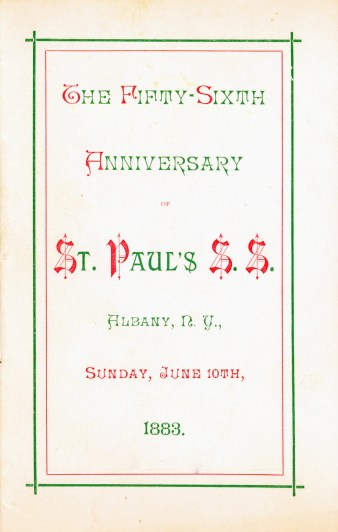
Sunday School Song Book 56th Anniversary (1883)

Sunday School Song Book 56th Anniversary (1883)

Ira Porter Jr., a member of St. Paul’s for fifty years, had not only served as Sunday School librarian, he was also clerk of the vestry for thirteen years. He was the son of Ira Porter Sr. (1811 – 1892) and Jane Eliza Rice Porter (1818 – 1894). The elder Ira Porter was a St. Paul’s vestryman from 1859 until 1871. Ira Jr. worked at the Albany Customs House for fifty years, ending his career in 1907 as a Special Deputy Surveyor of Customs.

Ira Porter Sr.

Ira Porter Sr.

Dr. Candlyn Marches in the Armistice Day Parade

It’s Veterans’ Day, or Armistice Day as it was known until 1954. St. Paul’s has many veterans whom we honor, but this year let us remember T. Frederick H. Candlyn, our organist and choirmaster from 1915 until 1943, who fought in the trenches during World War I. Candlyn marched in every Armistice Day parade here beginning with his discharge in 1919 until he left this city in 1943.

Candlyn arrived at St. Paul’s in May 1915, having recently immigrated from his birthplace in Davenham, Cheshire, England. While he filed first papers for naturalization in July 1916, Candlyn was still a British citizen in May 1917 when the Selective Service Act of 1917 was passed, requiring all men age 21 to 30 to register for the draft. In his native land, Candlyn (then age 24) would have been exempt, as the only son of a widowed mother, but not in the United States. He registered for the draft on June 5, 1917, and entered the army on September 21, 1917, leaving Albany with the first contingent of draftees for training at Fort Devens, Massachusetts.

Candlyn had a brief break from what he described as “a stiff bit of training” at Fort Devens when he returned to Albany to marry Dorothy Ridgway on December 29, 1917. She was a member of St. Paul’s, and the daughter of longtime St. Paul’s vestryman Frederick W. Ridgway. The newlyweds had a brief honeymoon trip, and then Candlyn returned to training. He became a United States citizen on June 25, 1918 at Fort Devens, and must have been shipped overseas soon afterward, assigned to the medical service.

Candlyn was discharged as corporal on  April 25, 1919. Every year thereafter, until he left Albany in 1943, Candlyn marched proudly in the Armistice Day parade, wearing the same olive drab uniform he had worn “over there.”

T.F.H. Candlyn in uniform (Albany Evening Journal 31 Dec 1917)

T.F.H. Candlyn in uniform (Albany Evening Journal 31 Dec 1917)

We have a description of one of these parades, and some details of his military service thanks to an article by columnist Edgar S. Van Olinda in the Albany Times-Union for November 17, 1941.

Those who witnessed the Armistice Day parade last Tuesday probably noted the Governor marching at the head of the column and the lone Civil war veteran, Colonel Hayes, of Brookview riding in the Governor’s open car. But unless you are a consistent curbstone fan or the collector of useless information, you probably missed another very important personage. Once again Dr. T. Frederick H. Candlyn, head of the music department of State College for Teachers, organist and choirmaster of St. Paul’s Episcopal church, paraded in the Legion division.

Dr. Candlyn does it every year; not that the stunt is very remarkable, as there are many who do the same thing. The important part is that he wears the same uniform he used overseas, and it is an enlisted man’s uniform at that.

Dr. Candlyn arrived at City hall just as Grand Marshal “Gil” Sharp and Carilloneur Floyd Walter were synchronizing watches, preparatory to the tolling of the big bell on the dot of 11, followed by the moment of silence, and “taps.” Both of these gentlemen took time out to congratulate the Doctor on his appearance and to ask, “How do you do it?” Most of the O.D. outfits have long since been carried away by the moths and those which are still in the clothes press are so small that most veterans would need the help of a shoehorn.

So, each year, T. Frederick H., on November 11, puts away the tuning fork and baton and dresses himself in the olive drab blouse, breeches and wrapped leggings and does his stuff.

After a brief aside about other Albany musicians who served in the war, Van Olinda continues with some insights into Candlyn’s wartime experience”

What could be more incongruous than our good friend, squatting on the firestep of a trench with a pad of score sheets on his knee, composing a Christmas cantata or a musical setting of the Magnificat with the shells and machine gun bullets whistling overhead?

He has written a delightful organ voluntary entitled “An Indian Legend,” which, while not too difficult to play, exhibits the possibilities of the organ stops. We can’t help but wonder if this, too, is a “front-line” composition.

In an earlier piece, published in the Times-Union for November 18, 1939, Van Olinda also describes Candlyn’s marching in the Armistice Day parade, and a few additional details of his wartime activities.

Dr. Candlyn had an interest in the outcome of the war beyond many Americans, for many of his close relatives still live in England. He stood on the parapet during his trick on watch, slipped on the wet duckboards in the trenches as he lugged rations to his platoon and learned the mechanism of machine gun and hand grenade. But during his rest periods, he jotted down little melodies on paper and when there was entertainment in the “Y” hut, Private Candlyn would be at the piano.

1938 Choir Boy Reunion with T.F.H. Candlyn

1938 Choir Boy Reunion with T.F.H. Candlyn

T.F.H. Candlyn gave much for his country with this wartime service. But he and his wife were to give once more to his adopted country. One year after that last Armistice Day parade in Albany, the Candlyns’ son Donald Shore Candlyn was killed by a sniper during the the Battle of the Bulge.


The Flora Myers Brady Gavit Memorial Organ

St. Paul’s worshiped in the building on Lancaster Street for a century, and we tend now to think of that building, through the haze of memory and legend, as our ideal church home. But even at its purchase in 1862, the building was considered a compromise. A few years before, in 1860 – 61, the congregation (then housed in a former theater on South Pearl Street) had decided to move into the newly-opened western part of the city. The vestry negotiated the purchase of property for a new church, hired an architect, and offered the old church for sale. Those plans were dashed by the bank failures of May 1861. William Rudder, St. Paul’s rector from 1859 until 1863, describes the crisis, and its solution:

But being now, as it were, without shelter, it was necessary at once to find some place of worship. It so happened that the authorities of a Dutch Reformed Congregation were engaged in building a house of worship at this time; but they, too, were brought to a stand by the financial problems of which I have spoken, and the unfinished building was offered for sale. Your vestry felt that, under the peculiar circumstances in which they were placed, they could not do better than purchase this building. They did so, and adding a chancel, endeavored to make it as churchlike in appearance as possible, and suitable to the requirements of our worship.[i]

William Rudder

William Rudder

John Henry Van Antwerp

John Henry Van Antwerp

The vestry’s and Rudder’s lack of enthusiasm is palpable. But the vestry purchased the Dudley Reformed Church on Lancaster Street in May 1862 with financing arranged by junior warden John H. Van Antwerp, cashier of the New York State Bank. The congregation held the first service there in September of that year.

St. Paul's, Late 19th century

St. Paul’s, Late 19th century

Yet only fifteen years later, at the congregation’s fiftieth anniversary celebration in 1877, Rudder asked if perhaps the congregation was ready to take up the 1861 vestry’s goal “to build a new church edifice in a better and more advantageous situation.” and to erect a building “worthy of the position and resources of the parish.” [ii] If they did so, he encouraged the 1877 vestry to “[s]how forth the largeness of your Christian zeal and love by the extent and richness, the trust and perfection of your work.”[iii]

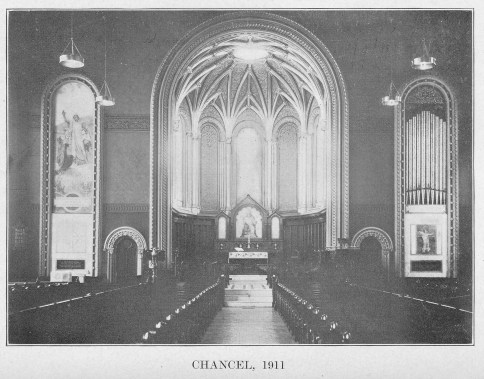
The congregation chose not to take up Rudder’s challenge, but they could not ignore the Lancaster Street building’s deficiencies, chief among which was the design of the chancel. While Rudder and the 1861 vestry had attempted to make the nave “as churchlike in appearance as possible,” the chancel they had added was recognized as inadequate. In 1902, the year of the parish’s 75th anniversary, our rector William Prall suggested five improvements necessary for the survival of the parish, two of them related to problem with the chancel: to remodel the chancel and bring the choir to the east end of church “where it properly belongs.”[iv]

William Prall

William Prall

Prall was unable able to accomplish these goals during his term as rector from 1900 to 1905, but they were taken up by his successor, Roelif Hasbrouck Brooks, who arrived in the spring of 1906. As a start, Brooks recommended improvements to the church building including the chancel. That fall, he appealed “to the congregation, urging them to repair and beautify their church by memorial gifts.”[v]

Roelif Hasbrouck Brooks

Roelif Hasbrouck Brooks

By the parish’s 80th anniversary in November 1907, Brooks had already accomplished much of this beautification, including Prall’s recommendation to remodel the chancel:

Since then [the appeal of autumn 1906] two windows had been put in place, two were now being constructed, a baptistery had been erected, the chancel enlarged, the organ reconstructed, two tablets had been erected and the credence table rebuilt. Meantime the Sunday-school had doubled its offerings for missions, the parish had met its apportionment and had also made various gifts for charities.[vi]

St. Paul's Chancel before 1901

St. Paul’s Chancel before 1901

St. Paul's Chancel in 1911

St. Paul’s Chancel in 1911

We do not know how the organ was “reconstructed,” but whatever improvements were made could not hide that fact that it was 74 years old. Brooks must have hoped that the church could afford a new organ to complete the restoration. The organ in use in 1907 was only St. Paul’s second, purchased in 1841, shortly after the congregation moved to the Pearl Street theater. Originally built by Thomas Robjohn (under contract with Firth & Hall of New York City), the instrument was rebuilt in 1857 by William A. Johnson, with the upgraded instrument inaugurated on Christmas Day 1857. Johnson also moved the instrument to Lancaster Street in 1864. William J. Stuart of Albany made major enhancements in 1892, including a new manual, pedal, chest, couplers and combination pedals, but by 1907 it must have been a very old looking (and sounding) organ. Brooks had plans for major enhancements to the church’s liturgy and worship space, including the creation of a boys’ choir, and moving the organ to the renovated chancel. He had the new chancel: a new organ would fit with these plans very nicely!

Years passed, and Brooks must have thought about who was capable of buying the church a new organ. His leading candidate would have been the wealthiest member of the congregation, Marcia Ann Myers Brady, who was already a major donor. Mrs. Brady had been a member of the congregation since 1872, and she raised their six children in the church. Her daughter Flora was baptized at St. Paul’s in 1879, attended our Sunday School and was married to E. Palmer Gavit by Dr. Prall, in 1901. Mrs. Brady’s other daughter, Marcia, was married to Carll Tucker at St. Paul’s in 1908.

Marcia Ann Myers Brady

Marcia Ann Myers Brady

Marcia Ann Myers Brady’s husband, Anthony N. Brady, was a practicing Roman Catholic who may never have seen the interior of St. Paul’s. Mr. Brady had started as a small businessman in Troy and Albany, but by the first decade of the twentieth century he had accumulated an immense fortune by investing in utilities and public transportation across the country. The firms he founded are the direct predecessors of such corporate giants as Consolidated Edison and Union Carbide, among others.

Tragedy struck Marcia Ann Myers Brady’s family in October 1912, when her daughter Flora died at age 35 in a fiery train wreck that also killed her sister-in-law and sister-in-law’s sister. Then a year later, Marcia Brady’s husband died, leaving an estate of over $72 million dollars, which in that period in New York was second only to that of John Jacob Astor.

Flora Myers Brady Gavit

Flora Myers Brady Gavit

This enormous fortune was divided between Marcia, her surviving children, and her namesake, Flora’s daughter Marcia Ann Gavit, age 6. Responding to Brooks’ desire for a new organ, Mrs. Brady chose to make a double gift to the church: $14,000 to cover the entire cost of a new organ, and $20,000 to the Flora Myers Brady Gavit Memorial Organ Endowment Fund,  its “[i]ncome to be used, one-half for the maintenance of [the] organ, and one-half to create a fund for the installation of a new organ when such shall be required.”

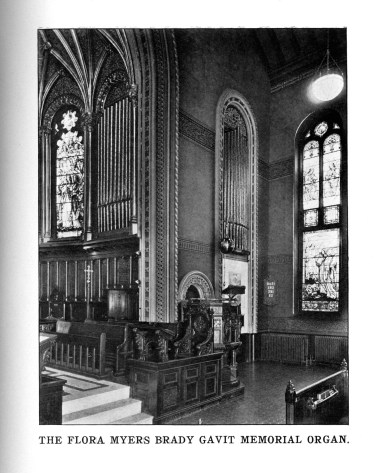
The new instrument was dedicated on Palm Sunday, March 28, 1915. Built by the Hutchings Organ Company of Boston, it was a three-manual electric organ, with thirty-five speaking stops, nine couplers, two tremolos and a set of chimes.
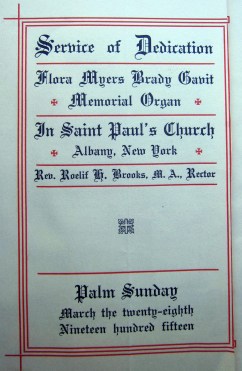
Program, Service of Dedication for Gavit Memorial Organ
Program, Service of Dedication for Gavit Memorial Organ

The Flora Myers Brady Gavit Memorial Organ

The Flora Myers Brady Gavit Memorial Organ

Plaque for Gavit Memorial Organ

Plaque for Gavit Memorial Organ

This was not the end of the Brady family’s generosity. After Marcia Ann Myers Brady’s death in 1921, her children, son-in-law (E. Palmer Gavit) and granddaughter (Marcia Ann Gavit) established a $60,000 trust in her name, with “the income to be used as the result of an expressed wish of Mrs. Brady to perpetuate the gifts she was accustomed to make during her lifetime for the support of the Parish.”

The Flora Myers Brady Gavit Memorial Organ Endowment Fund  continued to fund repairs and enhancements the Flora Myers Brady Gavit organ over the next fifty years. The 1915 instrument was first rebuilt in 1940 by Ernest M. Skinner & Son of Methuen MA, with guidance from our organist and choirmaster, T. Frederik H. Candlyn. The official opening of the “rebuilt and enlarged Flora Myers Brady Gavit Memorial Organ” was held on September 15, 1940. The enhancements included a new console with “modern electrical mechanism,” new stops (4 on the great, 5 on the swell, 4 on the choir and 5 on the pedal) and a new organ loft. “Many readjustments have likewise been made in the older organ to improve its speaking quality and tone.”[vii]
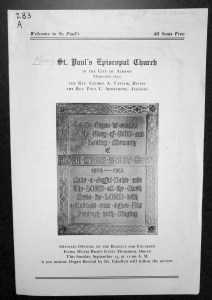
Program, Reopening of Rebuilt and Enlarge Gavit Organ 1940

Program, Reopening of Rebuilt and Enlarge Gavit Organ 1940

T. Frederick H. Candlyn at St. Paul's organ.

T. Frederick H. Candlyn at St. Paul’s organ.

The organ was again rebuilt “with tonal changes” by the M.P. Möller company in 1952. At that time, the organ was described as having 3 manuals, 4 divisions. 46 stops, 35 registers, 38 ranks and 2,521 pipes.[viii]

Only a dozen years later, New York State took the Lancaster Street building as part of the 98 acres needed to build the South Mall, now known as the Empire State Plaza. Any items not removed by the congregation before they left the building became State property The people of St. Paul’s had to make some difficult decisions about what could be taken and used in their new building, and the organ was one of those items left behind.

By early 1964, the vestry decided to purchase an organ by Casavant Frères for the new church on Hackett Boulevard, and to allow the State to sell the 1915 organ. Clarence Hollister (St. Paul’s organist and choirmaster from 1955 until 1967) estimated the old organ’s value at $60,000, but said that St. Paul’s had received an estimate of $32,000 to recondition it. Hollister’s opinion was that “I can’t see putting $32,000 into an old organ, which I’m not particularly fond of anyway.”[ix] One wonders how the organ could have deteriorated that much in the twelve years since the 1952 M.P. Möller revisions. It seems more likely that its deficiencies were a matter of changing styles in organ sound rather than actual deterioration.

Clarence Hollister at St. Paul's Organ

Clarence Hollister at St. Paul’s Organ

On June 3, 1964 the State issued a “Prospectus for the sale of organ at St. Paul’s church,” containing specification #CB639 for a “Three manual Hook & Hastings Organ with additions by Ernest M. Skinner.”[x] In July 1964, it was purchased by Christ Church (Episcopal) in Schenectady for the sum of $2,060.[xi]

More than a century after it was founded, the Flora Myers Brady Gavit Memorial Organ Funds continue to pay for maintenance of the Casavant organ. The funds, now known as the Gavit Organ Replacement and Gavit Organ Maintenance Fund, paid for a major repair only a few years ago, when organ pipes were beginning to lean precariously over the tenors and basses in the choir’s back row. We hope that Mrs. Brady would have approved.
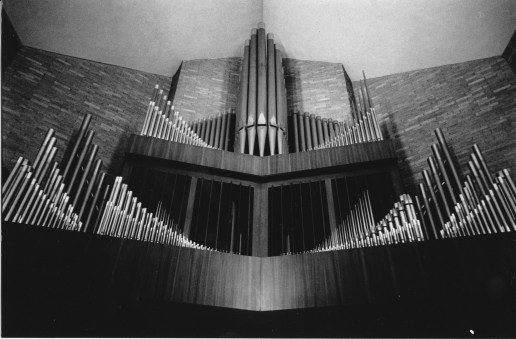
Pipework for St. Paul's Casavant Frères Organ

Pipework for St. Paul’s Casavant Frères Organ (photo credit: Amy van den Broek)

[i] “Sermon of the Rev. William Rudder, D.D.,” in The Semi-centennial  Services of St. Paul’s Church, Albany, N.Y. (Albany: The Argus Company, 1877), 37.

[ii] “Sermon of the Rev. William Rudder, D.D.,” 36.

[iii] “Sermon of the Rev. William Rudder, D.D.,” 40-41.

[iv] “Past, Present and Future: a Sermon Preached January 26, 1902 in Commemoration of the Seventy-Fifth Anniversary of the Founding of the Parish of St. Paul’s, Albany, N.Y. by the Rev. William Prall, D.D., Ph.D. Rector” (Albany: Weed-Parsons Printing Co., n.d.), page 17.

[v] “Tablet Unveiled in St. Paul’s, Albany N.Y.,” The Churchman 26 Oct 1907, volume 96, number 16, page 649.

[vi] “Tablet Unveiled in St. Paul’s, Albany N.Y.”.

[vii] “Service of Dedication: Flory Myers Brady Gavit Memorial Organ in in Saint Paul’s Church, Albany, New York” Archives of St. Paul’s Church.

[viii] OHS Database http://www.organsociety.org/database/SingleOrganDetails.php?OrganID=49048 retrieved 31 Oct 2016.

[ix] Albany Times-Union 21 Jun 1964.

[x] Office of General Services, Office of South Mall, South Mall Project Site Acquisition and Clearance Files. New York State Archives, 16209-91, folder “Demolition – St. Paul’s Church.”

[xi] Schenectady Gazette 09 Jul 1964.